
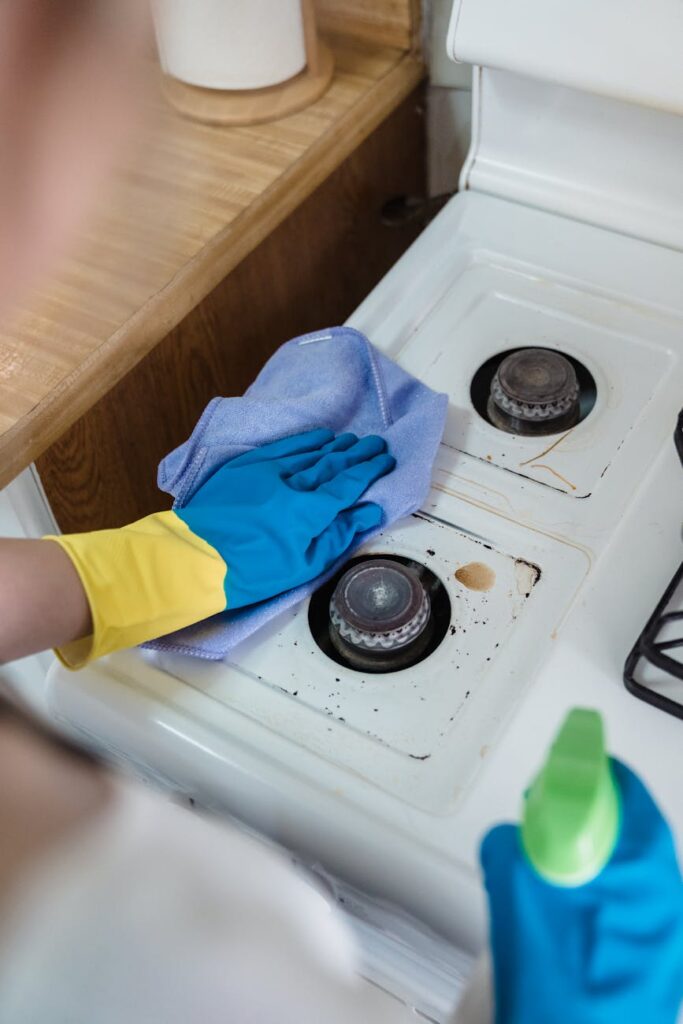
Stove Top Stains Odours Guide Part 1
Introduction
Stove tops are essential kitchen appliances that can easily become stained and emit unpleasant odours over time. These odours can be the result of burnt food, spills, or accumulated grease. In this guide, we’ll explore the causes of these odours, why they persist, and how to effectively eliminate them. Whether you have a gas, electric, or induction stove, understanding how to manage stove top stains and their associated smells will help keep your kitchen fresh and inviting.
What Causes Odours?
Several factors contribute to unpleasant smells coming from your stove top:
1. Burnt Food Residue: Food particles that burn onto the surface can produce a strong, lingering smell.
2. Grease Buildup: Over time, grease can accumulate from cooking, leading to rancid odours.
3. Spills: Sauces, oils, and other cooking liquids can spill and create a sticky residue that smells bad when heated.
4. Old Food: Food that lands in the crevices or under burners can rot and create a foul smell.
Understanding the causes of these odours will help you tackle the problem effectively.
Why This Problem Happens
The kitchen is often a busy place, and stove tops endure a lot of wear and tear. Here’s why odours persist:
- Heat Activation: Heating the stove can activate smells trapped in food particles or grease.
- Inadequate Cleaning: A lack of regular and thorough cleaning allows odours to build up over time.
- Material of the Stove: Some materials, like stainless steel or glass, can trap smells more than others.
- Air Circulation: Poor ventilation in the kitchen can compound the issue, making it hard for odours to dissipate.
- Dish soap
- Baking soda
- White vinegar
- Scrub brush or sponge
- Microfiber cloths
- Plastic scraper (for stubborn stains)
- Remove grates and burners for thorough cleaning.
- Clean grates with soapy water; soak if heavily soiled.
- Use a non-abrasive cleaner specifically designed for electric stoves.
- Avoid submerging any electrical components in water.
- Use a ceramic stovetop cleaner and a soft cloth for the glass surface.
- Avoid harsh chemicals that can scratch the surface.
By understanding these factors, you can take steps to prevent and eliminate odours effectively.
How to Fix Odours (Step-by-Step)
Here’s a straightforward approach to eliminate odours from your stove top:
Step 1: Gather Supplies
You’ll need:
Step 2: Remove Loose Debris
Before applying any cleaning solution, wipe down the stove top with a dry cloth to remove any loose crumbs or debris.
Step 3: Apply Dish Soap Solution
1. Mix a few drops of dish soap with warm water in a bowl.
2. Dip a sponge in the solution and wipe down the entire stove top.
3. Rinse with a clean, damp cloth.
Step 4: Treat Stubborn Stains
1. For burnt-on stains, sprinkle baking soda over the area.
2. Spray white vinegar on top of the baking soda (it will fizz).
3. Let it sit for 15-20 minutes.
4. Use a scrub brush or plastic scraper to remove the stains gently.
Step 5: Final Rinse
After scrubbing, wipe the stove top with a clean damp cloth to remove any leftover cleaning solution.
Step 6: Dry Thoroughly
Use a microfiber cloth to dry the stove top completely. This will prevent moisture from causing further odours.
Best Cleaning Methods
Different stove tops may require different cleaning methods:
Gas Stoves
Electric Stoves
Induction Stoves
Common Mistakes to Avoid
1. Neglecting Regular Cleaning: Skipping regular maintenance allows odours to build up.
2. Using Abrasive Cleaners: Harsh chemicals can damage the surface and trap odours.
3. Not Ventilating: Cooking without proper ventilation can exacerbate odours.
4. Ignoring Spills: Cleaning spills immediately prevents odours from setting in.
Avoiding these pitfalls will help maintain a clean and fresh-smelling kitchen.
Prevention Tips
To keep your stove top odour-free, consider these preventive measures:
1. Clean Regularly: Make it a habit to wipe down the stove after each use.
2. Use Ventilation: Turn on the exhaust fan while cooking to reduce odours.
3. Cover Food: Use lids while cooking to minimize spills and splatters.
4. Store Ingredients Properly: Keep food sealed to prevent strong smells from escaping.
Implementing these tips will significantly reduce the chances of odours developing in the first place.
Frequently Asked Questions
1. How often should I clean my stove top?
Aim to clean your stove top after every use to prevent stains and odours from building up.
2. Can I use bleach to clean my stove top?
Bleach is not recommended. It can produce harmful fumes and damage your stove’s surface.
3. What if the smell persists after cleaning?
If odours remain, try placing an open bowl of baking soda on the stove overnight to absorb lingering smells.
4. Are there any natural cleaners I can use?
Yes, a mixture of vinegar and baking soda is a great natural option for cleaning and odour removal.
5. How do I clean under the burners?
Remove the burners carefully, and use a damp cloth or sponge to clean the area underneath.
6. Why does my stove top smell like gas?
If you smell gas, turn off the stove immediately and ventilate the area. Contact a professional to check for gas leaks.
By following this guide, you’ll be equipped to tackle odours from stove top stains effectively. Stay tuned for Part 2, where we’ll delve deeper into advanced cleaning techniques and tips for maintaining a fresh kitchen environment.