
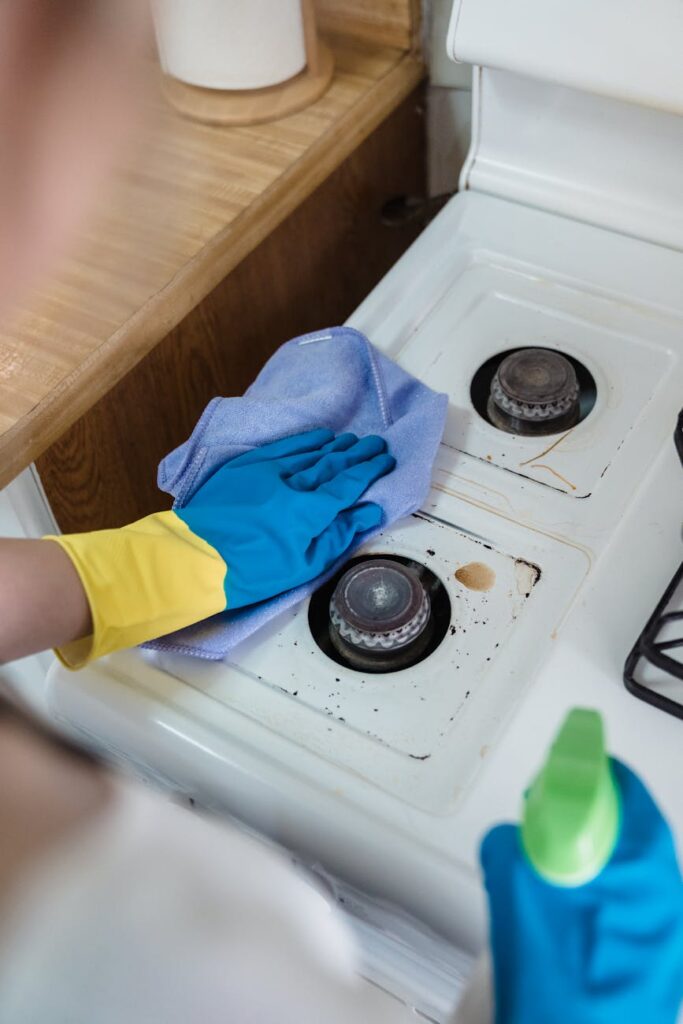
Stove Top Stains Cleaning Guide Part 1
Introduction
Stove tops can take a beating. Whether you’re a gourmet chef or a microwave master, spills and splatters are inevitable. Over time, these stains can build up, making your kitchen look unkempt and potentially affecting the functionality of your stove. This guide will help you tackle stove top stains effectively, ensuring a cleaner and more appealing cooking space.
What Causes Stove Top Stains?
Stove top stains can originate from a variety of sources, including:
1. Food Spills: Boiling sauces, splattering oils, and bubbling pasta can leave tough stains.
2. Burnt Residue: Overcooked food can leave behind charred bits that cling to your stove.
3. Grease Accumulation: Regular cooking tends to produce grease that can settle on the surface.
4. Hard Water Deposits: If you live in an area with hard water, mineral deposits can create unsightly stains over time.
5. Improper Cleaning Products: Some cleaners can leave residues that attract more dirt and grime.
Why This Problem Happens
Stove tops are frequently exposed to high temperatures, which can cause food and grease to adhere more stubbornly to the surface. As these substances cool, they can become hardened, making them difficult to remove. Additionally, neglecting regular cleaning can allow stains to set in, requiring more aggressive cleaning methods later.
How to Fix Stove Top Stains (Step-by-Step)
Cleaning stove top stains can be done effectively by following a few simple steps:
Step 1: Gather Your Supplies
Before starting, gather the following materials:
- Soft cloths or microfiber towels
- Non-abrasive sponge
- Baking soda
- White vinegar
- Dish soap
- Spray bottle
- Plastic scraper or a spatula
- Vinegar and Baking Soda: This method is effective for tough stains. After scrubbing, use a glass cleaner for a streak-free finish.
- Olive Oil: After cleaning, apply a small amount of olive oil to a cloth and buff the surface for a shine.
- Remove Burners: Take off the coils for a more thorough clean. Use a baking soda paste for stubborn stains.
- Individual Burner Cleaning: Remove the grates and soak them in soapy water. Clean the surface with a vinegar solution.
Step 2: Perform a Quick Wipe Down
1. Turn Off the Stove: Ensure all burners are off and cool.
2. Wipe Loose Debris: Use a dry cloth to remove any loose crumbs or debris from the surface.
Step 3: Create a Cleaning Solution
1. Mix the Cleaner: In a spray bottle, combine equal parts water and white vinegar with a few drops of dish soap.
2. Shake Well: Ensure the solution is well mixed.
Step 4: Apply the Cleaning Solution
1. Spray Generously: Spray the solution over the stained areas.
2. Let it Soak: Allow it to sit for about 10-15 minutes to break down the stains.
Step 5: Scrub the Stains
1. Use a Non-Abrasive Sponge: Gently scrub the stained areas in a circular motion.
2. Tackle Stubborn Spots: For harder stains, sprinkle baking soda over the area and spray a bit more vinegar. This will create a fizzing reaction that can help lift the stain.
Step 6: Rinse and Dry
1. Wipe with a Clean Cloth: Dampen a clean cloth with water and wipe away the cleaning solution.
2. Dry Thoroughly: Use a dry towel to ensure no moisture is left behind, preventing new stains.
Best Cleaning Methods
Different stove tops require different methods:
For Glass Stove Tops
For Stainless Steel Stove Tops
For Electric Coil Stoves
For Gas Stoves
Common Mistakes to Avoid
1. Using Abrasive Cleaners: Avoid steel wool or harsh chemicals; they can scratch the surface.
2. Not Prepping the Surface: Always wipe down the stove before applying cleaning solutions to avoid spreading debris.
3. Ignoring Manufacturer Guidelines: Check your stove’s manual for specific cleaning instructions.
4. Letting Stains Sit Too Long: Address stains promptly to prevent them from hardening and becoming tougher to clean.
5. Using Excess Water: Too much water can seep into electrical parts; use a damp cloth instead.
Prevention Tips
1. Clean Regularly: Wipe down the stove after each use to prevent build-up.
2. Use Splatter Guards: When frying or cooking with oils, use a splatter guard to minimize mess.
3. Keep It Covered: When not in use, consider using a stove cover to keep it clean.
4. Use Non-Stick Cookware: This can help reduce the amount of grease that settles on the surface.
5. Be Mindful of Cooking Techniques: Avoid high-heat methods that create more splatter.
Frequently Asked Questions
1. How often should I clean my stove top?
Regular cleaning after each use is ideal, with deep cleaning once a week.
2. Can I use vinegar on all stove tops?
Vinegar is safe for glass and stainless steel but check your manufacturer’s guidelines for other surfaces.
3. What’s the best way to remove burnt-on stains?
A paste of baking soda and water, left to sit, followed by gentle scrubbing, is effective for burnt stains.
4. Is it safe to use bleach on stove tops?
Bleach can be harsh and is not recommended for stove tops as it can damage the surface.
5. How can I prevent stains from forming?
Wipe up spills immediately and avoid cooking at excessively high temperatures.
6. What should I do if my stove top has scratches?
Use a stainless steel cleaner specifically designed for scratched surfaces to restore its appearance.
By following this guide, you can maintain a clean and functional stove top, making your cooking experience more enjoyable and efficient. Stay tuned for Part 2, where we’ll dive deeper into advanced cleaning techniques and solutions for stubborn stains.