
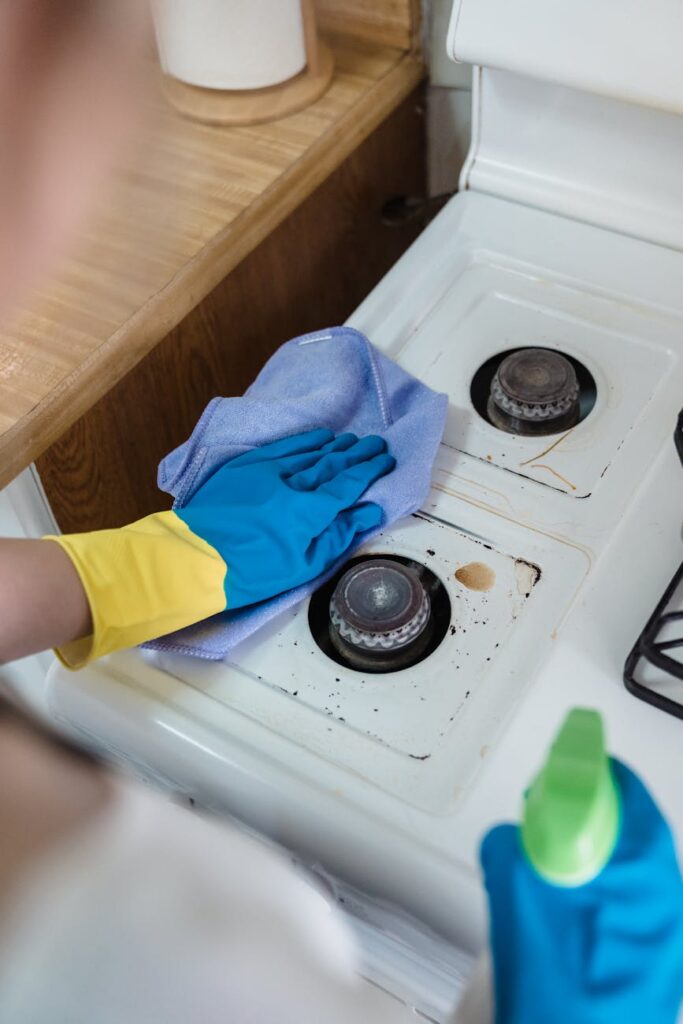
Stove Top Odor Mould & Damp Guide Part 1
Introduction
Stove top odors can be unpleasant and persistent, especially when they become intertwined with mould and damp issues. This guide will help you identify the root causes of these problems and provide actionable steps to resolve them. By understanding how to effectively clean and prevent mould and damp on your stove top, you can maintain a fresher kitchen environment.
What Causes Mould & Damp?
Mould and dampness in the kitchen can stem from several sources:
1. Humidity: High humidity levels in your kitchen can lead to condensation, especially around the stove top.
2. Poor Ventilation: Inadequate airflow can trap moisture, allowing mould to thrive.
3. Food Residue: Grease and food spills can create a sticky surface that attracts moisture and fosters mould growth.
4. Water Leaks: Any leaks from pipes or appliances can introduce moisture, which can lead to dampness.
5. Old Appliances: Older stoves may have areas that retain moisture or grease, promoting mould growth.
Why This Problem Happens
Understanding why mould and damp issues occur is crucial for effective cleaning and prevention.
- Environmental Factors: Kitchens are often warm and humid, especially when cooking. This creates an ideal environment for mould growth.
- Lack of Maintenance: Regular cleaning and maintenance are essential. Neglecting spills and not addressing leaks can exacerbate the problem.
- Condensation: Cooking can produce steam, which condenses on cooler surfaces, including your stove top, fostering mould growth.
- Mild detergent
- White vinegar
- Baking soda
- Spray bottle
- Soft cloths or sponges
- Scrubbing brush
- Gloves
- Ignoring Spills: Failing to clean spills promptly can lead to mould growth. Clean as soon as possible.
- Neglecting Ventilation: Always use your kitchen hood fan or open windows while cooking to minimize humidity.
- Using Too Much Water: Excessive moisture during cleaning can worsen damp issues. Use damp cloths rather than soaking the area.
- Not Addressing Underlying Issues: If mould keeps returning, investigate potential leaks or humidity problems.
- Neglecting Regular Maintenance: Schedule regular cleanings to prevent mould build-up.
How to Fix Mould & Damp (Step-by-Step)
To tackle mould and damp on your stove top, follow these steps:
Step 1: Gather Your Supplies
You will need:
Step 2: Prepare the Area
Clear the stove top of all items, including pots, pans, and any decorative items. Ensure the area is well-ventilated.
Step 3: Create a Cleaning Solution
Mix equal parts of white vinegar and water in a spray bottle. For stubborn mould, you can sprinkle baking soda directly onto the affected areas.
Step 4: Apply the Solution
Spray the vinegar solution generously over the mouldy areas. If using baking soda, dampen it with a little water to create a paste.
Step 5: Scrub the Surface
Using a scrubbing brush or sponge, gently scrub the affected areas. The combination of vinegar and baking soda will help lift the mould and remove any greasy residue.
Step 6: Rinse and Dry
After scrubbing, wipe the area with a clean, damp cloth to remove any remaining cleaning solution. Thoroughly dry the stove top afterward, as moisture can lead to further mould growth.
Step 7: Inspect for Leaks
Check for any leaks from pipes or appliances that may be contributing to dampness. Address any issues immediately.
Best Cleaning Methods
To effectively combat mould and damp, consider the following cleaning methods:
Vinegar and Baking Soda
This natural combination is excellent for breaking down grease and killing mould spores. Use it regularly for maintenance cleaning.
Hydrogen Peroxide
For persistent mould, hydrogen peroxide can be effective. Apply it directly to the affected area, let it sit for about 10 minutes, then scrub and rinse.
Commercial Mould Cleaners
If natural solutions aren’t effective, consider using a commercial mould cleaner. Always follow the manufacturer’s instructions and ensure good ventilation.
Common Mistakes to Avoid
Prevention Tips
1. Improve Ventilation: Ensure proper airflow by using exhaust fans and opening windows while cooking.
2. Control Humidity: Use a dehumidifier if necessary, especially in humid climates.
3. Regular Cleaning: Clean your stove top after every use to prevent grease and moisture accumulation.
4. Inspect for Leaks: Regularly check plumbing and appliance connections for leaks.
5. Use Mould-Resistant Products: Consider using mould-resistant paint or sealants in your kitchen.
Frequently Asked Questions
1. How often should I clean my stove top to prevent mould?
Aim to clean your stove top after every use to prevent grease and moisture build-up.
2. Can I use bleach to clean mould on my stove top?
While bleach can kill mould, it’s not recommended for stove tops due to potential damage to surfaces and lingering odors.
3. What should I do if the mould keeps returning?
Investigate and address any underlying issues, such as leaks or humidity problems, and ensure regular cleaning.
4. Is it safe to cook on a stove top with mould?
No, it’s best to thoroughly clean the mould before using the stove. Mould can contaminate food and pose health risks.
5. How can I tell if I have a damp problem?
Signs of damp include visible mould, a musty smell, or peeling paint. Check for condensation on windows or surfaces.
6. What’s the best way to ventilate my kitchen?
Use exhaust fans while cooking, open windows, and ensure your kitchen is designed for airflow to minimize humidity.
By following these guidelines, you can effectively manage and prevent mould and damp issues around your stove top, ensuring a fresher and healthier kitchen environment. Stay tuned for Part 2, where we’ll dive deeper into advanced cleaning techniques and maintenance strategies.