
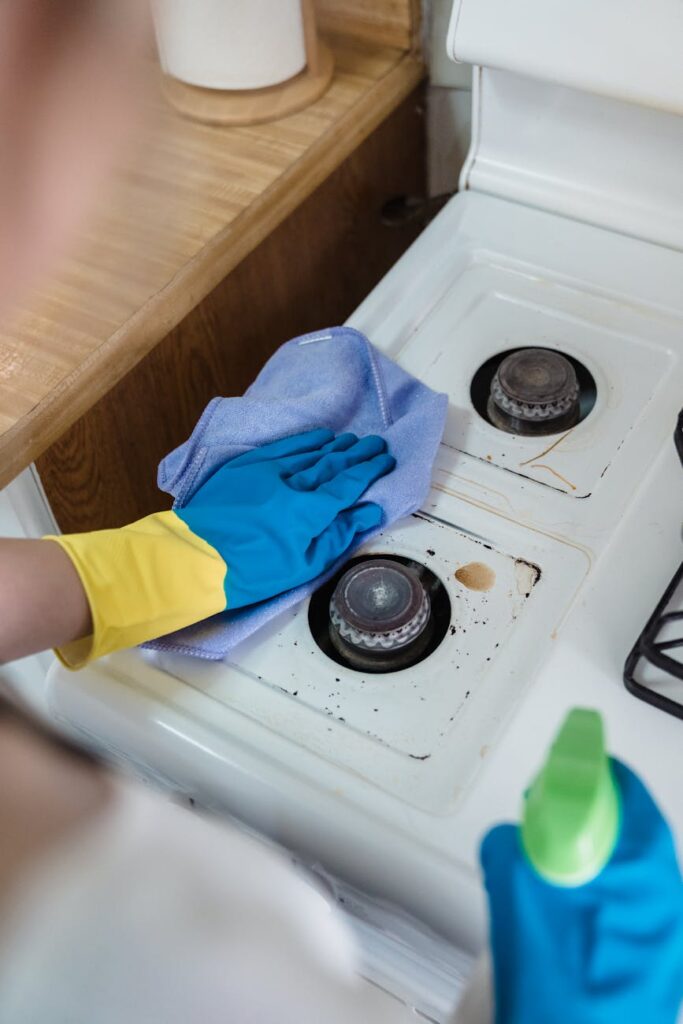
Stove Top Odor Cleaning Guide Part 1
Introduction
Stove top odors can linger long after a meal is finished, leaving your kitchen smelling less than fresh. Whether it’s the scent of burnt food, greasy residues, or lingering spices, these odors can be frustrating. This guide will help you understand what causes these smells, how to effectively clean your stove top, and tips to prevent odors from returning.
What Causes Stove Top Odors?
Stove top odors primarily arise from:
1. Food Residue: Spills and splatters from cooking can leave behind remnants that emit odors.
2. Grease Build-Up: Oils and fats can accumulate over time, creating a sticky surface that traps smells.
3. Burnt Food: Cooking mishaps can result in burnt remnants that produce strong, unpleasant odors.
4. Old Spices: Spices that have been spilled or splattered can add to the overall scent, especially if they’re old.
Why This Problem Happens
Odors develop when food particles, grease, and moisture combine on your stove top. The heat from cooking can cause these residues to break down and release volatile compounds, which contribute to unwanted smells. Over time, neglected cleaning can exacerbate the issue, making it harder to eliminate odors.
How to Fix Stove Top Odors (Step-by-Step)
Follow these steps to effectively remove odors from your stove top:
Step 1: Gather Your Supplies
You’ll need:
- Dish soap
- Baking soda
- White vinegar
- Warm water
- Soft sponge or cloth
- Scraper (non-metal)
- Spray bottle
Step 2: Remove Grates and Burner Covers
Take off any removable parts, such as grates and burner covers, to access the entire stove top.
Step 3: Wipe Down the Surface
Using a soft sponge and warm, soapy water, wipe down the entire stove top. Focus on areas with visible residue. Rinse the sponge frequently to avoid spreading grease.
Step 4: Treat Stubborn Odors
For persistent smells, create a paste using baking soda and water. Apply it to the affected areas and let it sit for 15-20 minutes. Baking soda neutralizes odors effectively.
Step 5: Scrape Off Residue
Gently use a non-metal scraper to remove any burnt-on food or residue. Be cautious to avoid scratching the surface.
Step 6: Rinse
Wipe down the stove top again with a clean, damp cloth to remove any cleaning agents or residue.
Step 7: Use Vinegar
In a spray bottle, mix equal parts white vinegar and water. Spray the solution onto the stove top and wipe it down with a clean cloth. Vinegar helps to cut through grease and neutralize odors.
Step 8: Dry Thoroughly
Ensure the stove top is completely dry before reattaching grates and burner covers. This prevents moisture from contributing to future odors.
Best Cleaning Methods
Method 1: Baking Soda and Vinegar
This combination is excellent for cutting through tough odors and residues. The fizzing action helps lift grime while neutralizing smells.
Method 2: Dish Soap and Warm Water
A simple, effective way to clean everyday spills and maintain your stove top. This method works well for regular cleaning.
Method 3: Lemon Juice
The natural acidity in lemon juice can help eliminate odors. Wipe the stove top with a cloth soaked in lemon juice for a fresh smell.
Method 4: Store-Bought Cleaners
If you prefer commercial solutions, look for cleaners specifically designed for your stove type. Always follow the manufacturer’s instructions for best results.
Common Mistakes to Avoid
1. Neglecting Regular Cleaning: Allowing spills to dry can make odors more difficult to remove.
2. Using Abrasive Cleaners: Avoid harsh chemicals and scrubbing pads that can damage your stove’s surface.
3. Ignoring Removable Parts: Remember to clean grates and burner covers as they can hold onto odors.
4. Overlooking Ventilation: Not using your kitchen vent can lead to lingering smells. Always ventilate when cooking.
Prevention Tips
1. Clean Immediately: Wipe up spills as soon as they happen to prevent odors from setting in.
2. Use a Splatter Guard: This can minimize spills and splatters when cooking, reducing the chances of odors forming.
3. Store Spices Properly: Keep spices sealed and stored away to prevent any accidental spills.
4. Ventilate While Cooking: Use your range hood or open a window to help dissipate any odors as you cook.
Frequently Asked Questions
1. How often should I clean my stove top?
It’s best to clean your stove top after each use. A deep clean once a week will help keep odors at bay.
2. Can I use vinegar on all stove tops?
Yes, vinegar is safe for most stove tops, but always check your manufacturer’s guidelines to be sure.
3. What if the odor persists after cleaning?
If odors linger, consider using an odor absorber like an open box of baking soda placed near the stove.
4. Is it safe to use baking soda on a glass top stove?
Yes, baking soda is safe for glass top stoves; just be gentle to avoid scratching the surface.
5. What should I do if my stove top smells like burnt food?
Try the baking soda paste method to absorb the odors, and make sure to ventilate the area while cleaning.
6. Can I use essential oils to mask odors?
While essential oils can provide a pleasant scent, they do not eliminate odors. Cleaning should be the first step before using oils.
By following this guide, you can tackle stove top odors effectively, ensuring your kitchen remains a fresh and inviting space. Stay tuned for Part 2, where we’ll delve deeper into advanced odor removal techniques and maintenance tips!