
Stove Grease Removal Mould & Damp Guide Part 1
Introduction
Stove grease can cause more than just an unsightly mess; it can also lead to mould and damp issues in your kitchen. Understanding how these problems develop and how to address them is essential for maintaining a clean and healthy home. This guide will walk you through the causes, solutions, and preventive measures to tackle mould and damp resulting from stove grease.
What Causes Mould & Damp?
Mould thrives in damp environments, and kitchens are particularly vulnerable due to cooking activities. Here are some common causes of mould and damp in relation to stove grease:
1. Grease Buildup: Accumulated grease on surfaces can trap moisture and become a breeding ground for mould.
2. Poor Ventilation: Inadequate airflow can prevent moisture from evaporating, leading to dampness.
3. Humidity: High humidity levels in the kitchen can exacerbate mould growth, particularly in areas near the stove.
4. Leaks: Water leaks from pipes or appliances can introduce additional moisture.
Why This Problem Happens
Understanding why mould and damp occur is crucial for effective cleaning. Here are a few reasons:
- Condensation: When cooking, steam rises, and if this moisture cannot escape, it condenses on cooler surfaces, creating a damp environment.
- Infrequent Cleaning: Ignoring regular cleaning can lead to the accumulation of grease, which retains moisture.
- Temperature Changes: Fluctuations in temperature can cause moisture to form, especially in poorly insulated kitchens.
- Protective gloves and a mask
- Scrub brush or sponge
- Spray bottle
- White vinegar or a mould removal solution
- Baking soda
- Microfiber cloths
- Vinegar: Its acidity effectively breaks down grease and kills mould spores.
- Baking Soda Paste: Mix baking soda with water to create a paste. Apply it to the affected area, scrub, and rinse off.
- Commercial Mould Removers: These are specifically designed to tackle stubborn mould but ensure they are safe for your kitchen surfaces.
- Regular Cleaning: Clean stove surfaces and surrounding areas at least once a week to remove grease.
- Improve Ventilation: Install an exhaust fan or open windows while cooking to reduce humidity.
- Use a Dehumidifier: In particularly humid kitchens, a dehumidifier can help keep moisture levels down.
- Seal Cracks: Inspect for and seal any leaks or cracks in walls and around plumbing.
How to Fix Mould & Damp (Step-by-Step)
Removing mould and damp from stove areas involves a systematic approach. Follow these steps:
Step 1: Gather Supplies
You’ll need:
Step 2: Prepare the Area
1. Clear the Surface: Remove all items from the stove and surrounding counters.
2. Ventilate the Kitchen: Open windows and turn on the exhaust fan to improve airflow.
Step 3: Apply Cleaning Solution
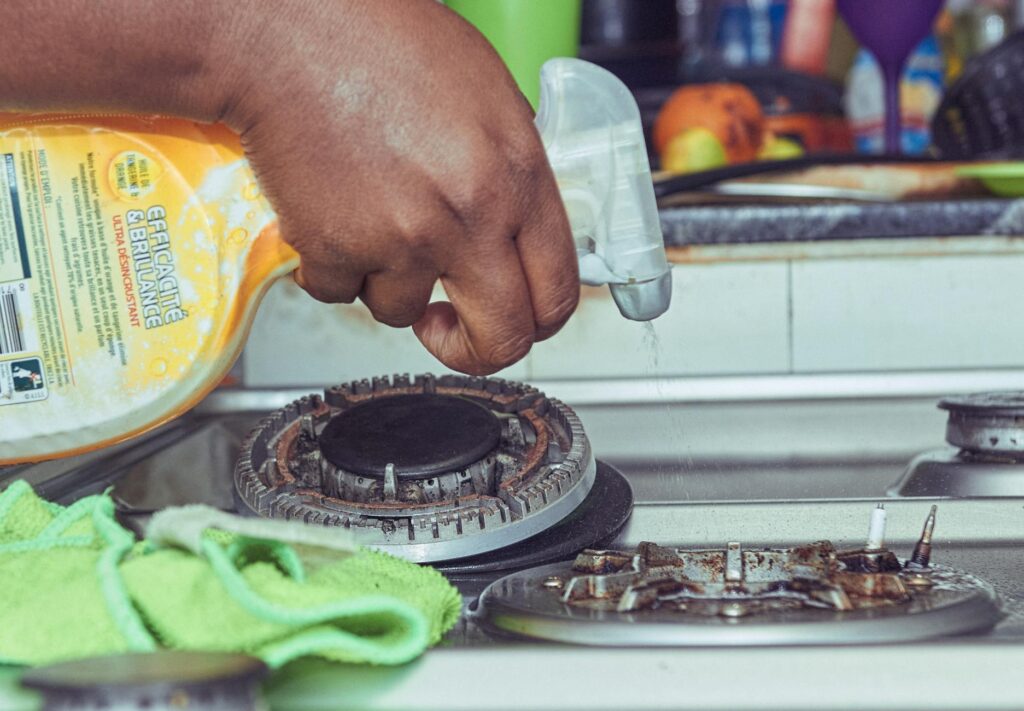
1. Vinegar Solution: Fill a spray bottle with equal parts water and white vinegar. Spray the affected areas generously.
2. Let It Sit: Allow the solution to penetrate for 10-15 minutes to break down the grease and kill mould spores.
Step 4: Scrub the Area
1. Use a Scrub Brush: Scrub the surfaces with a brush or sponge, focusing on areas with visible mould or dampness.
2. Rinse with Water: Wipe down the area with a damp cloth to remove the cleaning solution and any residue.
Step 5: Dry Thoroughly
1. Wipe Dry: Use a microfiber cloth to dry the cleaned area completely. This step is crucial to prevent mould from returning.
2. Check for Dampness: Ensure there are no lingering wet spots. If necessary, use a fan or dehumidifier.
Step 6: Repeat as Necessary
For persistent mould, you may need to repeat the process several times.
Best Cleaning Methods
Here are some effective cleaning methods for mould and damp caused by stove grease:
Common Mistakes to Avoid
When dealing with mould and damp, avoid these pitfalls:
1. Ignoring Ventilation: Always ensure proper airflow during and after cleaning.
2. Using Too Much Water: Excess water can worsen damp conditions. Use damp cloths rather than soaking.
3. Neglecting Regular Maintenance: Failing to clean grease regularly invites mould back.
Prevention Tips
Preventing mould and damp is more effective than dealing with it after it appears. Here are some tips:
Frequently Asked Questions
1. How often should I clean my stove to prevent mould?
Aim to clean your stove and surrounding areas at least once a week to prevent grease buildup.
2. Can I use bleach to remove mould?
While bleach can kill mould, it can also damage surfaces and doesn’t effectively remove grease. It’s best to use vinegar or commercial mould removers.
3. How can I tell if I have mould behind my stove?
Signs include a musty smell, discoloration on walls, or visible mould spots. If unsure, consider professional inspection.
4. Is mould dangerous to my health?
While not all moulds are harmful, certain types can cause allergic reactions or respiratory issues. It’s best to remove it promptly.
5. What humidity level should I maintain in my kitchen?
Aim for a humidity level between 30-50% to prevent mould growth.
6. Can I prevent mould with essential oils?
Some essential oils, like tea tree oil, have antifungal properties. Adding them to your cleaning routine can help deter mould.
By following this guide, you can effectively tackle mould and damp issues caused by stove grease, ensuring a cleaner and healthier kitchen environment. Stay tuned for Part 2, where we’ll delve deeper into advanced cleaning techniques and maintenance strategies!