
Stove Grease Removal Kitchen Guide Part 1
Introduction
Stove grease is an inevitable part of cooking, but it doesn’t have to be a permanent fixture in your kitchen. Grease buildup not only looks unsightly but can also pose a fire hazard. In this guide, we’ll explore the causes of kitchen grease, why it accumulates, and provide actionable steps to effectively remove it. With the right tools and techniques, you can keep your kitchen clean and safe.
What Causes Kitchen Grease?
Kitchen grease primarily comes from cooking fats and oils. When you fry, sauté, or even boil food, tiny particles of fat can become airborne or splatter onto surfaces. Over time, these particles cling to your stove, backsplash, and cabinets, forming a sticky residue. This buildup is particularly common around the stovetop and range hood, where heat and moisture are prevalent.
Why This Problem Happens
Grease accumulation occurs for several reasons:
1. Cooking Methods: Frying and sautéing produce more grease than boiling or baking.
2. Lack of Ventilation: Insufficient airflow can trap grease particles in the kitchen.
3. Infrequent Cleaning: Regular maintenance prevents buildup, but many homeowners overlook this.
4. High-Temperature Cooking: Cooking at high temperatures can cause fats to splatter more.
Understanding these factors can help you take proactive steps to mitigate grease accumulation.
How to Fix Kitchen Grease (Step-by-Step)
Step 1: Gather Your Supplies
Before you start cleaning, gather the following supplies:
- Degreaser (commercial or homemade)
- Warm water
- Microfiber cloths or paper towels
- Sponge
- Scrub brush (optional)
- Bucket
- Protective gloves
- Pros: Fast-acting, specifically formulated for grease, often require less scrubbing.
- Cons: Can contain harsh chemicals; always follow safety instructions.
Step 2: Prepare the Cleaning Solution
For a homemade degreaser, mix equal parts of white vinegar and water in a spray bottle. Alternatively, you can use a commercial degreaser according to the manufacturer’s instructions.
Step 3: Apply the Solution
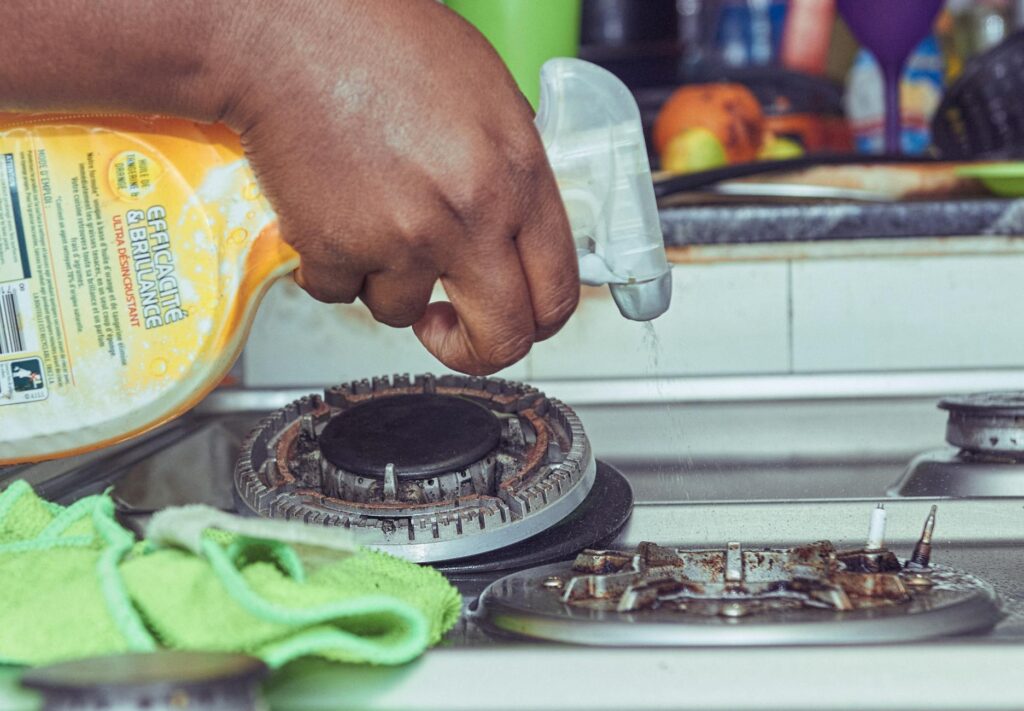
1. Spray the Affected Areas: Generously spray the degreaser onto the greasy surfaces, including the stovetop, knobs, and backsplash.
2. Let It Sit: Allow the solution to sit for 5-10 minutes to break down the grease.
Step 4: Wipe Down Surfaces
1. Use a Microfiber Cloth: Wipe the surfaces with a microfiber cloth or paper towel, working in circular motions.
2. Scrub Tough Spots: For stubborn grease, use a sponge or scrub brush to apply more pressure.
Step 5: Rinse and Dry
1. Rinse with Warm Water: Use a clean cloth dampened with warm water to remove any residue from the degreaser.
2. Dry the Surfaces: Wipe down with a dry cloth to prevent water spots and streaks.
Step 6: Clean the Range Hood
1. Remove Filters: If your range hood has removable filters, take them out and soak them in warm soapy water.
2. Wipe Down the Exterior: Use the same degreaser solution on the exterior and let it sit before wiping clean.
Best Cleaning Methods
Commercial Degreasers
Homemade Solutions
1. Vinegar and Baking Soda: A powerful combination. Sprinkle baking soda on greasy areas and spray with vinegar. Allow to fizz, then scrub.
2. Lemon Juice: The acidity helps cut through grease. Mix with water for a fresh-smelling cleaner.
Steam Cleaning
Using a steam cleaner can effectively loosen and remove grease without the need for chemicals. It’s especially useful for deep cleaning appliances.
Common Mistakes to Avoid
1. Using Abrasive Materials: Avoid steel wool or harsh scrubbers that can scratch surfaces.
2. Not Rinsing Thoroughly: Residue from cleaning products can attract more dirt and grease.
3. Ignoring the Range Hood: Regularly neglecting the range hood can lead to excessive grease buildup.
4. Skipping Regular Maintenance: Not cleaning regularly leads to tougher grime that requires more effort to remove.
Prevention Tips
1. Use a Splatter Guard: This can help minimize grease splatter while you cook.
2. Ventilate While Cooking: Use your range hood and open windows to improve airflow.
3. Clean Up Immediately: Wipe down surfaces after cooking to prevent grease from hardening.
4. Consider Cooking Methods: Opt for baking or steaming when possible to reduce grease production.
Frequently Asked Questions
1. How often should I clean my stove to prevent grease buildup?
Aim for a quick clean after each use and a deeper clean once a week.
2. Can I use bleach to clean grease?
No, bleach is not effective against grease and can create harmful fumes when mixed with other cleaners.
3. What’s the best time to clean my stove?
Cleaning right after cooking, while the surfaces are still warm, can make it easier to remove grease.
4. How do I remove burnt-on grease?
For burnt-on grease, apply a thick layer of baking soda mixed with water, let it sit, and then scrub gently.
5. Are there any eco-friendly degreasers?
Yes, vinegar, baking soda, and lemon juice are effective and environmentally friendly options.
6. Can I use the same cleaning methods for other kitchen surfaces?
Yes, many of these methods can be used on cabinets, countertops, and other surfaces, but always test on a small area first.
By following this comprehensive guide, you’ll be well-equipped to tackle stove grease effectively. Remember that consistent cleaning and prevention will keep your kitchen looking great and functioning safely. Stay tuned for Part 2, where we’ll dive deeper into advanced cleaning techniques and tools.