
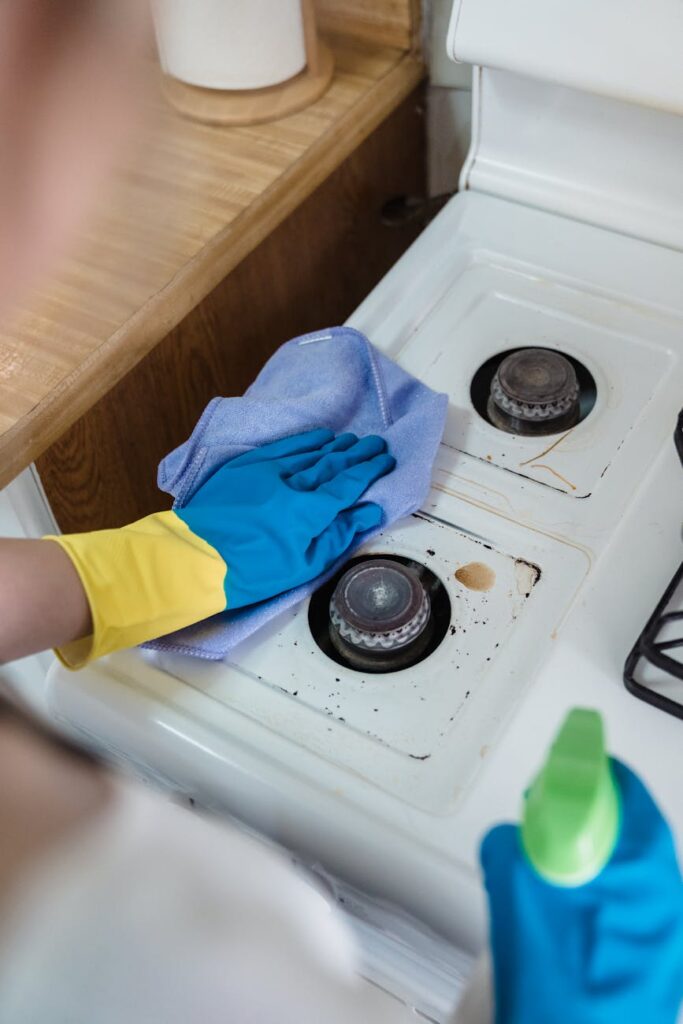
Stove Grease Buildup Odours Guide Part 1
Introduction
Stove grease buildup is more than just an unsightly mess; it can lead to unpleasant odours that linger in your kitchen. These smells can emanate from old grease and food particles clinging to your stove, hood, and surrounding areas. This guide will give you practical solutions to identify, address, and prevent these odours, ensuring your kitchen remains fresh and welcoming.
What Causes Odours?
The primary culprits of odours in your kitchen are:
- Old Grease: When cooking oil splatters and combines with food debris, it creates a sticky residue that can emit foul smells over time.
- Food Residue: Bits of food that get trapped in the stove or oven can decompose and produce unpleasant odours.
- Moisture: Grease can trap moisture, leading to a musty smell, especially in humid environments.
- Burnt Food: Occasional cooking mishaps can leave behind burnt particles that release acrid scents.
- Baking soda
- White vinegar
- Dish soap
- Microfiber cloths
- Scrub brush
- Spray bottle
- Warm water
- Optional: Essential oils (for added fragrance)
- Turn Off Appliances: Ensure your stove and oven are completely cool and turned off.
- Remove Loose Debris: Use a dry cloth to wipe away any loose food particles and grease.
- Mix baking soda with a little water to form a paste.
- Apply this paste to greasy areas and let it sit for 10-15 minutes. Baking soda neutralizes odours effectively.
- Use a scrub brush to scrub away the paste and loosened grease.
- Wipe the area with a damp microfiber cloth to remove residue.
- In a spray bottle, mix equal parts of white vinegar and warm water.
- Spray the affected areas and let it sit for 5-10 minutes before wiping with a clean cloth.
- For lingering odours, consider adding a few drops of essential oil to a fresh bowl of vinegar and placing it in your kitchen overnight.
- Use a steam cleaner on your stovetop and surrounding areas. The steam penetrates grease and makes it easier to wipe away.
- If natural methods don’t work, consider a commercial degreaser specifically designed for kitchen use. Follow the manufacturer’s instructions for best results.
- For ovens, use the self-cleaning function if available. Otherwise, apply a baking soda and vinegar paste inside, let it sit overnight, and scrub the next day.
- Schedule regular cleanings of your stove and hood to prevent grease buildup and associated odours.
- Failing to use exhaust fans while cooking can lead to grease buildup and lingering smells. Always turn on your vent during cooking.
- Avoid abrasive cleaners that can damage your stove’s surface. Stick to gentle, effective solutions.
- The range hood collects a lot of grease. Neglecting to clean it regularly will contribute to odours.
- Clean up spills immediately. The longer they sit, the harder they are to remove and the more smell they can produce.
- Ensure that pots, pans, and utensils used during cooking are cleaned promptly to prevent odours from spreading.
- Cover pots and pans while cooking to minimize grease splatter.
- Invest in a splatter guard for frying to keep your stove clean and odour-free.
- Set a weekly cleaning schedule to wipe down surfaces and prevent grease buildup.
- Regularly clean or replace filters in your range hood to ensure proper ventilation.
- Open windows while cooking to allow fresh air to circulate and odours to dissipate.
Understanding these sources is the first step in tackling the odours effectively.
Why This Problem Happens
Odours from stove grease buildup occur due to several factors:
1. Infrequent Cleaning: Regular maintenance is key. If the grease isn’t cleaned promptly, it hardens and becomes more difficult to remove.
2. Poor Ventilation: Kitchens without proper ventilation allow smells to circulate and linger.
3. Cooking Habits: Frequent frying or cooking with strong spices can increase grease accumulation and odour production.
4. Old Appliances: Older stoves and ovens may have more buildup due to less efficient cleaning mechanisms.
Addressing these underlying issues is crucial to eliminating and preventing odours.
How to Fix Odours (Step-by-Step)
1. Gather Supplies:
2. Initial Clean:
3. Apply Baking Soda Paste:
4. Scrub and Rinse:
5. Vinegar Solution:
6. Final Touch:
By following these steps, you can tackle the unpleasant odours effectively and restore freshness to your kitchen.
Best Cleaning Methods
1. Steam Cleaning:
2. Commercial Degreasers:
3. Deep Cleaning Ovens:
4. Regular Maintenance:
Common Mistakes to Avoid
1. Neglecting Ventilation:
2. Using Harsh Chemicals:
3. Ignoring the Hood:
4. Letting Spills Sit:
5. Not Cleaning Utensils:
Prevention Tips
1. Cook with Lids On:
2. Use a Splatter Guard:
3. Clean Regularly:
4. Maintain Your Exhaust Fan:
5. Air Out Your Kitchen:
Frequently Asked Questions
1. How often should I clean my stove to prevent odours?
Aim for a weekly cleaning. For heavy cooking, consider cleaning more frequently.
2. Will baking soda remove all types of kitchen odours?
Baking soda is effective for many odours but may not eliminate all. For stubborn smells, combine it with vinegar.
3. Can I use essential oils to mask odours?
Yes, but essential oils are better for freshening the air rather than directly cleaning grease.
4. What should I do if the odour persists after cleaning?
If odours persist, check for hidden grease buildup, especially in hard-to-reach areas, or consider professional cleaning services.
5. Are commercial degreasers safe for all stove types?
Always check the label for compatibility with your stove material. Some cleaners may damage certain surfaces.
6. Is it necessary to clean the range hood?
Absolutely. The range hood collects grease and odours and should be cleaned regularly to maintain a fresh kitchen environment.
By addressing stove grease buildup and its associated odours with these actionable steps and prevention tips, your kitchen can remain a pleasant place for cooking and gathering. Stay proactive, and your efforts will pay off in a fresher, cleaner environment.