
Soap Scum Stains Guide Part 1
Introduction
Soap scum stains are a common nuisance in bathrooms and kitchens, forming a dull, filmy residue on surfaces like tiles, glass, and sinks. This guide will help you understand what causes soap scum, why it occurs, and how to tackle it effectively. With the right methods, you can restore your surfaces to their original shine without spending hours scrubbing.
What Causes Stains?
Soap scum is primarily caused by a reaction between soap and the minerals found in hard water. When soap is used, it binds with these minerals—like calcium and magnesium—forming a sticky residue. This residue adheres to surfaces in wet areas, creating unsightly stains that can be challenging to remove.
Additionally, body oils, dirt, and other residues contribute to the formation of soap scum. Over time, if not addressed, these stains can become more ingrained, making them tougher to eliminate.
Why This Problem Happens
Soap scum stains typically occur in areas with frequent water exposure, such as:
- Showers and Bathtubs: Water droplets evaporate, leaving behind soap residue and minerals.
- Sinks: Regular use of soap and water contributes to scum buildup.
- Glass Shower Doors: Soap scum can form a haze that obscures visibility.
- Tiles and Grout: Stains can settle into porous surfaces, making removal more difficult.
- White vinegar or lemon juice
- Baking soda
- Spray bottle
- Soft scrub brush or sponge
- Microfiber cloth
- Rubber gloves (optional)
These stains are exacerbated by infrequent cleaning, hard water, and the type of soap used. Using bar soap, in particular, often leads to more significant soap scum buildup compared to liquid soap.
How to Fix Stains (Step-by-Step)
Step 1: Gather Your Supplies
Before you begin, ensure you have the following supplies:
Step 2: Apply the Cleaning Solution
1. Vinegar Method: Fill a spray bottle with equal parts white vinegar and water. Spray the solution generously over the stained area.
2. Baking Soda Method: Alternatively, sprinkle baking soda directly onto the stained surface.
Step 3: Let It Sit
Allow the solution to sit for at least 10-15 minutes. This lets the vinegar or baking soda work on breaking down the soap scum.
Step 4: Scrub the Surface
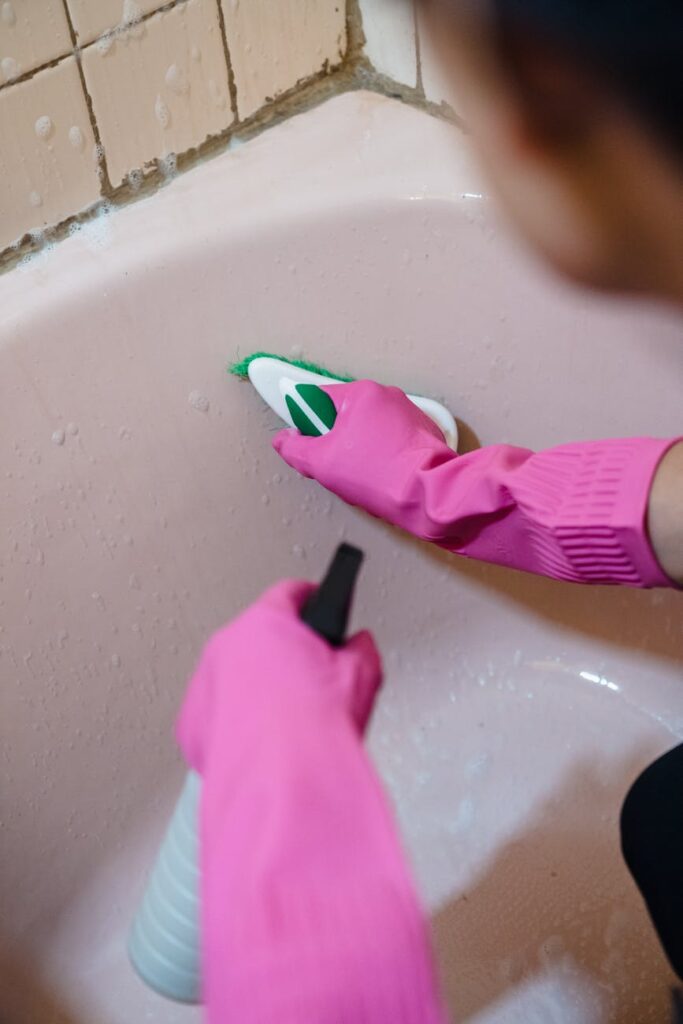
Using a soft scrub brush or sponge, gently scrub the stained area. Focus on corners and edges where soap scum tends to accumulate.
Step 5: Rinse Thoroughly
Rinse the area with warm water to remove any residue from the cleaning solution. Make sure to check that all soap scum is gone.
Step 6: Dry the Area
Use a microfiber cloth to dry the surface completely. This step helps prevent new stains from forming.
Best Cleaning Methods
1. Vinegar and Baking Soda
This combination is effective due to the acidic properties of vinegar, which dissolve minerals, and the abrasive nature of baking soda, which helps scrub away residue.
2. Commercial Cleaners
For tough stains, consider using commercial soap scum removers. Follow the manufacturer’s instructions for best results.
3. Homemade Paste
Make a paste using baking soda and water. Apply it to the stained area, let it sit, then scrub and rinse.
4. Steam Cleaning
For a chemical-free option, use a steam cleaner. The high temperature will loosen soap scum and make it easier to wipe away.
Common Mistakes to Avoid
1. Using Abrasive Cleaners: Avoid using steel wool or harsh scrubbing pads as they can scratch surfaces.
2. Ignoring Hard Water: If you have hard water, consider installing a water softener to reduce mineral buildup.
3. Not Rinsing Properly: Always rinse thoroughly after cleaning to prevent residue from attracting more dirt.
4. Overusing Soap: Use an appropriate amount of soap to reduce scum buildup in the first place.
5. Neglecting Regular Cleaning: Establish a cleaning routine to prevent stains from becoming entrenched.
Prevention Tips
1. Squeegee After Use: Keep a squeegee in the shower and use it after each shower to remove excess water.
2. Use Liquid Soap: Opt for liquid soaps instead of bar soaps to minimize scum formation.
3. Install a Water Softener: If you have hard water, a water softener can significantly reduce mineral deposits.
4. Clean Regularly: Set a schedule for cleaning your bathroom and kitchen surfaces at least once a week.
5. Wipe Down Surfaces: After each use, quickly wipe down surfaces with a dry cloth to remove any residual moisture.
Frequently Asked Questions
1. Can I use bleach to remove soap scum stains?
Bleach is not recommended for soap scum, as it can react with other cleaning products and may not effectively remove the residue. Stick to vinegar or baking soda for safer options.
2. How often should I clean soap scum stains?
Aim to clean areas prone to soap scum at least once a week. This prevents buildup and makes cleaning easier.
3. Are there any natural alternatives to commercial cleaners?
Yes, vinegar, baking soda, and lemon juice are excellent natural alternatives for cleaning soap scum stains.
4. Can I prevent soap scum stains completely?
While you may not eliminate soap scum entirely, regular cleaning and maintenance can significantly reduce its occurrence.
5. What surfaces are most affected by soap scum?
Showers, bathtubs, sinks, and glass surfaces are the most commonly affected by soap scum stains.
6. Is it safe to use vinegar on all surfaces?
Vinegar is safe for most surfaces, but avoid using it on natural stone, such as granite or marble, as it can cause damage.
By following these guidelines, you can effectively tackle soap scum stains and maintain a clean, welcoming home. Stay proactive in your cleaning routine, and you’ll enjoy a sparkling space free from unsightly stains.