
Smelly Dish Sponge Stains Guide Part 1
Introduction
A smelly dish sponge is not just unpleasant; it can also harbor bacteria, leading to stains and odors that can linger in your kitchen. Understanding how these stains occur and how to effectively clean them can help you maintain a fresh and hygienic kitchen environment. This guide will provide you with practical solutions for dealing with stains on smelly dish sponges, ensuring your cleaning routine is both effective and straightforward.
What Causes Stains?
Stains on dish sponges typically result from food particles, grease, and bacteria buildup. Here are the main contributors:
1. Food Residue: Leftover food can cling to the sponge, leading to discoloration and odors.
2. Grease: Cooking oils and fats can seep into the sponge, creating dark stains that are hard to remove.
3. Bacterial Growth: Sponges are a breeding ground for bacteria, especially when they remain damp and used frequently.
4. Mold and Mildew: If sponges are stored in a damp environment, mold can develop, causing both stains and unpleasant odors.
Why This Problem Happens
The sponge’s porous nature makes it susceptible to absorbing food particles and moisture. When sponges are not dried properly, they become a cozy habitat for bacteria and mold. The combination of leftover food, moisture, and warmth creates an ideal environment for staining and odors to flourish.
How to Fix Stains (Step-by-Step)
Cleaning a stained sponge is straightforward. Follow these steps for effective results:
Step 1: Rinse the Sponge
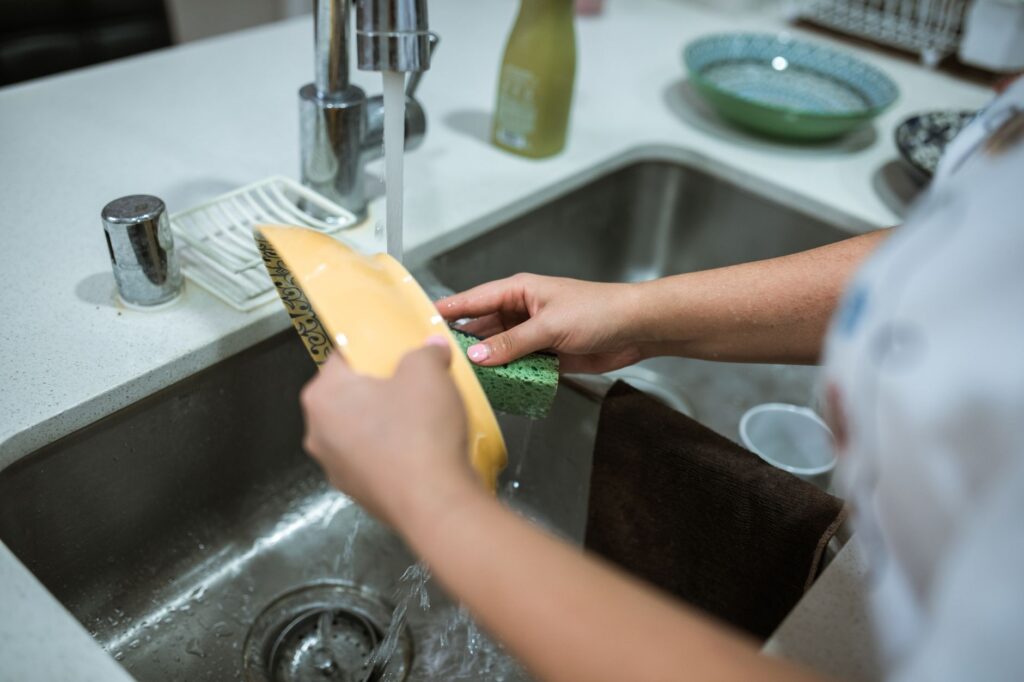
- Action: Hold the sponge under warm running water to remove any loose food particles.
- Why: This initial rinse helps to clear away surface debris, making it easier to treat the stains.
- Action: Mix equal parts white vinegar and water in a bowl. Submerge the sponge in the solution for 5-10 minutes.
- Why: Vinegar is a natural disinfectant that helps break down grease and kill bacteria.
- Action: Sprinkle a tablespoon of baking soda onto the sponge and scrub it gently.
- Why: Baking soda acts as a mild abrasive, helping to lift stains without damaging the sponge.
- Action: Rinse the sponge under warm water again, ensuring all vinegar and baking soda residue is removed.
- Why: This step ensures that no cleaning agents remain, which could affect the sponge’s performance.
- Action: Squeeze out excess water and place the sponge in a well-ventilated area to dry.
- Why: Proper drying prevents mold and bacteria from returning, keeping your sponge fresh for longer.
- How to Use: Wet the sponge and place it in the microwave for 1-2 minutes (ensure it’s microwave-safe).
- Why: The heat kills bacteria and removes odors. Ensure the sponge is damp to avoid fire hazards.
- How to Use: Place the sponge on the top rack of your dishwasher during a cycle.
- Why: The high heat and detergent from the dishwasher clean and disinfect the sponge thoroughly.
- How to Use: Mix one tablespoon of bleach in a quart of water. Soak the sponge for 5 minutes, then rinse.
- Why: Bleach is effective at killing bacteria and removing tough stains. Use with caution and ensure proper ventilation.
- How to Use: Add a few drops of tea tree or lavender oil to your sponge after cleaning.
- Why: These oils have natural antibacterial properties and can help keep your sponge smelling fresh.
Step 2: Soak in Vinegar Solution
Step 3: Scrub with Baking Soda
Step 4: Rinse Thoroughly
Step 5: Dry Completely
Best Cleaning Methods
Here are some effective methods for cleaning and maintaining your dish sponge:
1. Microwave Method
2. Dishwasher Method
3. Bleach Solution
4. Essential Oils
Common Mistakes to Avoid
1. Not Rinsing Completely: Leaving cleaning agents on the sponge can lead to skin irritation or diminish cleaning performance.
2. Using a Dirty Sponge: Cleaning with a sponge that is stained and smelly can spread bacteria instead of cleaning.
3. Storing in a Sealed Container: This traps moisture, promoting mold growth. Always allow sponges to air dry.
4. Neglecting Regular Cleaning: Failing to clean sponges regularly can lead to persistent odors and stains.
Prevention Tips
1. Change Sponges Regularly: Consider replacing your sponge every few weeks to prevent stains and odors from developing.
2. Use Two Sponges: Designate one sponge for dishes and another for surfaces to minimize cross-contamination.
3. Air Dry After Use: Always rinse and place the sponge in an area with good airflow to help it dry completely.
4. Avoid Soaking in Water: Don’t leave sponges in stagnant water; this encourages mold and bacterial growth.
Frequently Asked Questions
1. How often should I replace my dish sponge?
It’s recommended to replace your dish sponge every 2-4 weeks, depending on usage.
2. Can I use a smelly sponge after cleaning it?
While you can clean a smelly sponge, if the odor persists or if the sponge is heavily stained, it’s best to replace it.
3. What is the best way to store a sponge?
Store your sponge in a dry area, preferably in a holder that allows air circulation to prevent moisture buildup.
4. Can I wash sponges in hot water?
Yes, washing sponges in hot water can help kill bacteria, but make sure to follow up with a thorough rinse.
5. Are all cleaning methods safe for dish sponges?
Most methods are safe, but always check the sponge material before using bleach or heat-based cleaning.
6. How can I tell if my sponge is too dirty to clean?
If your sponge has persistent odors, visible mold, or significant stains that don’t come out, it’s time to replace it.
By following this guide, you can effectively manage smelly dish sponge stains, ensuring a clean and hygienic kitchen environment. Stay tuned for more tips in Part 2!