
Sink Odor Removal Stains Guide Part 1
Introduction
Stains in your sink can be more than just an unsightly nuisance; they often contribute to unpleasant odors that linger in your kitchen or bathroom. Whether it’s from food particles, soap scum, or mineral deposits, understanding how to tackle these stains effectively is essential for maintaining a fresh-smelling and clean sink. In this guide, we’ll delve into the causes of these stains, how to remove them step-by-step, and tips for preventing them in the future.
What Causes Stains?
Stains in sinks can arise from various sources, including:
1. Food Residue: Scraps left behind after washing dishes can lead to staining and odors.
2. Soap Scum: A build-up of soap can create a sticky film that traps grime.
3. Mineral Deposits: Hard water can leave behind calcium and lime deposits, resulting in unsightly stains.
4. Mold and Mildew: In damp conditions, mold and mildew can thrive, leading to dark stains and odors.
5. Rust: Metal fixtures can rust over time, leaving reddish-brown stains.
Understanding the source of the stains is the first step in effectively removing them.
Why This Problem Happens
Stains and odors in your sink often occur due to neglect or improper cleaning routines. Here are some reasons these problems arise:
- Infrequent Cleaning: Regular cleaning prevents build-up. If you only clean your sink occasionally, stains will accumulate.
- Wrong Cleaning Products: Using the wrong products can exacerbate stains instead of removing them.
- Water Quality: Hard water can lead to mineral build-up over time, increasing the likelihood of stains.
- Poor Ventilation: In bathrooms, lack of airflow can contribute to mold growth, leading to dark stains and odors.
- Baking soda
- White vinegar
- Dish soap
- Scrub brush or sponge
- Microfiber cloth
- Lemon (optional for fresh scent)
- Using Abrasive Cleaners: Avoid cleaning products that contain harsh chemicals or abrasives, as they can scratch and damage your sink.
- Neglecting Drains: Stains can often originate from the drain itself. Make sure to clean it regularly to prevent odors.
- Not Rinsing Properly: Leaving cleaning solutions in the sink can lead to further staining and unpleasant odors.
- Ignoring Regular Maintenance: Cleaning your sink only when you notice stains can lead to larger problems down the line.
Understanding these factors can help you address the root causes effectively.
How to Fix Stains (Step-by-Step)
Step 1: Gather Your Supplies
Before you start, make sure you have the following cleaning supplies:
Step 2: Initial Rinse
Begin by rinsing the sink with warm water to remove any loose debris. This will make the cleaning process more effective.
Step 3: Apply Baking Soda
Sprinkle a generous amount of baking soda over the stained areas. Baking soda is a natural abrasive that helps lift stains without scratching your sink.
Step 4: Add Vinegar
Pour white vinegar over the baking soda. This will create a fizzing reaction that helps break down stains and odors. Let it sit for about 10-15 minutes.
Step 5: Scrub
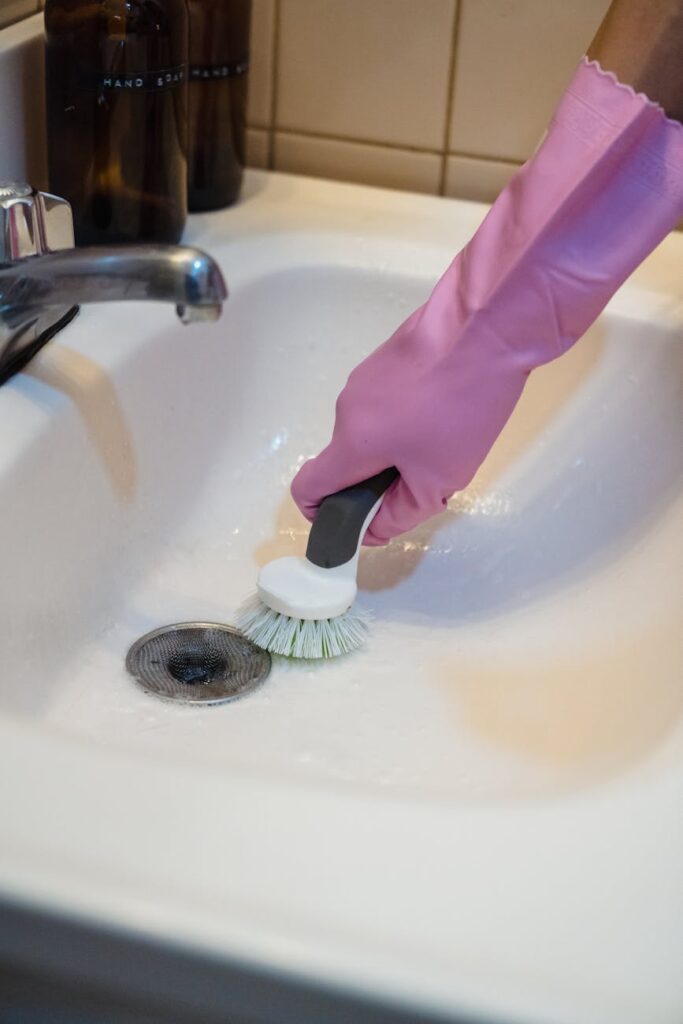
Using a scrub brush or sponge, gently scrub the sink in circular motions. Focus on stained areas, but be careful not to scratch the surface.
Step 6: Rinse Again
Rinse the sink thoroughly with warm water to wash away the baking soda and vinegar mixture, along with the loosened stains.
Step 7: Dry and Polish
Use a microfiber cloth to dry the sink, which helps prevent water spots. If desired, you can add lemon juice to the cloth for a fresh scent.
Best Cleaning Methods
Baking Soda and Vinegar
This classic combination is highly effective for breaking down stains and odors. It’s environmentally friendly and safe for most sink materials.
Dish Soap Solution
For greasy stains, a mixture of dish soap and warm water can work wonders. Simply mix a few drops of dish soap with warm water, apply it to the stained area, and scrub.
Commercial Cleaners
If natural methods don’t work, consider using a commercial cleaner specifically designed for your sink material. Always follow the manufacturer’s instructions and do a patch test in a hidden area first.
Common Mistakes to Avoid
Prevention Tips
1. Regular Cleaning: Clean your sink daily or after heavy use to prevent build-up.
2. Use a Drain Cover: A drain cover can catch food scraps and prevent them from causing stains.
3. Rinse Thoroughly: Always rinse your sink after washing dishes to remove soap and food particles.
4. Improve Ventilation: Ensure good airflow in bathrooms to reduce mold and mildew growth.
5. Soft Water Systems: Consider a water softener to reduce hard water deposits.
Frequently Asked Questions
1. How often should I clean my sink to prevent stains?
Aim for daily cleaning to prevent build-up. A thorough cleaning once a week should suffice for most households.
2. Can I use bleach to remove stains?
While bleach can remove some stains, it can also damage certain sink materials. It’s best to use natural cleaners first.
3. How do I remove stubborn stains?
For stubborn stains, you may need to let the baking soda and vinegar mixture sit longer, or try a commercial cleaner.
4. What if my sink has a persistent odor?
Persistent odors may be due to a clogged drain. Consider using a drain cleaner or calling a plumber if the problem persists.
5. Is it safe to use vinegar on all sink materials?
Vinegar is generally safe for stainless steel and glass. However, avoid using it on natural stone surfaces like granite or marble.
6. How can I maintain a fresh-smelling sink?
Regularly cleaning and using lemon juice or essential oils can help maintain a fresh scent in your sink.
By following these guidelines, you’ll be well on your way to maintaining a clean, odor-free sink. Stay tuned for Part 2, where we will cover advanced techniques and solutions for tough stains!