
Shower Mildew Removal Stains Guide Part 1
Introduction
Shower mildew stains can be a persistent nuisance for homeowners. Not only do they look unsightly, but they can also contribute to unpleasant odors and potential health issues. Understanding how to effectively remove these stains can help maintain a clean and hygienic bathroom. This guide will provide you with practical solutions to tackle shower mildew stains and keep your bathroom looking fresh.
What Causes Stains?
Shower mildew stains primarily stem from two sources: moisture and organic material.
1. Moisture: Showers create a humid environment, which is ideal for mildew growth. When water evaporates, it can leave behind soap scum and other residues.
2. Organic Material: Skin cells, soap, shampoo, and other products can accumulate in the shower. These substances can provide the necessary nutrients for mildew to thrive, leading to stubborn stains.
Why This Problem Happens
Mildew thrives in damp, warm environments, making the shower an ideal breeding ground. Factors contributing to persistent stains include:
- Poor Ventilation: Inadequate airflow can trap moisture, allowing mildew to flourish.
- Neglect: Infrequent cleaning can lead to buildups of soap scum and mildew.
- Temperature Fluctuations: Rapid changes in temperature can cause condensation, adding to moisture levels.
- Protective Gear: Gloves and a mask.
- Cleaning Solutions: Vinegar, baking soda, or commercial mildew removers.
- Scrubbing Tools: A scrub brush or sponge.
- Spray Bottle: For easier application of cleaning solutions.
Understanding these factors is crucial for effective mildew stain removal and prevention.
How to Fix Stains (Step-by-Step)
Step 1: Gather Your Supplies
Before starting, gather the following supplies:
Step 2: Ventilate the Area
Open windows or turn on the exhaust fan to improve airflow. This will help reduce moisture and make cleaning more effective.
Step 3: Apply Cleaning Solution
1. For Vinegar Solution: Fill a spray bottle with white vinegar. Spray the affected areas generously.
2. For Baking Soda Paste: Mix baking soda with water to create a thick paste. Apply this mixture to the stained areas.
3. For Commercial Cleaners: Follow the manufacturer’s instructions for application.
Step 4: Let It Sit
Allow the solution to sit for at least 10-15 minutes. This will give it time to penetrate and break down the mildew stains.
Step 5: Scrub the Area
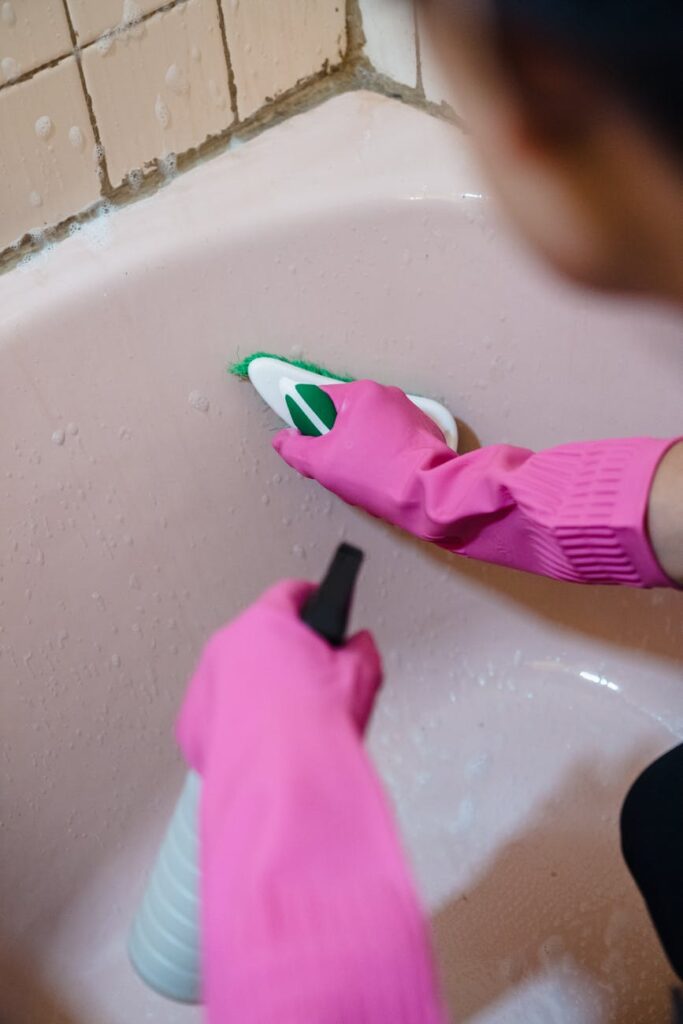
Using a scrub brush or sponge, scrub the stained areas vigorously. Focus on corners and crevices where mildew tends to accumulate.
Step 6: Rinse Thoroughly
Rinse the area with warm water to remove the cleaning solution and any loosened stains. Ensure all residue is washed away.
Step 7: Dry the Area
Use a towel to dry the shower surfaces. This helps prevent future mildew growth by reducing moisture.
Best Cleaning Methods
Different cleaning methods can be effective for mildew stains. Here are some of the best options:
1. Vinegar
Vinegar is a natural mildew remover. Its acidity helps break down mildew and soap scum.
2. Baking Soda
Baking soda is a gentle abrasive that can help scrub away stains while neutralizing odors.
3. Hydrogen Peroxide
This powerful disinfectant can be effective against mildew. Use it in a 3% solution for safe application on surfaces.
4. Commercial Cleaners
If natural remedies don’t work, consider using a commercial mildew remover. Look for products specifically designed for bathroom use.
Common Mistakes to Avoid
1. Not Testing Cleaners: Always test a small, inconspicuous area first to avoid damaging surfaces.
2. Using Too Much Water: Excess water can promote mildew growth. Use cleaning solutions sparingly.
3. Ignoring Ventilation: Neglecting to ventilate can lead to recurring problems. Always ensure proper airflow during and after cleaning.
4. Skipping Regular Maintenance: Regular cleaning is essential. Neglecting this can lead to tougher stains over time.
Prevention Tips
Preventing mildew stains is easier than removing them. Here are some effective strategies:
1. Improve Ventilation: Use exhaust fans during and after showers to reduce humidity. Open windows if possible.
2. Wipe Down Surfaces: After each shower, use a squeegee or towel to wipe down walls and the shower floor.
3. Use Mildew-Resistant Products: Consider mildew-resistant shower curtains, caulk, and paints.
4. Regular Cleaning: Establish a regular cleaning schedule to keep mildew at bay. Aim to clean your shower at least once a week.
5. Keep the Shower Dry: If possible, keep the shower door open to allow moisture to escape.
Frequently Asked Questions
1. How often should I clean my shower to prevent mildew?
Aim to clean your shower at least once a week to keep mildew at bay.
2. Can I use bleach to remove mildew stains?
While bleach can be effective, it can also damage surfaces and emit harmful fumes. Consider using milder alternatives first.
3. What if the stains persist after cleaning?
If stains persist, consider using a more potent commercial mildew remover or consult a professional cleaning service.
4. Is it safe to mix vinegar and baking soda?
Yes, but be cautious. Mixing them creates a fizzy reaction that can be messy. It’s best to use them separately for cleaning.
5. How can I prevent mildew in a poorly ventilated bathroom?
Use a dehumidifier to reduce moisture levels and consider installing an exhaust fan if possible.
6. Are there natural alternatives to commercial cleaners?
Yes, vinegar, baking soda, and hydrogen peroxide are effective natural alternatives for mildew removal.
—
By following the information in this guide, you’ll be well-equipped to tackle mildew stains in your shower. Stay tuned for Part 2, where we’ll delve deeper into advanced techniques and solutions for stubborn stains!