
Shower Head Mold Stains Guide Part 1
Introduction
Mold stains on shower heads are not just unsightly; they can also affect water quality and pressure. If you’ve noticed black or green spots on your shower head, you’re not alone. Many homeowners face this issue, but the good news is that it can be tackled effectively. This guide will provide you with straightforward, actionable steps to identify, clean, and prevent mold stains on your shower head.
What Causes Stains?
Mold stains on shower heads are primarily caused by moisture and lack of proper ventilation. Here are the main contributors:
- Humidity: Bathrooms are naturally humid environments, especially after showers. This moisture creates an ideal breeding ground for mold and mildew.
- Mineral Buildup: Hard water can leave mineral deposits that provide a surface for mold to thrive.
- Organic Material: Soap scum and hair products can accumulate over time, offering nutrition to mold spores.
- Poor Ventilation: Bathrooms without adequate airflow can trap humidity, exacerbating mold growth.
- White vinegar or a commercial mold remover
- Baking soda (optional)
- A small brush (like an old toothbrush)
- A spray bottle
- Gloves (optional)
- A microfiber cloth or sponge
- Commercial Mold Removers: These can be effective for tough stains but should be used with caution. Always follow the manufacturer’s instructions.
- Baking Soda Paste: Mix baking soda with water to form a paste. Apply it to the stains and let it sit before scrubbing.
- Hydrogen Peroxide: This is a strong antimicrobial solution that can also help remove mold stains. Mix it with water in a spray bottle and follow the same application process as vinegar.
- Install a Dehumidifier: If your bathroom tends to be particularly humid, a dehumidifier can help reduce moisture levels.
- Ventilation: Always use an exhaust fan during and after showers to reduce humidity. If you don’t have one, consider opening a window.
- Regular Cleaning: Incorporate shower head cleaning into your regular cleaning routine to prevent buildup.
- Wipe Down After Use: A quick wipe with a towel after each shower can help reduce moisture.
- Use a Shower Spray: Consider using a daily shower spray to help prevent soap scum and mildew buildup.
Why This Problem Happens
Understanding why mold stains occur can help you tackle the problem more effectively. The combination of heat and moisture in your bathroom creates a perfect environment for mold spores to settle and multiply.
Additionally, if your shower head has not been cleaned regularly, it can accumulate mineral deposits and other organic materials. These deposits act as a food source for mold, making it easier for them to take hold.
Neglecting routine cleaning can lead to a significant buildup of mold stains, which can become increasingly difficult to remove over time.
How to Fix Stains (Step-by-Step)
Cleaning mold stains from your shower head is a straightforward process. Follow these steps for effective results:
Step 1: Gather Your Supplies
Step 2: Prepare the Cleaning Solution
If you’re using white vinegar, pour it into a spray bottle. For tougher stains, mix equal parts of vinegar and water. You can also sprinkle baking soda directly onto the stains for extra scrubbing power.
Step 3: Apply the Solution
Spray the vinegar solution generously onto the stained areas of the shower head. If using baking soda, sprinkle it over the damp areas.
Step 4: Let It Sit
Allow the solution to sit for at least 15-30 minutes. This waiting period helps the cleaning agents break down the mold and stains.
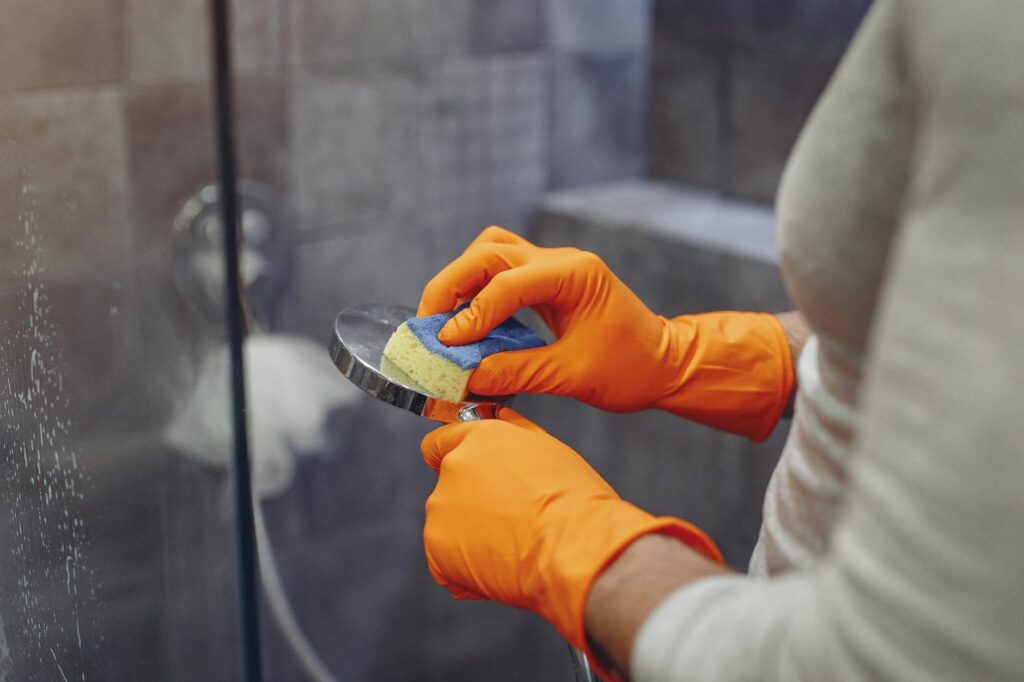
Step 5: Scrub the Stains
Using your small brush, scrub the stained areas gently. Focus on crevices and nozzles where mold tends to accumulate.
Step 6: Rinse Thoroughly
Rinse the shower head with warm water to remove any cleaning solution and loosened mold.
Step 7: Dry the Shower Head
Use a microfiber cloth to dry the shower head completely, preventing future moisture buildup.
Best Cleaning Methods
While vinegar is an effective and natural option, there are other methods you can consider:
Common Mistakes to Avoid
1. Ignoring Regular Maintenance: Neglecting to clean your shower head regularly can lead to stubborn mold stains. Aim for bi-weekly cleaning.
2. Using Abrasive Cleaners: Avoid harsh chemicals and abrasive materials that can scratch your shower head’s surface.
3. Not Rinsing Thoroughly: Failing to rinse off cleaning solutions can lead to buildup and further staining.
4. Overlooking the Nozzles: Mold often hides in the nozzles of the shower head. Make sure to scrub these areas well.
5. Using Hot Water: While warm water is effective, boiling water can damage certain shower head materials.
Prevention Tips
Preventing mold stains is often easier than dealing with them after they appear. Here are some tips to keep your shower head clean:
Frequently Asked Questions
1. How often should I clean my shower head?
Aim to clean your shower head every two weeks to prevent mold and mineral buildup.
2. Can I use bleach to clean my shower head?
While bleach can kill mold, it can also damage certain finishes. It’s best to use vinegar or a commercial mold remover specifically designed for bathroom use.
3. What if my shower head has persistent stains?
If stains persist after cleaning, consider soaking the shower head in a vinegar solution overnight before scrubbing again.
4. Is it safe to use vinegar on all types of shower heads?
Most shower heads are safe for vinegar cleaning, but check the manufacturer’s guidelines if you’re unsure.
5. How do I remove mineral deposits from my shower head?
Soaking your shower head in a vinegar solution for 15-30 minutes will help dissolve mineral deposits.
6. Can I use a toothbrush to clean my shower head?
Yes, an old toothbrush is perfect for scrubbing small crevices and nozzles effectively.
By following these steps and tips, you can effectively manage and prevent mold stains on your shower head, keeping your bathroom clean and fresh. Stay tuned for Part 2, where we’ll delve deeper into long-term solutions and advanced cleaning techniques!