
Shower Head Mold: Mould & Damp Guide Part 1
Introduction
Mould and dampness can be a persistent issue in bathrooms, particularly on shower heads. This not only affects the aesthetics of your shower but can also lead to hygiene concerns. In this guide, we’ll explore the causes of mould and damp, how to effectively tackle the problem, and provide you with practical tips to maintain a clean shower head.
What Causes Mould & Damp?
Mould thrives in damp environments, and shower heads are no exception. Several factors contribute to mould growth in this area:
- High Humidity: Bathrooms are naturally humid spaces. After a hot shower, moisture lingers in the air, promoting mould growth.
- Poor Ventilation: Insufficient airflow allows moisture to accumulate, increasing damp conditions.
- Water Stagnation: If water collects in the shower head, it creates a breeding ground for mould.
- Mineral Deposits: Hard water can leave mineral deposits that trap moisture and provide a surface for mould to grow.
- White vinegar or lemon juice
- Baking soda (optional)
- A plastic bag or bowl
- An old toothbrush or soft scrub brush
- Clean cloths or paper towels
- For removable heads: Fill a bowl or plastic bag with white vinegar. Submerge the shower head and let it soak for at least 30 minutes. If you have stubborn mould, consider adding baking soda to the vinegar.
- For non-removable heads: Fill a plastic bag with vinegar and secure it around the shower head. Let it soak for 30 minutes.
- Using Abrasive Cleaners: They can scratch the surface and make it easier for mould to adhere.
- Neglecting Regular Maintenance: Cleaning only when you notice mould allows it to become a bigger problem.
- Ignoring Ventilation: Failing to improve bathroom ventilation can exacerbate dampness.
- Not Rinsing Thoroughly: Residue from cleaning products can attract more dirt and mould.
Why This Problem Happens
Understanding why mould and damp occur on shower heads is crucial for prevention:
1. Infrequent Cleaning: Many homeowners neglect regular cleaning of their shower heads, allowing mould to take root.
2. Water Quality: High mineral content in water can create a rough surface where mould can cling.
3. Temperature Fluctuations: Sudden changes in temperature can create condensation, leading to dampness.
4. Neglected Seals and Fixtures: Worn-out seals can lead to leaks, increasing moisture levels.
How to Fix Mould & Damp (Step-by-Step)
If you discover mould on your shower head, addressing it promptly is essential. Follow these steps to effectively clean your shower head:
Step 1: Gather Your Supplies
Step 2: Remove the Shower Head
If possible, detach the shower head from the pipe. This makes cleaning more thorough. If you can’t remove it, proceed to the next step.
Step 3: Soak in Vinegar
Step 4: Scrub Away Mould
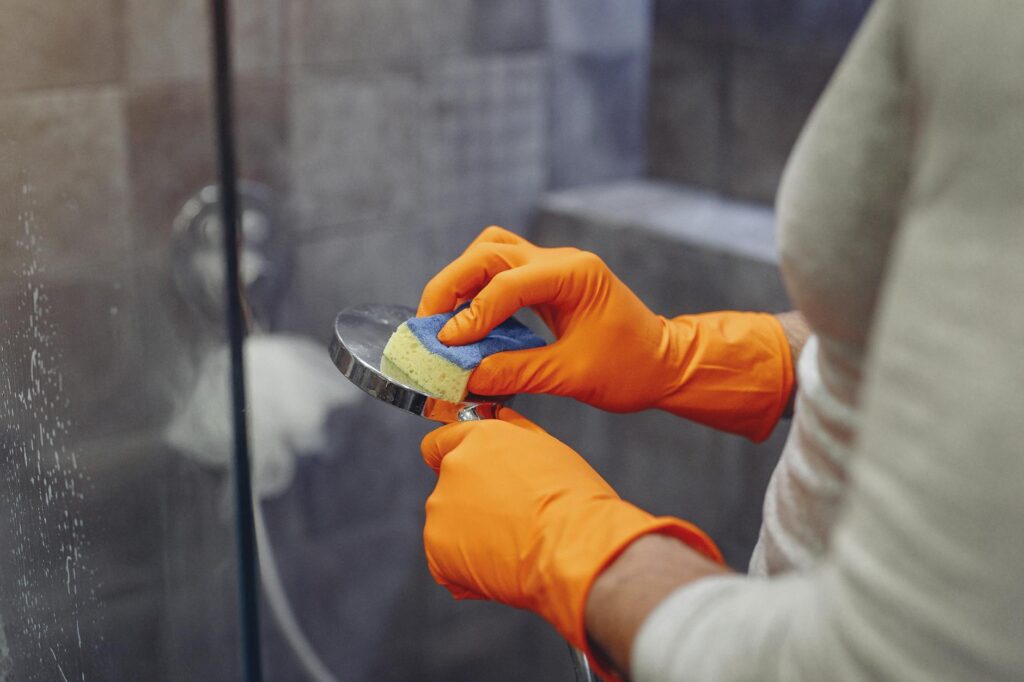
After soaking, use an old toothbrush or soft brush to scrub the shower head. Focus on areas with visible mould. Rinse thoroughly under hot water.
Step 5: Reattach and Rinse
If you removed the shower head, reattach it. Turn on the shower at high pressure for a few minutes to flush out any remaining vinegar and debris.
Step 6: Dry Thoroughly
Wipe down the shower head with a clean cloth to remove any excess moisture, preventing further mould growth.
Best Cleaning Methods
For ongoing maintenance, consider these effective cleaning methods:
1. Vinegar and Baking Soda
Combine equal parts vinegar and baking soda to create a paste. Apply it to the shower head, let it sit for 15 minutes, and scrub before rinsing.
2. Hydrogen Peroxide
Use a mixture of hydrogen peroxide and water (1:1 ratio) to disinfect and remove mould. Apply it with a spray bottle, let it sit for 10 minutes, and rinse.
3. Commercial Cleaners
If you prefer store-bought solutions, look for mould and mildew removers specifically designed for bathroom use. Follow the manufacturer’s instructions carefully.
Common Mistakes to Avoid
When tackling mould and damp on shower heads, avoid these common pitfalls:
Prevention Tips
To keep your shower head mould-free, implement these preventive measures:
1. Improve Ventilation
Ensure your bathroom has adequate airflow. Open windows or use an exhaust fan during and after showers to reduce moisture.
2. Wipe Down Surfaces
After each shower, use a squeegee or cloth to wipe down the shower head and walls. This helps eliminate excess moisture.
3. Regular Cleaning Schedule
Establish a routine for cleaning your shower head. Aim for every two weeks to prevent mould build-up.
4. Use a Water Softener
If hard water is an issue, consider installing a water softener to reduce mineral deposits that trap moisture.
Frequently Asked Questions
1. How often should I clean my shower head?
Aim to clean your shower head every two weeks to prevent mould build-up.
2. Can I use bleach to clean my shower head?
Bleach is not recommended as it can damage the finish and cause discolouration.
3. What if my shower head has severe mould?
For severe cases, you may need to soak it longer or consider replacing it if cleaning fails.
4. Is vinegar safe for all types of shower heads?
Most shower heads are safe with vinegar, but check the manufacturer’s guidelines for specific materials.
5. How can I tell if my shower head needs cleaning?
If you notice a musty smell, visible mould, or reduced water flow, it’s time to clean.
6. What else can I do to prevent mould in my bathroom?
In addition to cleaning, ensure good ventilation, use mould-resistant paints, and keep surfaces dry.
By following this guide, you’ll be well-equipped to tackle mould and damp issues on your shower head, ensuring a clean and hygienic showering experience. Stay tuned for Part 2, where we’ll dive deeper into advanced cleaning techniques and product recommendations.