
Oven Smoke Odor Kitchen Guide Part 1
Introduction
If you’ve ever opened your oven only to be met with an unpleasant smoke odor, you’re not alone. This common issue can linger long after you’ve finished cooking, making your kitchen less inviting. Fortunately, understanding the causes of oven smoke odors and learning how to eliminate them can make a significant difference. In this guide, we will explore the underlying reasons for these odors, provide actionable steps to fix them, and share tips to prevent them from returning.
What Causes Kitchen Smoke Odor?
Oven smoke odor can arise from several sources:
1. Food Residue: Burnt food particles left on oven surfaces can emit a smoke-like smell.
2. Spills: Grease and other spills that are not cleaned promptly can smoke when the oven is heated.
3. Old Oven: An aging oven may have accumulated grime that becomes problematic over time.
4. Self-Cleaning Cycle: If the self-cleaning feature is used incorrectly, it can cause smoke due to excessive residue burning off.
5. Electrical Issues: Faulty wiring or components can also produce odors that mimic smoke.
Understanding the cause will help you choose the right cleaning method.
Why This Problem Happens
Oven smoke odors typically occur due to a combination of heat and residue. When you cook, food particles can splatter onto the oven walls or bottom. If these particles are not cleaned, they can burn when the oven is heated again, releasing smoke and odors.
Additionally, grease build-up can lead to more significant issues. When heated, the grease can produce not only unpleasant smells but also smoke, which can affect the flavor of your food. Older ovens tend to accumulate more grime, making them more susceptible to these issues.
How to Fix Kitchen (Step-by-Step)
Step 1: Gather Your Supplies
Before you start cleaning, gather the following:
- Baking soda
- White vinegar
- Sponge or cleaning cloth
- Scraper (plastic recommended)
- Spray bottle
- Warm water
- Dish soap
- Gloves (optional)
- Baking Soda and Vinegar: A powerful combination that neutralizes odors and cuts through grease.
- Dish Soap Solution: For regular maintenance, a simple solution of warm water and dish soap can help.
- Commercial Oven Cleaners: If the odor persists, consider using a commercial oven cleaner. Always follow the manufacturer’s instructions.
Step 2: Cool Down and Disconnect
Ensure the oven is cool and unplug it for safety. If you have a gas oven, turn off the gas supply.
Step 3: Remove Oven Racks
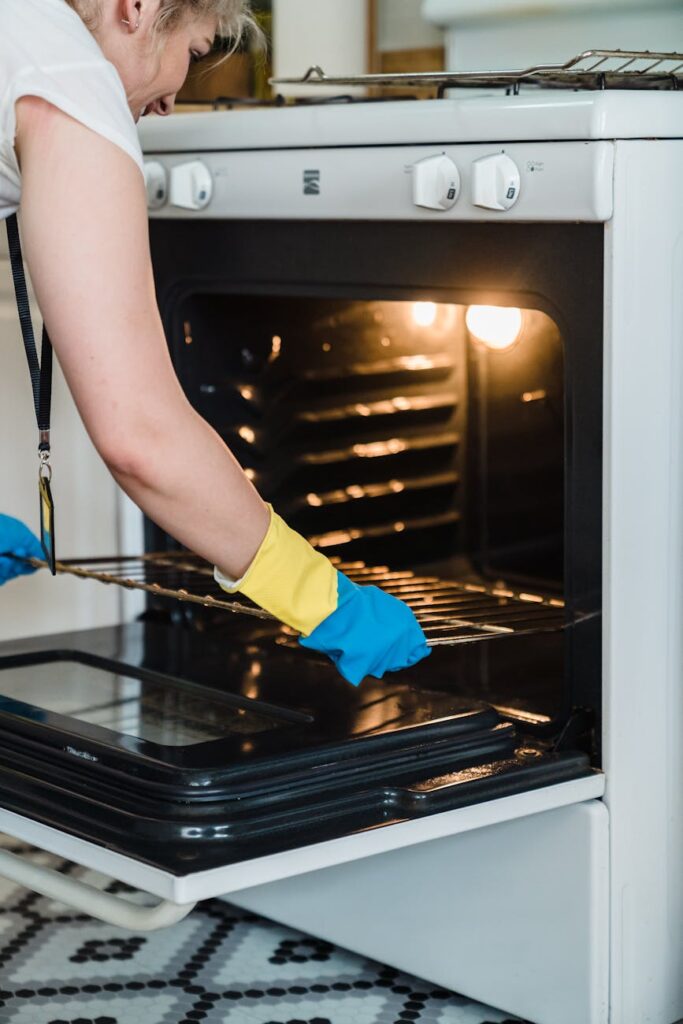
Take out the oven racks to give yourself better access to the oven’s interior. Clean the racks separately by soaking them in warm soapy water.
Step 4: Make a Cleaning Paste
Combine equal parts baking soda and water to create a paste. This will help break down built-up grime without scratching surfaces.
Step 5: Apply the Paste
Spread the baking soda paste on the interior surfaces of the oven, focusing on areas with visible residue. Avoid applying it directly to heating elements.
Step 6: Let It Sit
Allow the paste to sit for at least 12 hours, or overnight if possible. This will give it time to break down the grime.
Step 7: Wipe Down
After the paste has set, use a damp sponge to wipe down the surfaces. For tough spots, use a scraper to gently remove residue.
Step 8: Rinse with Vinegar
Fill a spray bottle with white vinegar and spray it inside the oven. The vinegar will react with the baking soda, helping to lift any remaining grime.
Step 9: Final Wipe
Wipe down the oven with a clean cloth or sponge until all residue is gone. Make sure to wipe the oven door and the edges as well.
Step 10: Clean the Racks
Scrub the soaked oven racks, rinse, and dry them before replacing them in the oven.
Best Cleaning Methods
Common Mistakes to Avoid
1. Not Allowing the Paste to Sit: Rushing the cleaning process won’t effectively remove odors.
2. Using Metal Scrubbers: These can scratch the oven surfaces and damage the finish.
3. Neglecting the Oven Racks: These can also contribute to odors if not cleaned regularly.
4. Ignoring Ventilation: Ensure the kitchen is well-ventilated while cleaning to avoid inhaling fumes from cleaning products.
5. Failing to Check Heating Elements: Sometimes, the issue may lie with the heating elements themselves, which can also harbor residue.
Prevention Tips
1. Regular Cleaning: Clean your oven regularly, at least every few months, to prevent build-up.
2. Use a Drip Pan: Place a drip pan under the oven to catch spills before they hit the bottom.
3. Cover Dishes: When roasting or baking, use lids or foil to minimize splatter.
4. Immediate Cleanup: Clean up spills as soon as possible to prevent odors from developing.
5. Utilize Oven Liners: Consider using oven-safe liners to catch spills and reduce cleaning time.
Frequently Asked Questions
1. How often should I clean my oven?
Aim for a thorough cleaning every three months or after particularly messy meals.
2. Can I use bleach to clean my oven?
No, bleach is not recommended for ovens as it can create harmful fumes when heated.
3. What if the smoke odor persists after cleaning?
If odors persist, check for underlying issues such as faulty wiring or hidden residue.
4. Are commercial cleaners safe for all ovens?
Always check the label to ensure compatibility with your oven type.
5. Is it safe to use the self-cleaning feature?
Yes, but ensure that you remove excess residue before using it to avoid smoke.
6. Can I prevent smoke odors by adjusting my cooking methods?
Yes, using lower temperatures and covering dishes can significantly reduce smoke and odors.
—
By following the steps outlined in this guide, you can effectively tackle oven smoke odors and maintain a fresh-smelling kitchen. Stay tuned for Part 2, where we’ll explore advanced techniques and deeper cleaning strategies.