
Oven Smell Removal Stains Guide Part 2
Introduction
Oven smells can linger long after you’ve finished cooking, leaving behind unsightly stains and odors that can be challenging to eliminate. This guide will help you understand the causes behind these stains, why they occur, and how to effectively fix them. We’ll also cover the best cleaning methods, common mistakes to avoid, and tips for preventing future issues.
What Causes Stains?
Stains in your oven are often the result of spills, grease, and food particles that have burnt onto surfaces. Common culprits include:
- Spilled food: Sauces, oils, and juices can splatter during cooking.
- Grease buildup: Over time, cooking fats can accumulate and become sticky.
- Food residues: Items like cheese and sugar can caramelize and harden.
- Baking soda
- White vinegar
- Dish soap
- A spray bottle
- Soft cloths or sponges
- A scraper (plastic preferred)
- Water
- Baking Soda and Vinegar: This combination is effective for breaking down tough, burnt-on stains.
- Dish Soap Solution: For lighter stains, a mixture of warm water and dish soap can work wonders.
- Commercial Oven Cleaners: If natural methods fail, consider using a commercial cleaner designed for ovens. Always follow the manufacturer’s instructions.
- Using Steel Wool: Avoid abrasive scrubbers that can scratch the oven’s surface.
- Not Ventilating: Ensure proper ventilation when using commercial cleaners to avoid inhaling fumes.
- Ignoring Stains: Letting stains sit for too long can make them harder to remove.
- Clean Regularly: Wipe down your oven after each use to prevent buildup.
- Use a Baking Sheet: Place a baking sheet on the rack below items that may spill to catch drips.
- Monitor Cooking Temperatures: Avoid excessively high temperatures that can cause food to burn and stick.
These stains not only create unpleasant odors but can also affect the quality of your food.
Why This Problem Happens
Understanding why these stains occur helps in addressing them effectively:
1. High Temperatures: Cooking at high temperatures can cause spills and residues to burn onto oven surfaces.
2. Infrequent Cleaning: Regular use without adequate cleaning allows stains to build up over time.
3. Spillovers: Baking items, especially those that rise, can overflow and cause messes that lead to stains.
Recognizing these factors can help you take preventive measures in the future.
How to Fix Stains (Step-by-Step)
Step 1: Gather Your Supplies
You’ll need:
Step 2: Prepare the Oven
1. Turn Off and Cool Down: Ensure your oven is turned off and completely cool before cleaning.
2. Remove Racks: Take out any oven racks to make cleaning easier.
Step 3: Make a Cleaning Paste
1. Mix Baking Soda with Water: Combine 1/2 cup of baking soda with a few tablespoons of water until you form a paste.
2. Apply the Paste: Spread this paste over the stained areas of your oven, focusing on tough spots.
Step 4: Let it Sit
Allow the baking soda paste to sit for at least 30 minutes. This helps break down the stains.
Step 5: Spray with Vinegar
1. Vinegar in a Spray Bottle: Fill a spray bottle with white vinegar.
2. Spray the Paste: After 30 minutes, lightly spray the baking soda paste with vinegar. This will cause a fizzing reaction that helps lift the stains.
Step 6: Scrub the Stains
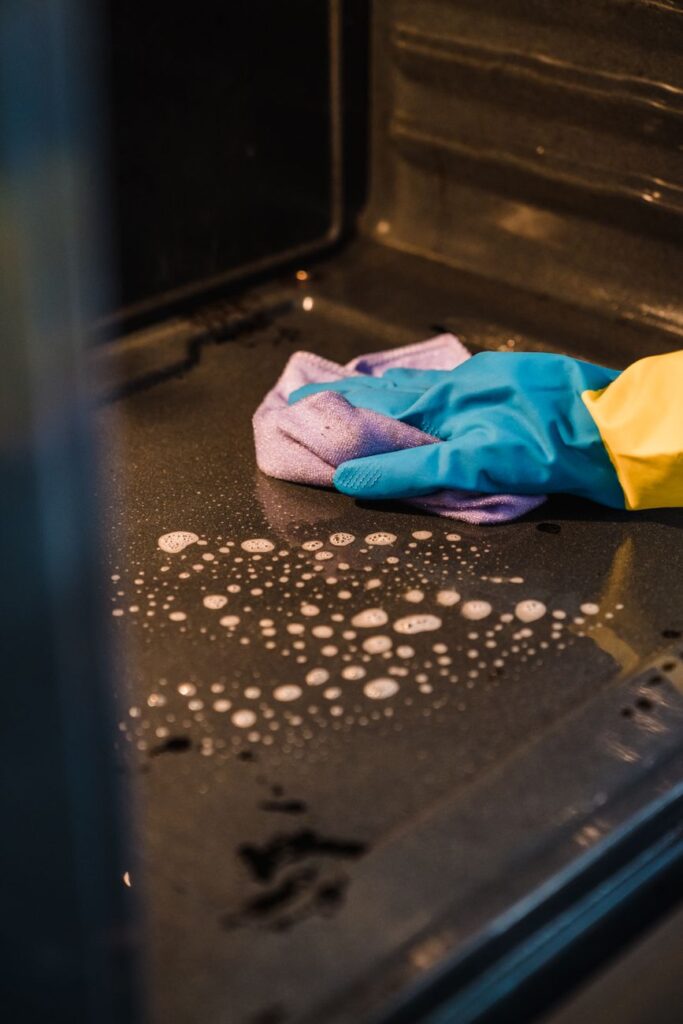
1. Use a Soft Cloth or Sponge: Gently scrub the stained areas using a soft cloth or sponge.
2. Scrape Tough Spots: For stubborn stains, use a plastic scraper to lift the residue without damaging the oven’s surface.
Step 7: Wipe Clean
1. Rinse with Water: Dampen a clean cloth with water and wipe off the baking soda and vinegar mixture.
2. Dry Thoroughly: Ensure that the oven is completely dry before using it again.
Best Cleaning Methods
Common Mistakes to Avoid
Prevention Tips
Frequently Asked Questions
1. How often should I clean my oven?
It’s best to clean your oven at least once every few months, or more frequently if you cook often.
2. Can I use vinegar alone to remove stains?
While vinegar is effective, pairing it with baking soda enhances its cleaning power for tough stains.
3. Is it safe to use commercial cleaners?
Yes, as long as you follow the instructions on the label. Ensure proper ventilation when using these products.
4. What if the stains are still visible after cleaning?
For persistent stains, repeat the baking soda and vinegar method or consider a specialized cleaning product.
5. Can I clean the oven while it’s still warm?
No, it’s important to let the oven cool completely to avoid burns and ensure effective cleaning.
6. Will this method work for self-cleaning ovens?
Self-cleaning ovens typically have a different cleaning process. Always refer to your owner’s manual for specific instructions.
Conclusion
Removing stains and odors from your oven doesn’t have to be a daunting task. By understanding the causes and employing effective cleaning methods, you can maintain a fresh and clean cooking environment. Regular upkeep, along with timely cleaning, will help prevent future stains and ensure your oven remains in top condition for all your culinary adventures.