
Oven Odor Removal: Mould & Damp Guide Part 2
Introduction
Ovens are essential kitchen appliances, but they can also become breeding grounds for mould and damp if not cleaned properly. This not only affects the appliance’s performance but can also lead to unpleasant odours that permeate your home. In this guide, we’ll delve into the causes of mould and damp in ovens, how to fix the issue, and tips for prevention.
What Causes Mould & Damp?
Mould and damp in your oven typically arise from:
1. Moisture Build-Up: Excess moisture from cooking, spills, or poorly sealed oven doors can create a humid environment.
2. Food Residue: Leftover food particles can trap moisture and create an ideal breeding ground for mould.
3. Poor Ventilation: Inadequate air circulation can prevent moisture from evaporating, leading to dampness.
4. Temperature Fluctuations: When the oven cools down after use, condensation can form, especially in humid climates.
Why This Problem Happens
Understanding why mould and damp develop in your oven is key to tackling the issue effectively.
- Infrequent Cleaning: If you don’t clean your oven regularly, food particles and moisture accumulate, fostering mould growth.
- Humidity: High humidity levels in your kitchen can exacerbate the problem.
- Temperature Changes: If the oven is turned off after cooking without proper drying, moisture can linger.
- Seals and Gaskets: Worn-out seals can allow moisture to enter the oven, contributing to damp conditions.
- White vinegar
- Baking soda
- Dish soap
- A sponge or scrub brush
- Microfiber cloths
- A spray bottle
- Gloves (optional)
How to Fix Mould & Damp (Step-by-Step)
Step 1: Gather Supplies
Before you start, gather the following cleaning supplies:
Step 2: Prepare the Oven
1. Turn Off the Oven: Ensure your oven is completely cool.
2. Remove Racks and Other Components: Take out any removable parts to make cleaning easier.
Step 3: Clean the Interior
1. Vinegar Solution: In a spray bottle, mix equal parts of white vinegar and water. Spray the entire interior of the oven, focusing on mouldy areas. Let it sit for 10-15 minutes.
2. Scrub: Use a sponge or scrub brush to scrub away mould. Baking soda can be sprinkled on tough spots for added abrasiveness.
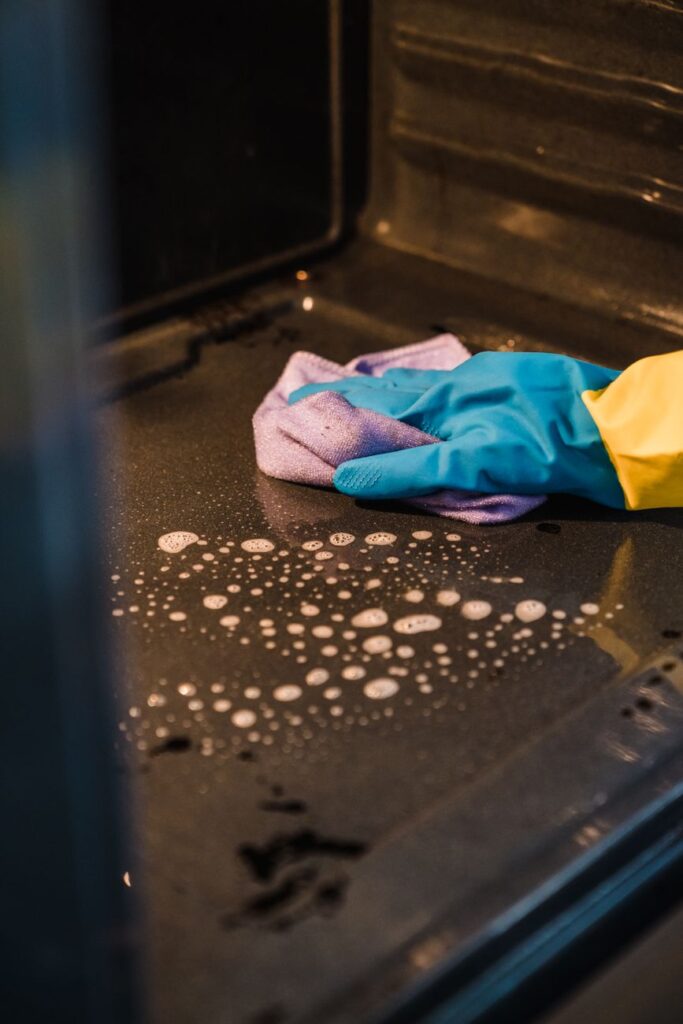
3. Wipe Down: Use a damp microfiber cloth to wipe down all surfaces, ensuring you remove all vinegar and mould residues.
Step 4: Clean Removable Parts
1. Soak Racks: In a sink filled with warm water, add dish soap and soak the oven racks for at least 30 minutes. Scrub any mould off with a sponge.
2. Dry Thoroughly: Ensure all components are completely dry before reassembling them in the oven.
Step 5: Deodorize
To eliminate any remaining odours:
1. Baking Soda: Place a small bowl of baking soda in the oven overnight. This will absorb lingering smells.
2. Vinegar Steam: To further deodorize, heat a bowl of water mixed with vinegar in the oven for about 30 minutes. This will help eliminate persistent odours.
Step 6: Final Touches
After cleaning, leave the oven door open for a few hours to allow it to air out completely.
Best Cleaning Methods
1. Vinegar and Baking Soda: This combination is effective in cutting through grime and killing mould.
2. Commercial Cleaners: If natural methods aren’t enough, consider using a commercial oven cleaner specifically designed to tackle mould and odours.
3. Steam Cleaning: Some modern ovens have a steam clean feature that can help loosen grime and kill mould without harsh chemicals.
Common Mistakes to Avoid
1. Ignoring Regular Maintenance: Neglecting to clean your oven regularly can lead to severe mould issues.
2. Using Abrasive Cleaners: Avoid harsh chemicals or abrasive materials that can damage the oven’s surface.
3. Not Drying Thoroughly: Failing to dry your oven properly after cleaning can lead to new mould growth.
4. Sealing the Oven After Cleaning: Close the oven door immediately after cleaning; allow it to air out to prevent dampness.
Prevention Tips
1. Regular Cleaning: Establish a routine cleaning schedule to prevent build-up.
2. Use a Dehumidifier: In humid climates, a dehumidifier can help control moisture levels in the kitchen.
3. Check Seals: Regularly inspect and replace worn seals and gaskets to keep moisture out.
4. Ventilation: Ensure your kitchen is well-ventilated while cooking to reduce humidity.
5. Cook without Lids: When appropriate, cook without lids to allow steam to escape.
Frequently Asked Questions
1. How often should I clean my oven to prevent mould?
Aim to clean your oven every month or after heavy use, especially if you notice moisture build-up.
2. Can mould in the oven cause health issues?
While cleaning mould is essential for maintaining a pleasant environment, mould can sometimes contribute to respiratory issues. Always clean it thoroughly.
3. What natural remedies can I use to remove mould?
White vinegar, baking soda, and lemon juice are effective natural remedies for mould removal.
4. Is it safe to use bleach in my oven?
Bleach is not recommended for oven cleaning as it can leave harmful residues and is not effective against grease build-up.
5. How can I tell if my oven has mould?
Signs of mould include visible black or green spots, a musty smell, or persistent dampness inside the oven.
6. Can I use my oven immediately after cleaning?
It’s best to let your oven air out and dry completely before using it again, especially if you used vinegar or baking soda.
By following the steps outlined in this guide, you can effectively tackle mould and damp in your oven, ensuring it remains a clean and efficient appliance in your kitchen. Regular maintenance and preventive measures will keep your oven odour-free, making your cooking experience more enjoyable.