
Oven Grease Stains Mould & Damp Guide Part 2
Introduction
Oven grease stains can lead to unsightly mould and damp issues if not addressed promptly. This guide provides actionable steps to tackle the problem effectively. Whether you’re dealing with persistent mould in your kitchen or damp walls near your oven, understanding the causes and solutions is key to maintaining a clean and healthy home.
What Causes Mould & Damp?
Mould and dampness thrive in environments that provide moisture, warmth, and food sources. In the kitchen, especially around the oven, grease stains can trap moisture and create a breeding ground for mould. The following are common causes:
- High Humidity: Cooking produces steam, which can condense on surfaces.
- Poor Ventilation: Inadequate airflow allows moisture to linger.
- Grease Accumulation: Grease stains can retain moisture, creating a perfect environment for mould.
- Water Leaks: Any leaks from pipes or appliances can introduce additional moisture.
- Check for leaks around your oven and any nearby appliances.
- Inspect walls and ceilings for signs of moisture.
- Baking soda
- White vinegar
- Mild detergent
- Scrub brush
- Spray bottle
- Cloths
- Gloves and mask (for protection)
- After cleaning, monitor the area for any signs of recurring mould or dampness.
- Vinegar Solution: Acetic acid in vinegar is effective against mould and grease.
- Baking Soda Paste: Mix baking soda with water to create a paste for scrubbing tough stains.
- Commercial Cleaners: If natural solutions don’t work, consider commercial mould removers, but always follow instructions.
- Improve Ventilation: Use exhaust fans while cooking and open windows to reduce humidity.
- Regular Cleaning: Clean your oven and surrounding areas weekly to prevent grease buildup.
- Dehumidifiers: Consider using a dehumidifier in your kitchen, especially in humid climates.
- Seal Cracks: Inspect and seal any cracks in walls or ceilings to keep moisture out.
- Moisture Absorbers: Use moisture-absorbing products to help maintain low humidity levels.
Why This Problem Happens
Understanding the underlying issues helps in addressing mould and damp effectively:
1. Cooking Practices: Frequent frying or boiling can release steam and grease into the air, settling on surfaces.
2. Infrequent Cleaning: Regular cleaning is essential; neglecting it allows grease and moisture to build up.
3. Temperature Fluctuations: Differences between indoor and outdoor temperatures can lead to condensation.
4. Structural Issues: Cracks or gaps in walls can allow moisture to enter.
How to Fix Mould & Damp (Step-by-Step)
Addressing mould and damp effectively requires a systematic approach:
Step 1: Identify the Source
Step 2: Gather Your Supplies
Step 3: Clean Affected Areas
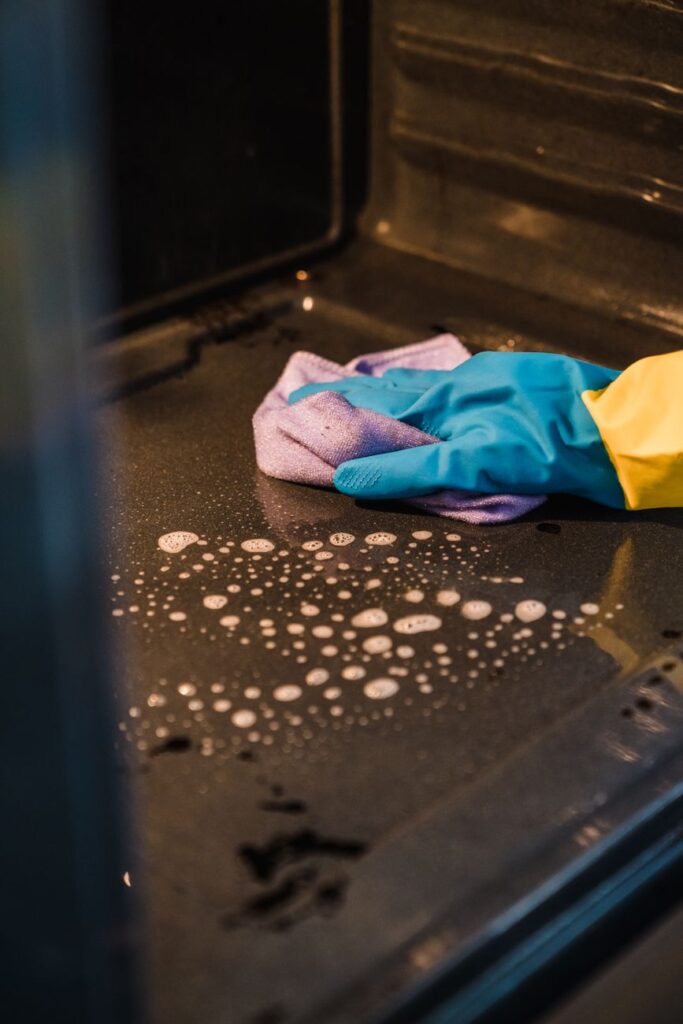
1. Mix Cleaning Solution: Combine equal parts of white vinegar and water in a spray bottle.
2. Apply Solution: Spray the affected areas generously and let it sit for at least 15 minutes.
3. Scrub: Use a scrub brush to remove mould and grease stains. For stubborn spots, sprinkle baking soda on top of the vinegar solution before scrubbing.
4. Rinse: Wipe the area clean with a damp cloth to remove residue.
5. Dry Thoroughly: Use a dry cloth to soak up any remaining moisture. Ensure the area is fully dried to prevent mould from returning.
Step 4: Check for Recurrent Issues
Best Cleaning Methods
Using the right cleaning methods can significantly improve your results:
Common Mistakes to Avoid
Avoiding these pitfalls can save time and effort:
1. Neglecting Ventilation: Always ensure proper airflow while cooking to reduce steam buildup.
2. Using Too Much Water: Excessive water can worsen dampness; use cleaning solutions sparingly.
3. Ignoring Prevention: Once cleaned, don’t forget to implement preventive measures.
4. Skipping Regular Cleaning: Regular maintenance is essential; don’t wait for mould to appear.
Prevention Tips
Preventing mould and damp is easier than dealing with it once it appears:
Frequently Asked Questions
1. How often should I clean my oven to prevent mould and damp?
Aim to clean your oven and surrounding areas at least once a week, especially if you cook frequently.
2. Can I use bleach to clean mould?
While bleach can be effective, it is not recommended for porous surfaces. It may not penetrate mould roots and can create harmful fumes.
3. What if the mould keeps coming back after cleaning?
Persistent mould may indicate an underlying moisture problem. Check for hidden leaks or consider professional assistance.
4. Is it safe to use natural cleaning products around food?
Yes, vinegar and baking soda are safe and effective. Just ensure you wipe down surfaces thoroughly afterward.
5. How can I tell if I have a damp problem?
Signs include musty smells, visible water stains, or peeling paint. Pay attention to these indicators to address issues early.
6. What should I do if I’m sensitive to mould?
If you are sensitive, wear a mask and gloves while cleaning, and consider hiring a professional to handle extensive mould issues.
By following this guide, you can effectively tackle mould and damp caused by oven grease stains, ensuring a cleaner and healthier kitchen environment.