
Oven Grease Removal Odours Guide Part 1
Introduction
If you’ve ever opened your oven only to be greeted by a lingering, unpleasant smell, you’re not alone. Odours from oven grease can turn cooking into an unpleasant experience. This guide will help you understand what causes these odours, why they persist, and how to effectively eliminate them. With clear, actionable steps, you’ll be able to keep your oven smelling fresh and clean.
What Causes Odours?
Oven grease odours primarily stem from the buildup of food particles, oils, and fats that accumulate over time. When these substances are exposed to heat, they can break down and release volatile compounds, resulting in unwanted smells. Common sources of these odours include:
- Spills: Food spills that aren’t cleaned up immediately can bake onto surfaces.
- Burnt Food: Cooking food at high temperatures can lead to charring, which creates odorous smoke.
- Stale Grease: Old grease that remains in the oven can become rancid, contributing to foul smells.
- Baking soda
- White vinegar
- A sponge or non-abrasive scrubber
- A soft cloth
- A spray bottle
- Water
Why This Problem Happens
Understanding the root causes of oven odours can help prevent them from returning:
1. Infrequent Cleaning: Regular maintenance is key. Neglecting to clean your oven can lead to a toxic buildup of grease and food residues.
2. Temperature Fluctuations: Cooking at varying temperatures can cause grease to sputter and spread, increasing the likelihood of odour retention.
3. Poor Ventilation: An oven that isn’t adequately ventilated can trap smells, allowing them to linger longer than necessary.
How to Fix Odours (Step-by-Step)
Eliminating odours from your oven is straightforward. Follow these steps for effective cleaning:
Step 1: Gather Supplies
You’ll need:
Step 2: Prepare Your Oven
1. Turn Off and Cool Down: Ensure your oven is turned off and completely cool before starting the cleaning process.
2. Remove Racks and Accessories: Take out any racks, trays, or pans inside the oven.
Step 3: Create a Cleaning Paste
1. Mix Baking Soda and Water: In a bowl, combine 1 cup of baking soda with enough water to form a thick paste.
2. Apply the Paste: Spread the paste on the oven’s interior surfaces, focusing on areas with visible grease buildup. Avoid the heating elements.
Step 4: Let it Sit
1. Allow to Soak: Let the baking soda paste sit for at least 12 hours or overnight. This will help break down the grease.
Step 5: Wipe it Down
1. Scrub with a Sponge: After soaking, use a sponge or non-abrasive scrubber to wipe away the paste. For stubborn areas, a little elbow grease may be required.
2. Rinse with Vinegar: Fill a spray bottle with white vinegar and spray it onto the cleaned surfaces. The reaction between vinegar and baking soda will help lift any remaining grime.
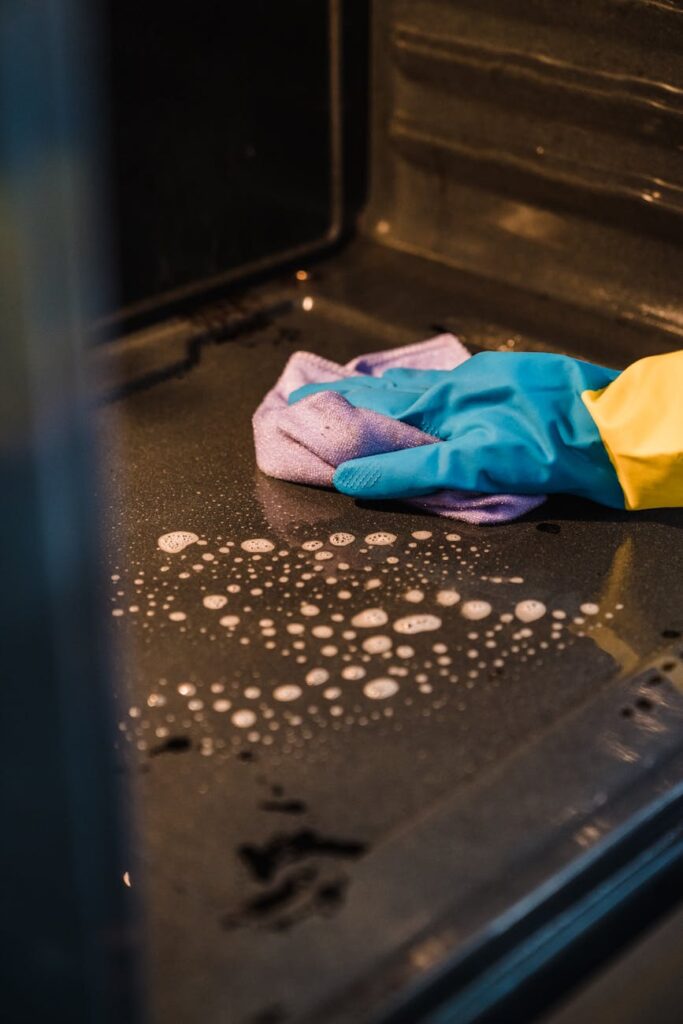
3. Final Wipe: Use a damp cloth to wipe down the oven again, removing any residue.
Step 6: Dry and Replace Racks
1. Dry Thoroughly: Allow the oven to dry completely before replacing the racks and accessories.
2. Check for Odours: Turn your oven on to a low temperature for a few minutes to ensure any lingering smells dissipate.
Best Cleaning Methods
Different cleaning methods can be effective for various types of odours. Here are a few to consider:
1. Steam Cleaning: Fill an oven-safe dish with water and place it in the oven. Heat the oven to 350°F (175°C) for about 30 minutes. The steam will help loosen grime and neutralize odours.
2. Commercial Oven Cleaners: If natural methods don’t work, consider using a commercial oven cleaner. Follow the instructions carefully, ensuring adequate ventilation.
3. Lemon Juice: Place a bowl of lemon juice in the oven and heat it at a low temperature. The citrus scent neutralizes unpleasant smells.
4. Essential Oils: Add a few drops of essential oils like lemon or lavender to your cleaning solutions for a pleasant, fresh scent.
Common Mistakes to Avoid
To achieve the best results when tackling oven odours, steer clear of these common pitfalls:
1. Using Abrasive Cleaners: Avoid harsh chemicals or scouring pads that can scratch the oven’s surfaces.
2. Neglecting Regular Maintenance: Failing to clean spills immediately can lead to more stubborn odours down the line.
3. Overlooking the Oven Door: The door can accumulate grease, so make sure to clean it thoroughly, inside and out.
4. Forgetting the Fan and Vents: Don’t ignore the oven fan and vents; these areas can trap odours too.
Prevention Tips
Preventing odours from developing in your oven is easier than removing them. Here are some helpful tips:
1. Clean Spills Promptly: As soon as a spill occurs, wipe it up to prevent it from baking onto the oven surfaces.
2. Use a Drip Tray: Place a drip tray beneath dishes that tend to overflow or splatter to catch any spills before they reach the oven floor.
3. Ventilate While Cooking: Open windows or turn on the kitchen exhaust fan to help dissipate smells while cooking.
4. Regular Deep Cleaning: Schedule regular cleanings of your oven, ideally every one to three months, depending on usage.
5. Store Food Properly: Ensure food is stored in airtight containers to prevent odours from permeating the oven when it’s not in use.
Frequently Asked Questions
1. How often should I clean my oven to prevent odours?
Aim to clean your oven every one to three months, or more frequently if you use it often.
2. Can I use baking soda and vinegar together for cleaning?
Yes, using baking soda and vinegar together can create a powerful cleaning reaction that helps lift grime and neutralize odours.
3. What should I do if the odour persists after cleaning?
If the odour remains, consider checking for hidden spills or residues and using a commercial oven cleaner.
4. Are there any natural alternatives to commercial cleaners?
Yes, baking soda, vinegar, and lemon juice are excellent natural alternatives for cleaning and deodorizing your oven.
5. How can I prevent grease buildup in the oven?
Use a drip tray, clean spills right away, and avoid cooking items that tend to splatter.
6. Is it safe to use essential oils for cleaning?
Yes, essential oils can provide pleasant scents and have natural cleansing properties, but always ensure they’re food-safe.
By following this guide, you can effectively tackle and prevent unpleasant odours in your oven, making your cooking experience much more enjoyable. Stay tuned for Part 2, where we’ll delve even deeper into advanced cleaning techniques and tips!