
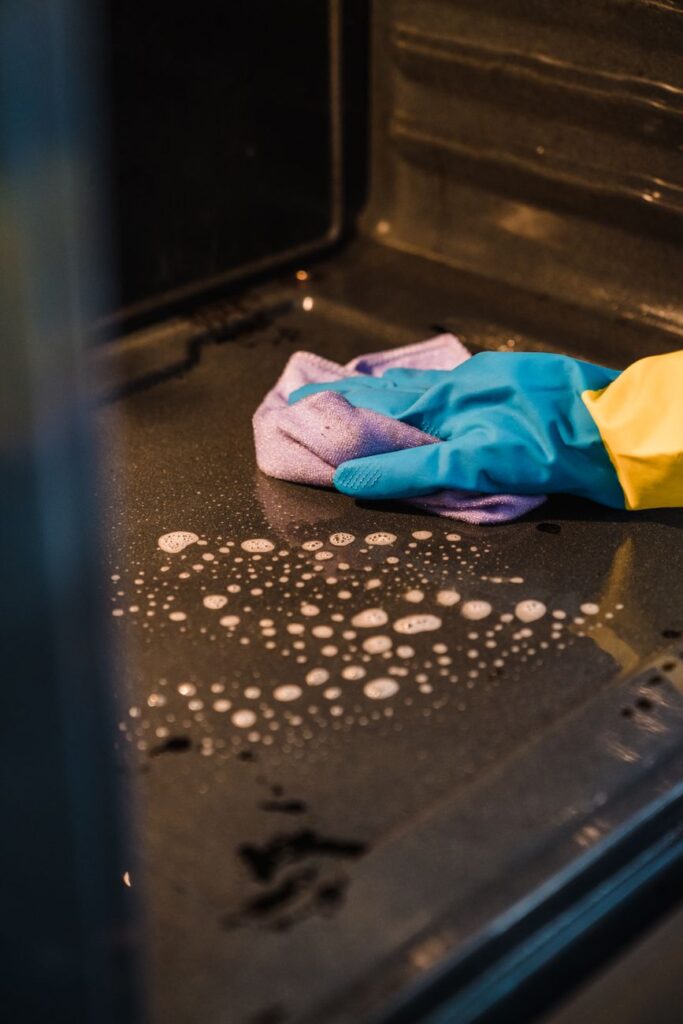
Oven Grease Removal Mould & Damp Guide Part 2
Introduction
Mould and dampness in and around your oven can be more than just an eyesore; it’s a sign of deeper issues often linked to grease build-up, moisture, and poor ventilation. This guide will help you understand the causes of mould and dampness, how to effectively remove it, and prevent it from recurring.
What Causes Mould & Damp?
Mould thrives in damp, warm environments, making your kitchen an ideal breeding ground. The primary contributors to mould and damp around your oven include:
- Grease Accumulation: Grease from cooking can trap moisture, leading to mould growth.
- Poor Ventilation: Inadequate airflow can prevent moisture from evaporating.
- High Humidity: Kitchens can become humid, especially during cooking, which can exacerbate dampness.
- Leaks: Water leaks from pipes or appliances can introduce moisture.
- Cooking Habits: Regularly frying or boiling food without proper ventilation can increase humidity levels.
- Infrequent Cleaning: Ignoring grease build-up allows moisture to linger, creating a hospitable environment for mould.
- Seasonal Changes: In colder months, condensation can form around your oven if it’s not properly insulated.
- Structural Issues: Cracks in walls or ceilings can lead to water seepage, creating damp spots.
- Visible mould spots on surfaces.
- Musty smells indicating unseen mould.
- Areas of persistent dampness.
- Rubber gloves
- N95 mask
- Spray bottle
- White vinegar
- Baking soda
- Dish soap
- Scrub brush or sponge
- Bucket
- Cloths for drying
- Set a cleaning schedule to wipe down surfaces regularly.
- Encourage airflow by keeping pantry doors open and using exhaust fans.
- Vinegar: A natural disinfectant that kills mould spores.
- Baking Soda: Absorbs moisture and neutralizes odours.
- Dish Soap: Effective for cutting through grease and grime.
- Hydrogen Peroxide: A powerful mould killer that can be used on tougher stains. Mix it with water and spray on affected areas.
- Commercial Mould Cleaners: If natural methods fail, consider a store-bought product specifically designed for mould removal.
- Regular Cleaning: Clean your oven and surrounding areas weekly to prevent grease build-up.
- Use Exhaust Fans: Always turn on your range hood when cooking to reduce humidity.
- Seal Cracks: Inspect and seal any cracks in walls or floors to prevent moisture intrusion.
- Monitor Humidity Levels: Use a hygrometer to keep indoor humidity below 60%.
Why This Problem Happens
Understanding the root causes can help you tackle the problem more effectively. Here are some reasons why mould and damp occur:
How to Fix Mould & Damp (Step-by-Step)
Step 1: Assess the Situation
Before cleaning, examine the extent of the mould and dampness. Check for:
Step 2: Gather Your Supplies
You will need:
Step 3: Prepare the Area
1. Turn Off Appliances: Ensure your oven is off and cool before starting.
2. Ventilate the Space: Open windows or turn on an exhaust fan to disperse airborne spores.
Step 4: Clean Visible Mould
1. Mix Cleaning Solution: In a spray bottle, mix equal parts water and white vinegar. Alternatively, you can use a solution of baking soda and water.
2. Spray Affected Areas: Generously spray the mouldy surfaces.
3. Let it Sit: Allow the solution to sit for 10–15 minutes to penetrate the mould.
4. Scrub: Use a scrub brush or sponge to remove the mould. Be thorough but gentle to avoid damaging surfaces.
5. Rinse and Dry: Wipe down all surfaces with a damp cloth and dry thoroughly.
Step 5: Address Dampness
1. Check for Leaks: Identify any leaks from pipes or appliances and repair them.
2. Improve Ventilation: Install or use exhaust fans during cooking and consider a dehumidifier if your kitchen is particularly humid.
Step 6: Regular Maintenance
Best Cleaning Methods
Alternative Methods
Common Mistakes to Avoid
1. Ignoring Small Patches: Even small mould spots can grow if left untreated.
2. Using Bleach: While bleach can kill mould, it doesn’t remove it and can lead to further growth by providing moisture.
3. Neglecting Ventilation: Failing to improve airflow can make mould a recurring problem.
4. Skipping Protective Gear: Always wear gloves and a mask to protect yourself from mould spores.
Prevention Tips
Frequently Asked Questions
1. Can I remove mould from my oven?
Yes, you can remove mould from your oven using vinegar or a baking soda solution. Ensure the oven is cool before cleaning.
2. How often should I clean my oven to prevent mould?
Aim to clean your oven and its surroundings at least once a week to reduce grease and moisture build-up.
3. Is mould harmful to my health?
Yes, mould can cause respiratory issues and allergies. It’s important to remove it promptly.
4. What should I do if the mould keeps coming back?
If mould returns, check for underlying issues such as leaks or inadequate ventilation and address those problems.
5. Can I use essential oils for mould removal?
While some essential oils have antifungal properties, they are not as effective as vinegar or baking soda for serious mould infestations.
6. How can I tell if dampness is from cooking or a leak?
Look for signs of water damage, such as staining or peeling paint, and check for moisture in walls or under appliances.
By following this guide, you can effectively tackle mould and dampness around your oven, ensuring a clean and healthy kitchen environment. Regular maintenance and proactive measures will keep your space free from these unwanted issues.