
Oven Cleaning Tips: Bathroom Guide Part 2
Introduction
Cleaning your bathroom is a task that often feels overwhelming, but it doesn’t have to be. In this guide, we will focus on effective techniques to tackle the most common bathroom cleaning issues. From soap scum on tiles to grime in the shower, we’ll provide practical solutions to keep your bathroom sparkling clean.
What Causes Bathroom Grime?
Bathroom grime can accumulate due to several factors:
1. Moisture: High humidity levels create an ideal environment for mold and mildew.
2. Soap Residue: Leftover soap and shampoo can build up on surfaces, leading to stubborn stains.
3. Hard Water: Minerals in hard water can leave unsightly limescale deposits on faucets and showerheads.
4. Skin Cells and Hair: These organic materials can contribute to grime buildup, particularly around drains.
Understanding the causes of grime will help you develop effective cleaning strategies.
Why This Problem Happens
Bathroom cleaning issues often arise because of a lack of regular maintenance. When dirt and moisture are not addressed promptly, they can lead to more serious problems, such as mold growth or permanent staining. Additionally, many homeowners may not know the best cleaning products or techniques for specific surfaces, leading to ineffective cleaning efforts.
How to Fix Bathroom Grime (Step-by-Step)
Step 1: Gather Your Supplies
Before you start cleaning, gather the following supplies:
- All-purpose cleaner
- Glass cleaner
- Disinfectant spray
- Baking soda
- White vinegar
- Scrub brushes (soft and hard bristle)
- Microfiber cloths
- Sponges
- Rubber gloves
Step 2: Clear the Area
Remove all items from countertops, shelves, and the shower. This will give you unobstructed access to all surfaces that need cleaning.
Step 3: Apply Cleaners
1. Tiles and Grout: Spray an all-purpose cleaner on the tiles and grout. Let it sit for 10-15 minutes to break down grime.
2. Showerhead and Faucets: Soak a cloth in vinegar and wrap it around the showerhead and faucet to dissolve limescale.
3. Toilet: Pour toilet cleaner into the bowl and let it sit while you clean the rest of the bathroom.
Step 4: Scrub Surfaces
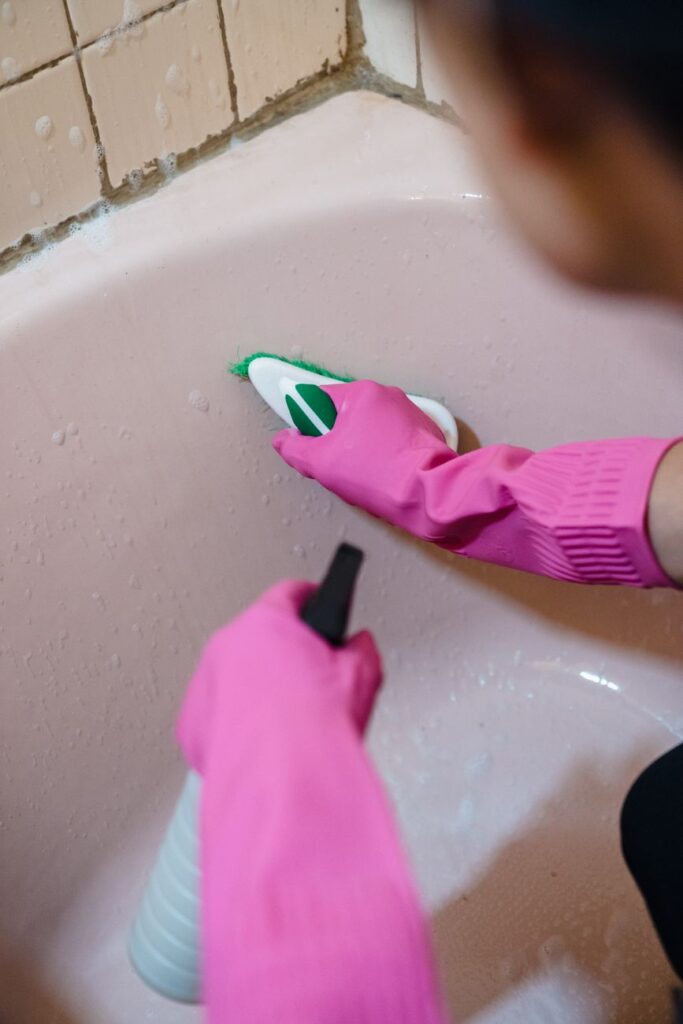
1. Tiles and Grout: Use a scrub brush to clean the tiles and grout. Rinse with warm water.
2. Showerhead and Faucets: Wipe down with a microfiber cloth after soaking in vinegar.
3. Toilet: Use a toilet brush to scrub the inside of the bowl, paying special attention to stains. Flush to rinse.
Step 5: Wipe Down Surfaces
After scrubbing, use a microfiber cloth to wipe down all surfaces, including countertops, mirrors, and shelves. For mirrors, use a glass cleaner for a streak-free finish.
Step 6: Final Touches
Return items to their places and consider organizing them to prevent future clutter.
Best Cleaning Methods
1. Baking Soda and Vinegar: This powerful duo can tackle tough stains. Sprinkle baking soda on surfaces and spray with vinegar; let it fizz, then scrub.
2. Steam Cleaning: Using a steam cleaner can effectively sanitize surfaces without harsh chemicals. It’s great for grout and tiles.
3. Disinfecting Wipes: Quick and effective for daily touch-ups, disinfecting wipes can make maintaining cleanliness easier.
Common Mistakes to Avoid
1. Using the Wrong Cleaners: Some cleaners can damage finishes; always check product labels.
2. Not Allowing Cleaners to Sit: Many cleaners require time to break down grime. Don’t rush this step.
3. Overlooking Ventilation: Always ventilate the bathroom when using strong cleaning products to avoid inhalation of fumes.
4. Neglecting Grout: Grout often gets overlooked but can harbor mold. Make sure to clean it regularly.
Prevention Tips
1. Regular Cleaning: Establish a weekly cleaning routine to prevent buildup.
2. Use a Squeegee: After every shower, use a squeegee on tiles and glass to reduce water spots and soap scum.
3. Ventilation: Ensure your bathroom is well-ventilated. Use exhaust fans or open windows to reduce humidity.
4. Choose the Right Products: Use soap and shampoo that are less likely to leave residue.
Frequently Asked Questions
1. How often should I clean my bathroom?
Aim for a deep clean once a week with daily touch-ups for surfaces like sinks and countertops.
2. What is the best way to remove soap scum?
An equal mix of vinegar and water can effectively cut through soap scum. Spray it on, let it sit for a few minutes, then scrub.
3. How do I prevent mold in my bathroom?
Keep your bathroom dry and well-ventilated. Use mildew-resistant products and clean regularly.
4. Can I use bleach in my bathroom?
Yes, but be cautious. Use it diluted and ensure good ventilation. Avoid mixing it with other cleaners, especially ammonia.
5. What should I do if I have hard water stains?
Use a mixture of vinegar and baking soda to help dissolve hard water stains. For tougher stains, consider a commercial hard water cleaner.
6. Is it safe to use vinegar on all surfaces?
Vinegar is safe for most surfaces but can damage natural stone and some finishes. Always test in an inconspicuous area first.
By following these practical cleaning tips and methods, you can maintain a clean and hygienic bathroom with ease. With regular attention, your bathroom will remain a welcoming space in your home.