
Mouldy Shower Head Mould & Damp Guide Part 2
Introduction
A mouldy shower head is not just an eyesore; it can also lead to dampness and health concerns in your bathroom. This guide will help you understand the causes of mould and damp, how to effectively clean your shower head, and tips for preventing future issues.
What Causes Mould & Damp?
Mould and dampness thrive in warm, humid environments. In bathrooms, the combination of steam from hot showers and inadequate ventilation creates the perfect breeding ground. The following factors contribute to mould growth on shower heads:
1. Poor Ventilation: Bathrooms without proper airflow trap moisture, allowing mould to flourish.
2. Hard Water: Minerals in hard water can leave deposits that create a rough surface for mould to cling to.
3. Neglect: Failing to clean your shower head regularly provides an opportunity for mould to establish itself.
4. Temperature Fluctuations: Rapid changes from hot to cold can cause condensation, contributing to dampness.
Why This Problem Happens
Understanding why mould develops on your shower head is key to preventing future outbreaks.
- Humidity: High humidity levels in bathrooms encourage mould growth. Showering generates steam, which can linger if not ventilated properly.
- Water Stagnation: Water that sits in the shower head can become a breeding ground for mould and bacteria.
- Organic Matter: Soap scum, hair, and skin cells provide nutrients for mould, making it more likely to grow.
- White vinegar or a commercial mould cleaner
- Baking soda (optional)
- A soft brush or old toothbrush
- A spray bottle
- A plastic bag (if soaking)
- Rubber gloves
- Vinegar: Its acidity makes it effective against mould and mineral deposits.
- Baking Soda: This can be added for extra scrubbing power.
How to Fix Mould & Damp (Step-by-Step)
Step 1: Gather Your Supplies
You will need:
Step 2: Remove the Shower Head
1. Turn off the water supply to your shower.
2. Use a wrench or pliers to carefully detach the shower head from the pipe. Wrap a cloth around the pipe to prevent scratching.
Step 3: Soak the Shower Head
1. Fill a plastic bag with equal parts white vinegar and water or use a commercial mould cleaner.
2. Place the shower head in the bag and secure it around the neck of the shower head.
3. Let it soak for at least 30 minutes. For heavy mould, leave it for a few hours or overnight.
Step 4: Scrub the Shower Head
1. After soaking, remove the shower head from the bag.
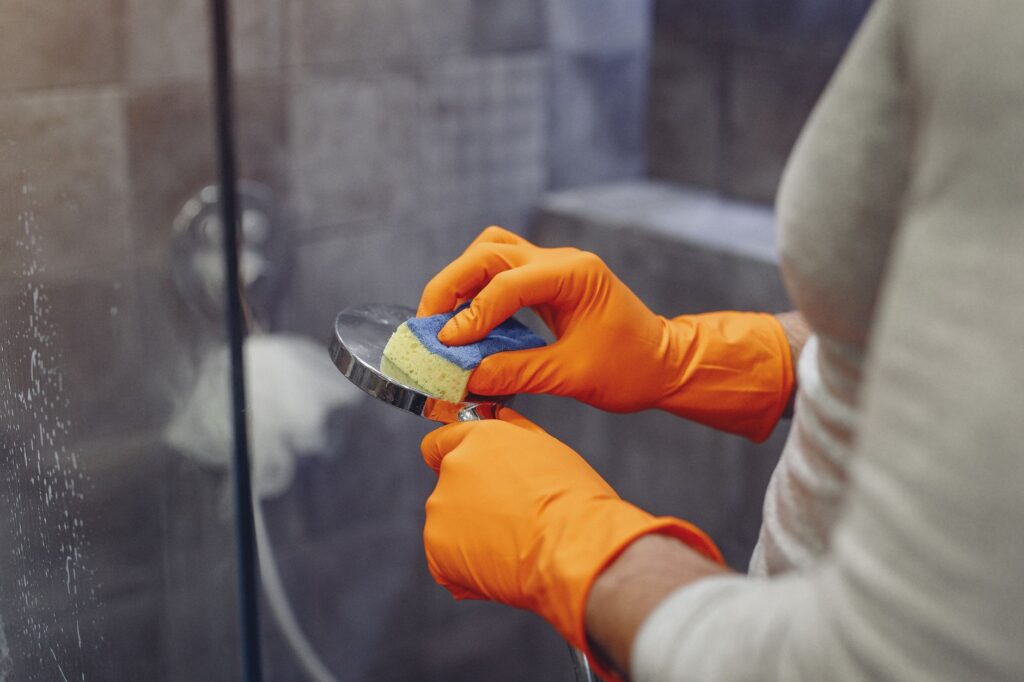
2. Use a soft brush or toothbrush to scrub away any remaining mould and deposits.
3. Pay special attention to the nozzle openings where mould tends to accumulate.
Step 5: Rinse and Reattach
1. Rinse the shower head thoroughly under warm water to remove any cleaning solution and loosened mould.
2. Reattach the shower head to the pipe, ensuring it is securely fastened.
3. Turn the water supply back on and run the shower for a few minutes to clear out any remaining residue.
Best Cleaning Methods
Vinegar and Baking Soda
Commercial Cleaners
If you prefer store-bought options, choose a cleaner labeled for mould removal. Always follow the manufacturer’s instructions for safety and effectiveness.
Regular Maintenance
Make cleaning your shower head a regular part of your cleaning routine. Aim to clean it every month to prevent build-up.
Common Mistakes to Avoid
1. Ignoring Ventilation: Failing to use exhaust fans or keep windows open can trap moisture.
2. Not Cleaning Regularly: Skipping regular cleanings allows mould to establish itself.
3. Using Harsh Chemicals: Strong chemical cleaners can damage your shower head. Stick to vinegar or designated mould removers.
4. Not Drying After Use: Allowing water to remain on surfaces encourages mould growth.
Prevention Tips
1. Improve Ventilation: Install an exhaust fan or open windows to reduce humidity.
2. Regular Cleaning: Clean your shower head monthly to prevent build-up.
3. Use a Squeegee: After showering, use a squeegee to wipe down your shower walls and head to remove excess moisture.
4. Install a Water Softener: If you have hard water, consider installing a water softener to reduce mineral deposits.
5. Seal Grout and Caulk: Ensure all grout lines and caulked areas are sealed to prevent moisture from seeping in.
Frequently Asked Questions
1. How often should I clean my shower head?
Aim to clean your shower head at least once a month to prevent mould build-up.
2. Can I use bleach to clean my shower head?
While bleach is effective against mould, it can damage some fixtures. Stick to vinegar or dedicated mould cleaners for safety.
3. What if the mould keeps coming back?
Persistent mould may indicate poor ventilation or water issues. Assess your bathroom’s humidity and consider installing a dehumidifier.
4. Is there a way to prevent hard water build-up?
Consider using a water softener or regularly cleaning with vinegar to help combat hard water deposits.
5. Can I clean my shower head without removing it?
Yes, you can spray vinegar or a mould cleaner directly onto the shower head and scrub it. However, soaking it is usually more effective.
6. What are the signs of a mould problem?
Look for black or green spots on your shower head, an earthy smell, or damp patches around your bathroom.
By following these steps, you can effectively tackle mouldy shower heads and dampness in your bathroom, ensuring a cleaner and healthier environment. Regular maintenance and prevention are key to keeping your bathroom mould-free.