
Mouldy Shower Head Kitchen Guide Part 2
Introduction
A mouldy shower head can be an unsightly and unhygienic issue, particularly in the kitchen where cleanliness is crucial. This guide will walk you through the causes, solutions, and preventive measures you can take to keep your shower head clean and mould-free. With straightforward steps and practical advice, you can tackle this problem effectively.
What Causes Kitchen Mould on Shower Heads?
Mould thrives in damp environments, making shower heads a prime target. In the kitchen, factors such as high humidity, poor ventilation, and food splatters contribute to the growth of mould.
Key Contributors:
- Humidity: Cooking and cleaning often create additional moisture in the air.
- Water Quality: Hard water can leave mineral deposits that provide a breeding ground for mould.
- Infrequent Cleaning: Neglecting regular maintenance allows mould to settle and spread.
- Lack of Cleaning: Over time, grime and moisture can accumulate, promoting mould growth.
- Condensation: Kitchens often experience steam from cooking, which can condense on surfaces, including shower heads.
- Inadequate Airflow: Poor ventilation allows moisture to linger, creating an ideal environment for mould.
- White vinegar or lemon juice
- Baking soda
- Spray bottle
- Soft cloth or sponge
- Old toothbrush
- Rubber gloves (optional)
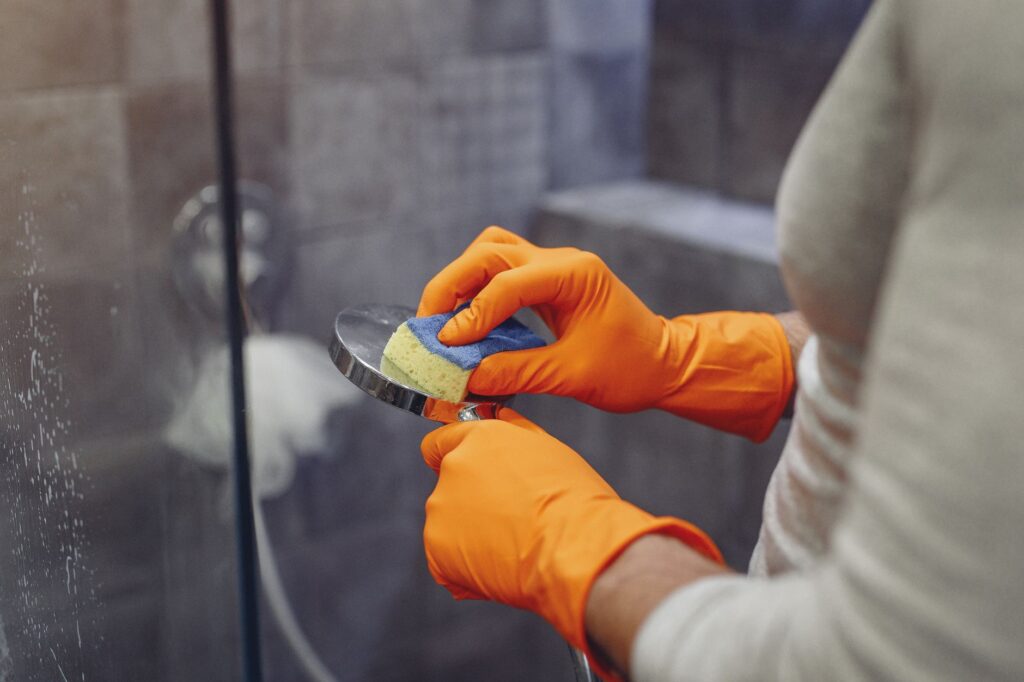
- Use a soft cloth or sponge to scrub the shower head gently. For tight spots, an old toothbrush works wonders.
- Rinse the shower head with warm water to remove all cleaning solutions and loosened mould.
- Wipe the shower head dry with a clean cloth to prevent new mould growth.
Why This Problem Happens
Mould on shower heads develops when water droplets accumulate and remain stagnant. Other contributing factors include:
How to Fix Kitchen Mouldy Shower Head (Step-by-Step)
Cleaning a mouldy shower head is a straightforward process. Follow these steps for effective results:
Step 1: Gather Your Supplies
Step 2: Prepare the Cleaning Solution
1. Vinegar Method: Fill a spray bottle with white vinegar. If you prefer a more fragrant solution, mix equal parts vinegar and water.
2. Baking Soda Paste: Mix baking soda with a small amount of water to create a thick paste.
Step 3: Apply the Solution
1. Spray the Shower Head: Generously spray the vinegar solution on the mouldy areas. Let it sit for 10-15 minutes to break down the mould.
2. Apply Baking Soda Paste: For stubborn spots, apply the baking soda paste directly onto the mould and let it sit for another 10-15 minutes.
Step 4: Scrub the Surface
Step 5: Rinse Thoroughly
Step 6: Dry the Area
Best Cleaning Methods
1. Vinegar Soak
For heavily affected shower heads, remove the shower head and soak it in a bowl of vinegar for an hour. Rinse and scrub afterward.
2. Lemon Juice
Lemon juice is a natural cleaning agent and deodorizer. It can be mixed with baking soda for a potent cleaning paste.
3. Hydrogen Peroxide
For a stronger treatment, use hydrogen peroxide in a spray bottle. It effectively kills mould spores while being safe for most shower head materials.
Common Mistakes to Avoid
1. Using Abrasive Cleaners: Avoid harsh chemicals or scrubbing pads that can damage the shower head’s finish.
2. Neglecting Regular Maintenance: Failing to clean regularly allows mould to establish itself.
3. Ignoring Ventilation: Not addressing humidity and airflow can lead to recurring mould issues.
4. Overlooking the Surrounding Area: Ensure the entire shower environment is clean to prevent mould from returning.
Prevention Tips
1. Regular Cleaning: Clean your shower head at least once a month to prevent mould buildup.
2. Improve Ventilation: Use an exhaust fan or open windows while cooking to reduce humidity.
3. Dry After Use: Wipe down the shower head after each use to eliminate moisture.
4. Water Softener: If hard water is an issue, consider installing a water softener to reduce mineral deposits.
Frequently Asked Questions
1. How often should I clean my shower head?
It’s recommended to clean your shower head once a month to prevent mould growth.
2. Can I use bleach to clean my shower head?
While bleach is effective against mould, it can damage certain finishes. It’s better to stick with vinegar or baking soda.
3. What if my shower head is still mouldy after cleaning?
If mould persists, repeat the cleaning process or consider soaking the shower head in vinegar for an extended period.
4. Does hard water contribute to mould growth?
Yes, hard water can leave mineral deposits that promote mould growth and make cleaning more difficult.
5. Why does mould keep coming back?
If mould keeps returning, it may be due to high humidity, poor ventilation, or infrequent cleaning.
6. Are there any specific products I should avoid?
Avoid any cleaners with harsh chemicals or abrasive agents that can damage the shower head finish.
By following this guide, you can effectively tackle the issue of a mouldy shower head in your kitchen. Regular maintenance and proper cleaning methods will ensure a hygienic and pleasant environment.