
Moldy Shower Tiles Stains Guide Part 2
Introduction
Moldy shower tiles are a common nuisance in many homes. They not only look unpleasant but can also lead to further damage if not addressed promptly. In this guide, we’ll explore the causes of mold stains, effective cleaning methods, and how to prevent them from recurring. Whether you’re a seasoned cleaner or tackling this for the first time, you’ll find practical solutions right here.
What Causes Stains?
Mold and mildew stains on shower tiles typically arise from moisture and poor ventilation. The following factors contribute to these stains:
- High Humidity: Bathrooms are often humid environments due to hot showers and baths, creating an ideal breeding ground for mold.
- Lack of Ventilation: Insufficient airflow allows moisture to linger, promoting mold growth.
- Soap Residue: Soap scum can trap moisture, providing a surface for mold to thrive.
- Water Hardness: Hard water contains minerals that can leave deposits, making it easier for mold to adhere to tiles.
- Cleaning Solution: Choose between a commercial mold cleaner or a homemade solution (like vinegar and baking soda).
- Scrub Brush: A stiff-bristled brush will help remove stubborn stains.
- Sponge or Cloth: For wiping down surfaces.
- Spray Bottle: For easy application of your cleaning solution.
- Gloves: Protect your hands from harsh chemicals.
- White vinegar
- Baking soda
- Spray vinegar directly onto the moldy areas.
- Sprinkle baking soda over the vinegar.
- Let it fizz for a few minutes, then scrub and rinse.
- 1 cup bleach
- 1 gallon water
- Mix the solution in a well-ventilated area.
- Apply it to the affected areas and let it sit for 10 minutes before scrubbing and rinsing.
Why This Problem Happens
Understanding why mold stains form is crucial for effectively addressing the issue. Mold thrives in damp conditions and can reproduce rapidly. When combined with soap scum and dirt, the problem escalates.
Additionally, if grout lines are cracked or damaged, they may retain moisture, further inviting mold growth. The combination of these factors makes shower tiles a prime target for mold stains.
How to Fix Stains (Step-by-Step)
Step 1: Gather Your Supplies
Before you start cleaning, gather the necessary supplies:
Step 2: Apply the Cleaning Solution
1. Preparation: Ensure the bathroom is well-ventilated by opening a window or turning on an exhaust fan.
2. Spray: Generously spray the cleaning solution on the affected tiles and grout. Let it sit for about 10-15 minutes to penetrate the mold.
Step 3: Scrub
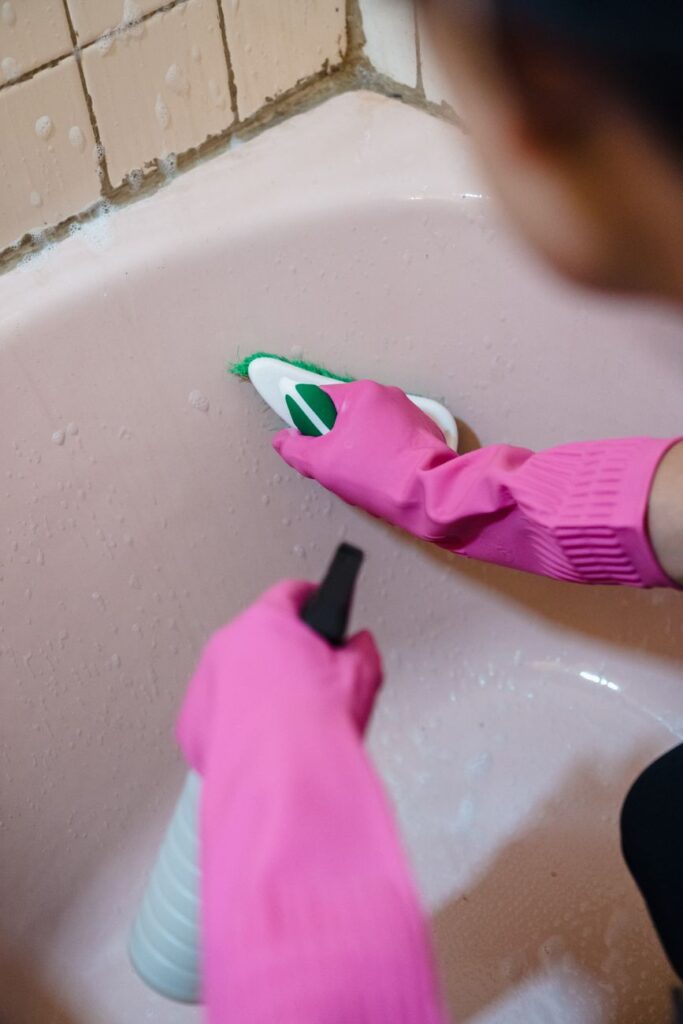
Using the scrub brush, scrub the tiles and grout lines vigorously. Focus on areas with visible mold stains, applying extra pressure as needed.
Step 4: Rinse
After scrubbing, rinse the tiles thoroughly with warm water to remove any residue from the cleaning solution.
Step 5: Dry
Use a clean towel to dry the tiles. This step is critical to prevent new mold from forming.
Best Cleaning Methods
1. Vinegar and Baking Soda
Ingredients:
Instructions:
2. Bleach Solution
Ingredients:
Instructions:
3. Commercial Mold Cleaners
Choose a cleaner specifically designed for mold and mildew. Follow the manufacturer’s instructions for the best results.
Common Mistakes to Avoid
1. Not Prepping the Area: Failing to ventilate can lead to inhaling harmful fumes. Always ensure proper airflow.
2. Using Too Much Product: More cleaner doesn’t mean better results. Follow the recommended amounts for each cleaning solution.
3. Ignoring Grout Lines: Mold often hides in grout. Be sure to scrub these areas thoroughly, as they can harbor spores even after cleaning.
4. Not Rinsing Properly: Residue from cleaning solutions can attract dirt and grime. Always rinse thoroughly.
5. Neglecting to Dry: Allowing moisture to linger can lead to immediate re-growth of mold. Always dry your tiles after cleaning.
Prevention Tips
1. Improve Ventilation: Use exhaust fans or open windows during and after showers to reduce humidity.
2. Regular Cleaning: Implement a weekly cleaning schedule to keep mold at bay.
3. Seal Grout: Apply a grout sealer every six months to prevent moisture infiltration.
4. Use Squeegees: After showering, use a squeegee to remove excess water from tiles, reducing moisture build-up.
5. Choose Mold-Resistant Products: Use mold-resistant caulk and tiles to minimize the risk of mold growth.
Frequently Asked Questions
1. How often should I clean my shower tiles?
Aim to clean your shower tiles at least once a week to prevent mold build-up.
2. Can I use vinegar on colored grout?
Yes, but test a small area first to ensure there’s no discoloration.
3. What’s the best way to remove stubborn stains?
A bleach solution or a commercial mold cleaner typically works best for tough stains.
4. Are there natural alternatives to commercial cleaners?
Yes, vinegar, baking soda, and hydrogen peroxide are effective natural cleaners for mold.
5. How can I tell if the mold is dangerous?
While most shower mold is not harmful, if you notice a musty smell or respiratory issues, consult a professional.
6. What if the stains return after cleaning?
If stains reappear quickly, reassess your ventilation and humidity levels. Regular cleaning and preventive measures are key.
—
By following this guide, you can tackle moldy shower tile stains effectively and keep your bathroom looking fresh and clean. Implementing these preventive measures will help you maintain a mold-free environment, ensuring your shower remains a place of relaxation rather than a source of frustration.