
Moldy Shower Grout Mould & Damp Guide Part 2
Introduction
Moldy shower grout is a common nuisance in many homes. Not only does it look unsightly, but it can also lead to bigger issues if not addressed promptly. In this guide, we’ll dive deeper into understanding the causes of mold and damp, practical steps to fix the issue, and how to prevent it from recurring.
What Causes Mould & Damp?
Mould thrives in damp environments, and your shower is the perfect breeding ground. Here are the primary causes:
1. High Humidity: Showers create a lot of steam, leading to elevated humidity levels.
2. Poor Ventilation: Inadequate airflow allows moisture to linger.
3. Water Leaks: Leaking pipes or fixtures can contribute to dampness.
4. Grout Condition: Cracked or damaged grout can trap moisture, making it hard to dry out.
5. Temperature Changes: Sudden changes in temperature can create condensation on surfaces.
Why This Problem Happens
The shower is often the most humid part of your home, making it susceptible to mold growth. When water evaporates, it leaves behind moisture in the air. If this moisture isn’t properly ventilated, it accumulates, creating an ideal environment for mold spores to settle and grow. Additionally, if your grout is porous or damaged, it can absorb water, leading to dampness that further promotes mold growth.
How to Fix Mould & Damp (Step-by-Step)
Addressing moldy shower grout can be straightforward if you follow these steps:
Step 1: Gather Your Supplies
You will need:
- Gloves
- A scrub brush or old toothbrush
- Bucket
- Spray bottle
- White vinegar or a commercial mold remover
- Baking soda (optional)
- Bleach (optional)
- Sponge
Step 2: Prepare the Area
1. Ventilate: Open windows and doors to allow airflow.
2. Protect Surroundings: Lay down towels or plastic sheets to catch drips.
Step 3: Apply Cleaning Solution
1. Vinegar Method: Fill a spray bottle with white vinegar and spray directly onto the moldy grout.
2. Commercial Cleaner: If using a commercial product, follow the instructions on the label.
3. Baking Soda Paste: For tougher stains, mix baking soda with a small amount of water to create a paste. Apply to the grout and let it sit for 10-15 minutes.
Step 4: Scrub the Grout
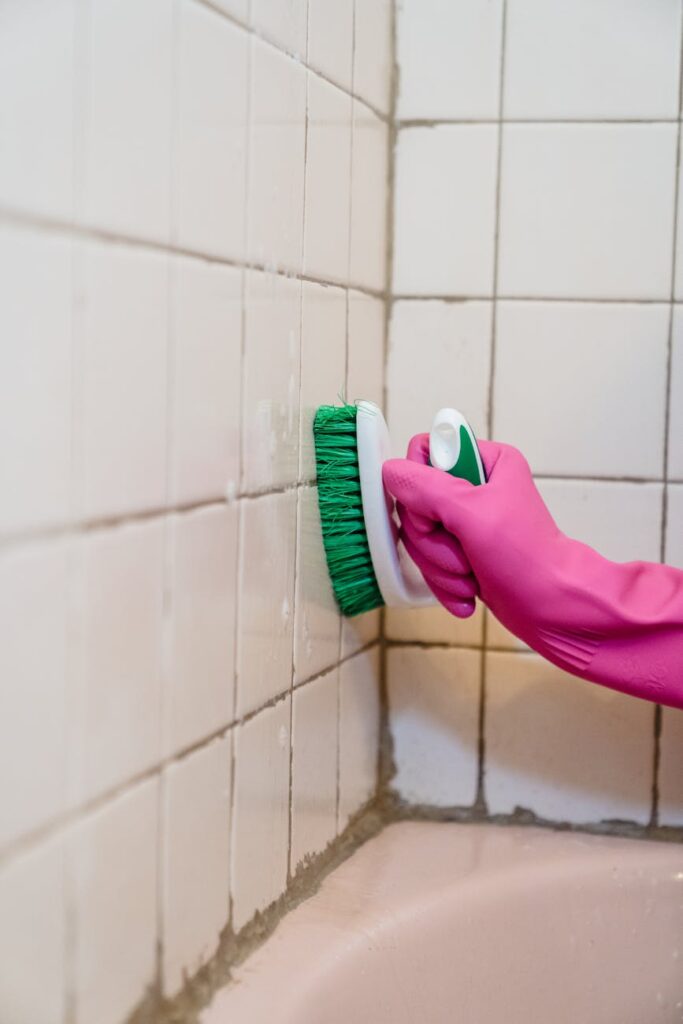
1. Use a scrub brush or an old toothbrush to scrub the grout. Focus on the moldy areas.
2. Rinse with warm water after scrubbing to remove residues.
Step 5: Disinfect (Optional)
For persistent mold, a diluted bleach solution (1 part bleach to 10 parts water) can be used. Apply cautiously and ensure proper ventilation. Rinse thoroughly after a few minutes.
Step 6: Dry the Area
After cleaning, dry the grout with a towel or let it air dry. Ensure the shower is well-ventilated to prevent moisture buildup.
Best Cleaning Methods
1. Vinegar: This natural cleaner is effective against mold and safe for most surfaces.
2. Baking Soda: Great for scrubbing and deodorizing, baking soda can be used in conjunction with vinegar.
3. Hydrogen Peroxide: A non-toxic option that can kill mold spores effectively.
4. Commercial Mold Cleaners: These often contain potent ingredients designed for heavy-duty cleaning.
Common Mistakes to Avoid
1. Not Ventilating: Skipping ventilation can lead to further mold growth.
2. Using Too Much Water: Excess moisture can exacerbate the problem.
3. Ignoring Early Signs: Addressing small mold patches quickly can prevent larger infestations.
4. Using Harsh Chemicals Incorrectly: Always follow instructions on commercial products; misuse can damage surfaces.
Prevention Tips
1. Improve Ventilation: Install an exhaust fan or keep a window open during and after showers.
2. Seal Grout: Use a grout sealer after cleaning to protect against moisture absorption.
3. Wipe Down Surfaces: After each shower, use a squeegee or towel to dry the walls and grout.
4. Regular Cleaning: Clean your shower regularly to prevent mold buildup.
5. Fix Leaks Promptly: Address any plumbing issues to avoid persistent dampness.
Frequently Asked Questions
1. How often should I clean my shower grout?
Aim to clean your shower grout at least once a month to prevent mold and mildew from establishing.
2. Can I use bleach on all types of grout?
Not all grout can handle bleach. Test a small area first and avoid using it on colored grout, as it can cause discoloration.
3. What if the mold keeps coming back?
Persistent mold may indicate a deeper moisture issue. Check for leaks, ensure proper ventilation, and consider re-sealing your grout.
4. Is vinegar as effective as commercial cleaners?
Vinegar is effective for light to moderate mold but may not be as effective as some commercial products for heavy infestations.
5. Can I prevent mold with essential oils?
Some essential oils, like tea tree oil, have antifungal properties. Dilute in water and spray on grout as a preventive measure.
6. What should I do if I have health concerns related to mold?
If you have health concerns, consult a professional for assessment and remediation, especially for larger mold issues.
By following these guidelines, you can effectively tackle moldy shower grout and keep your bathroom looking its best. Remember, regular maintenance is key to preventing future issues.