
Moldy Shower Grout Kitchen Guide Part 2
Introduction
Moldy shower grout is a common nuisance that often creeps into our kitchens, especially if you have a shower nearby or a poorly ventilated space. This guide will help you identify the causes, fix the problem, and prevent it from returning. With practical steps and effective cleaning methods, you can restore your kitchen to a mold-free zone.
What Causes Kitchen Moldy Shower Grout?
The primary cause of moldy grout in kitchens is moisture accumulation. Kitchens frequently experience high humidity levels due to cooking, washing dishes, and even improper ventilation. This moisture creates an ideal environment for mold to thrive, especially in grout lines, which are porous and can trap water and organic matter.
Key causes include:
1. High Humidity: Steam from cooking or dishwashing contributes to humidity.
2. Poor Ventilation: Lack of airflow prevents moisture from evaporating.
3. Leaky Pipes: Water leaks from plumbing can saturate grout.
4. Food Residue: Organic material from food can promote mold growth.
Why This Problem Happens
Understanding the reasons behind moldy shower grout can help you address the issue more effectively. Mold spores are everywhere; they become a problem when they find a suitable environment with moisture and organic material.
1. Condensation: When warm air meets cooler surfaces, condensation forms, feeding mold.
2. Grout Porosity: Grout is porous and can easily absorb water and food particles, which mold loves.
3. Neglected Cleaning: Infrequent cleaning allows mold to establish itself and multiply.
How to Fix Kitchen Moldy Shower Grout (Step-by-Step)
1. Gather Your Supplies:
- Gloves
- Scrub brush or old toothbrush
- Spray bottle
- Cleaning solution (bleach, vinegar, or baking soda)
- Rags or paper towels
- Open windows and doors to allow fresh air to circulate.
- If possible, use a fan to enhance airflow.
- For bleach: Mix one part bleach with three parts water in a spray bottle.
- For vinegar: Use undiluted white vinegar.
- For baking soda: Create a paste with water.
- Generously spray the moldy areas with your chosen solution.
- Allow it to sit for at least 10-15 minutes.
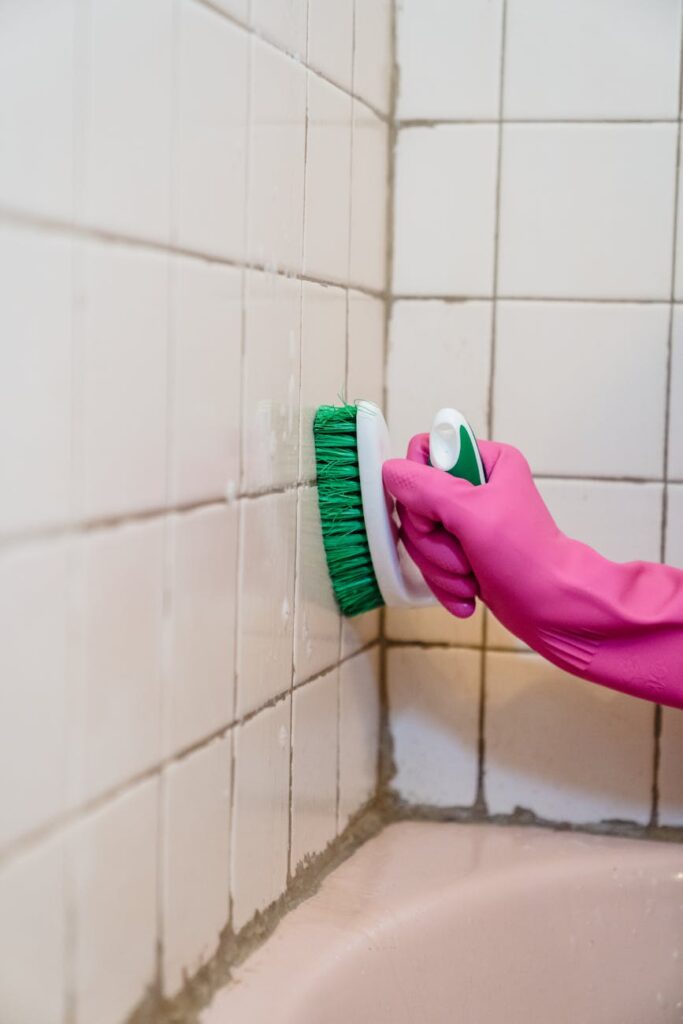
- Use a scrub brush or an old toothbrush to scrub the grout lines.
- Apply more cleaning solution as needed to ensure thorough coverage.
- Rinse the scrubbed area with warm water to remove any residue.
- Wipe down the surfaces with a clean rag or paper towel.
- Use a towel to dry the area completely.
- Ensure there’s no lingering moisture.
- Aim to clean your grout at least once a month, with more frequent cleanings if you notice mold.
- No, bleach can discolor certain types of grout. Test a small area first or opt for vinegar or baking soda.
- Yes, steam cleaners can effectively remove mold without chemicals, but ensure you follow the manufacturer’s guidelines.
- Mold can grow back quickly if the area isn’t dried properly or if moisture continues to be a problem.
- While sealing grout can help, it’s not a complete solution. Regular cleaning and moisture management are still essential.
- If mold keeps returning despite your efforts, check for hidden leaks or consider consulting a professional for further assistance.
2. Ventilate the Area:
3. Apply Cleaning Solution:
4. Spray the Grout:
5. Scrub the Grout:
6. Rinse the Area:
7. Dry Thoroughly:
Best Cleaning Methods
1. Bleach Solution: Effective for heavy mold stains. However, use it with caution; it can discolor surfaces and should not be mixed with ammonia.
2. Vinegar: A natural and safe alternative that kills most mold types. It’s non-toxic and doesn’t leave harmful residues.
3. Baking Soda: A gentle abrasive that can lift mold away while also deodorizing the area.
4. Hydrogen Peroxide: A strong alternative for stubborn mold, effective when applied directly to the grout.
Common Mistakes to Avoid
1. Skipping Ventilation: Always ensure proper airflow while cleaning; this helps to dry out the area and reduces mold growth.
2. Using the Wrong Tools: Avoid metal brushes that can damage grout. Stick to soft brushes or sponges.
3. Not Following Up: After cleaning, make sure to dry the area well. Leaving it damp can lead to regrowth.
4. Ignoring Hidden Areas: Check behind sinks and appliances where moisture can accumulate.
Prevention Tips
1. Increase Airflow: Use exhaust fans while cooking and consider installing a dehumidifier if necessary.
2. Regular Cleaning: Incorporate grout cleaning into your routine. A quick wipe-down once a week can prevent build-up.
3. Seal Grout: Consider applying a grout sealer to protect against moisture and stains.
4. Fix Leaks Promptly: Address any plumbing issues immediately to avoid water pooling.
5. Store Food Properly: Keep food in airtight containers to minimize organic debris around your kitchen.
Frequently Asked Questions
1. How often should I clean my kitchen grout?
2. Is bleach safe to use on all types of grout?
3. Can I use a steam cleaner on grout?
4. Why do I still see mold after cleaning?
5. Will sealing my grout prevent mold?
6. What should I do if the mold returns?
By following this comprehensive guide, you can effectively tackle moldy shower grout in your kitchen and maintain a clean, healthy environment. With the right cleaning methods and prevention strategies, you can keep your kitchen mold-free for the long run.