
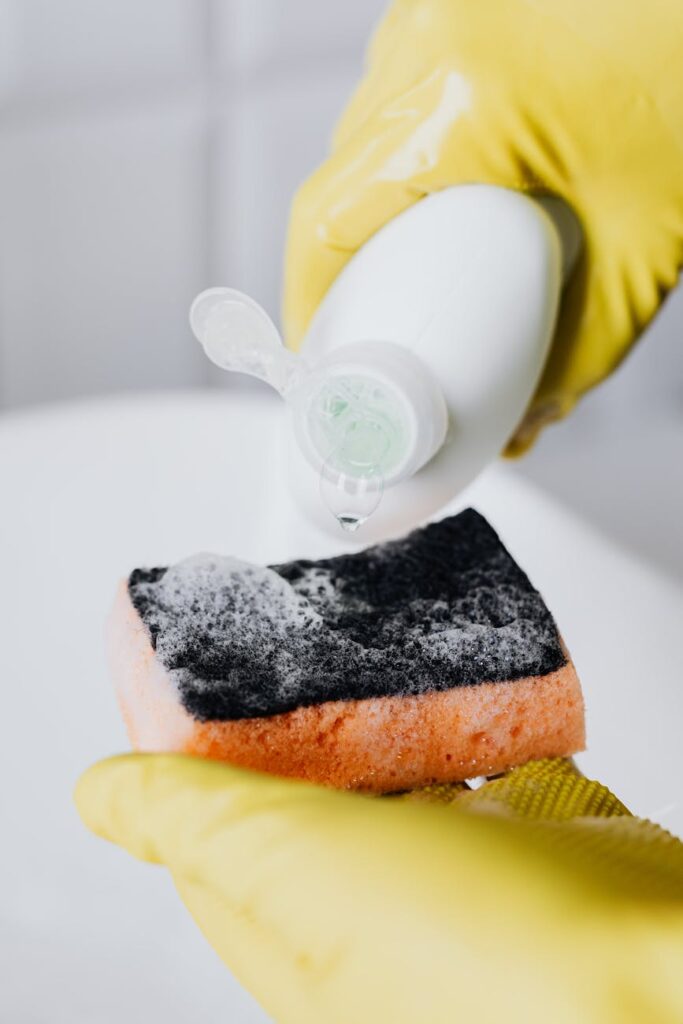
Moldy Dish Sponge Odours Guide Part 1
Introduction
A moldy dish sponge can be a hidden menace in your kitchen, emitting unpleasant odours that linger long after usage. This guide will help you understand why your sponges smell, how to fix the problem, and prevent it from happening again. Let’s tackle those odours head-on and keep your kitchen fresh.
What Causes Odours?
The primary culprits behind odorous sponges are bacteria and mold. When sponges are damp and not properly cleaned, they become breeding grounds for these microorganisms. Food particles trapped within the sponge provide an ideal environment for bacteria to thrive, leading to foul smells.
Common sources of odours include:
- Food Residue: Bits of food that get trapped in the sponge.
- Moisture: Sponges that remain wet for extended periods create ideal conditions for mold and bacteria.
- Poor Airflow: Sponges stored in enclosed spaces do not dry out effectively, promoting odour formation.
- Rinse the Sponge: Start by rinsing the sponge under hot running water to remove any food particles.
- Prepare a Vinegar Solution: Mix equal parts white vinegar and water in a bowl.
- Soak the Sponge: Submerge the sponge in the solution and let it soak for 5-10 minutes. Vinegar is a natural deodorizer and will help kill bacteria.
- Wet the Sponge: Ensure the sponge is wet before placing it in the microwave (dry sponges can catch fire).
- Microwave for 1-2 Minutes: Heat the sponge on high for 1-2 minutes. This will help to kill remaining bacteria and mold.
- Final Rinse: After microwaving, carefully remove the sponge (it will be hot) and rinse it thoroughly under cold water.
- Air Dry: Place the sponge in a well-ventilated area to dry completely. Avoid sealing it in a container or drawer.
- Baking Soda: Create a paste using baking soda and water. Scrub the sponge with this paste, then rinse thoroughly.
- Bleach Solution: For tough odours, mix 1 tablespoon of bleach with 1 quart of water. Soak the sponge in this solution for 5 minutes, then rinse well.
- Dishwasher: Place the sponge in the top rack of your dishwasher during a hot cycle. This will help sanitize it.
- Neglecting Regular Cleaning: Don’t wait until the sponge smells. Clean it regularly, ideally every few days.
- Using a Dry Sponge: Always ensure the sponge is wet before microwaving.
- Storing in a Closed Container: Allow sponges to air out after use to prevent moisture buildup.
- Ignoring the Lifespan: Sponges should be replaced every 2-4 weeks, depending on usage.
Why This Problem Happens
Understanding why your sponge develops odours can help you tackle the issue more effectively:
1. Lack of Cleaning: Regular cleaning of your sponge is often neglected, allowing bacteria to multiply.
2. Extended Wetness: Leaving sponges soaked in water or sitting in a damp environment accelerates mold growth.
3. Improper Storage: Storing sponges in dark, enclosed areas reduces airflow and traps moisture, furthering the odour problem.
How to Fix Odours (Step-by-Step)
If your sponge smells, don’t throw it away just yet. Follow these steps to eliminate the odours effectively:
Step 1: Rinse Thoroughly
Step 2: Soak in Vinegar
Step 3: Microwave for Disinfection
Step 4: Rinse Again
Step 5: Dry Completely
Best Cleaning Methods
In addition to the above steps, there are several effective cleaning methods to keep your sponges odour-free:
Common Mistakes to Avoid
Avoid these common pitfalls to maintain a fresh sponge:
Prevention Tips
To prevent odours from returning, implement these practical tips:
1. Rinse After Use: Always rinse your sponge thoroughly after washing dishes to remove food particles.
2. Store Properly: Keep sponges in a well-ventilated area. You can hang them or place them in a dish rack.
3. Rotate Sponges: If you have multiple sponges, rotate them to ensure even drying and usage.
4. Use Sponge Holders: Consider using a sponge holder that allows for drainage and air circulation.
Frequently Asked Questions
1. How often should I replace my dish sponge?
Replace your dish sponge every 2-4 weeks, depending on usage. If you notice any lingering odours or visible mold, it’s time for a new sponge.
2. Can I use a sponge that smells bad?
Using a smelly sponge is not advisable, as it can harbor harmful bacteria. Clean it thoroughly or replace it if the odour persists.
3. What is the best way to disinfect a sponge?
Microwaving a wet sponge for 1-2 minutes is one of the most effective ways to disinfect it. Alternatively, you can soak it in a bleach solution.
4. Why does my sponge smell even after cleaning?
If your sponge continues to smell after cleaning, it may be too old or damaged. Bacteria can reside in the sponge’s core, making it hard to eliminate all odours.
5. Are there sponges that are odour-resistant?
Yes, some sponges are specially designed to be odour-resistant or antimicrobial. Look for these products in stores for better long-term results.
6. Can I wash my sponge in the washing machine?
While you can wash sponges in the washing machine, it may not be as effective as other methods like microwaving. Ensure the sponge is wet and place it in a mesh laundry bag for best results.
By following this guide, you’ll be equipped to deal with moldy dish sponge odours efficiently and keep your kitchen smelling fresh. Stay tuned for Part 2, where we’ll delve deeper into advanced cleaning techniques!