
Moldy Bathroom Grout Stains Guide Part 2
Introduction
Keeping your bathroom clean can be a daunting task, especially when it comes to moldy grout stains. Not only do they look unappealing, but they can also harbor bacteria and cause unpleasant odors. In this guide, we’ll explore the causes of these stains, why they persist, and provide you with actionable steps to eliminate them effectively.
What Causes Stains?
Moldy bathroom grout stains are primarily caused by a combination of moisture, lack of ventilation, and organic materials. Here are the main contributors:
1. Humidity: Bathrooms are often damp environments where moisture can easily accumulate.
2. Soap Scum: Residue from soaps and shampoos can create a breeding ground for mold.
3. Poor Ventilation: Insufficient air circulation allows humidity to linger, promoting mold growth.
4. Organic Debris: Hair, skin cells, and dirt can accumulate in the grout, providing nutrients for mold.
Understanding these causes is the first step in addressing the problem effectively.
Why This Problem Happens
Moldy grout stains occur when mold spores settle in the porous surface of the grout. If the conditions are right—namely, warmth and moisture—these spores can flourish, leading to visible stains. Over time, stains can darken and spread, making them more difficult to remove. Grout is particularly susceptible because it is porous, allowing moisture and debris to penetrate and settle in its crevices.
Factors that exacerbate the issue include:
- Infrequent Cleaning: Regular maintenance is key to preventing mold growth.
- Neglect: Even a small amount of moisture left after a shower can contribute to mold growth if not addressed promptly.
- Old Grout: Worn or damaged grout can provide more space for mold to thrive.
- Protective gear: Gloves, goggles, and a mask.
- Cleaning agents: Baking soda, white vinegar, hydrogen peroxide, or a commercial mold remover.
- Scrubbing tools: An old toothbrush or a grout brush.
- Spray bottle: For applying solutions.
- Bucket: For rinsing.
- Ensure the bathroom is well-ventilated. Open windows and turn on exhaust fans.
- Remove any items from the area you’ll be cleaning to avoid damage.
- Baking Soda and Vinegar Method:
- Hydrogen Peroxide Method:
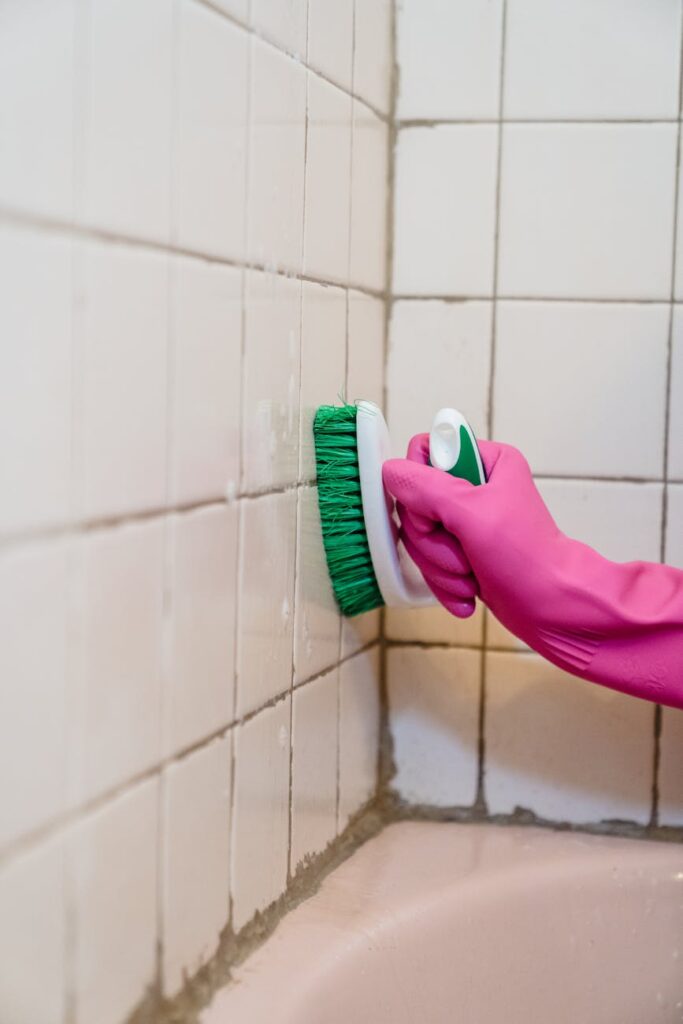
- Use an old toothbrush or grout brush to scrub the stained areas. Focus on the grout lines and areas where mold is visible.
- Use warm water to rinse the area well. Make sure all cleaning solutions are completely washed away.
- Wipe the grout and surrounding surfaces with a dry cloth. Ensure that no moisture remains, as this can encourage more mold growth.
How to Fix Stains (Step-by-Step)
Removing moldy grout stains requires a systematic approach. Follow these steps to restore your grout to its original condition:
Step 1: Gather Your Supplies
Step 2: Prepare the Area
Step 3: Apply the Cleaning Solution
1. Sprinkle baking soda directly onto the stained grout.
2. Spray white vinegar over the baking soda. Let it fizz for 10 minutes.
1. Apply hydrogen peroxide directly to the stained areas using a spray bottle.
2. Let it sit for about 10-15 minutes.
Step 4: Scrub the Stains
Step 5: Rinse Thoroughly
Step 6: Dry the Area
Best Cleaning Methods
Several cleaning methods can effectively deal with moldy bathroom grout stains:
1. Baking Soda and Vinegar
This natural method is effective for light to moderate stains. The combination creates a bubbling reaction that helps lift stains.
2. Hydrogen Peroxide
A stronger cleaning solution that acts as a bleaching agent, hydrogen peroxide is ideal for tougher mold stains. Apply it directly for maximum effect.
3. Commercial Mold Remover
For severe mold infestations, consider using a commercial mold remover. Always follow the manufacturer’s instructions and test a small area first.
4. Oxygen Bleach
Oxygen bleach is a safe and effective alternative to chlorine bleach. It can remove mold stains without damaging the grout.
Common Mistakes to Avoid
1. Using Abrasive Cleaners: Avoid using steel wool or other abrasive materials that can damage grout.
2. Neglecting Safety Gear: Always wear gloves and a mask when working with cleaning chemicals to protect yourself.
3. Not Rinsing Properly: Leaving cleaning agents on the grout can lead to further staining or damage.
4. Skipping Prevention: Addressing stains without implementing preventive measures can lead to recurring problems.
5. Overuse of Bleach: While bleach can kill mold, it may weaken grout over time and isn’t always effective against mold roots.
Prevention Tips
Prevention is key to maintaining clean grout. Here are some effective tips:
1. Keep the Bathroom Dry: Use a squeegee after showering to remove excess water from surfaces.
2. Enhance Ventilation: Install exhaust fans and keep windows open to reduce humidity levels.
3. Regular Cleaning: Clean your grout at least once a month to prevent mold buildup.
4. Seal the Grout: Apply a grout sealer every 6-12 months to protect against moisture and stains.
5. Use Mold-Resistant Products: Opt for mold-resistant caulks and sealants when updating your bathroom.
Frequently Asked Questions
1. How often should I clean my bathroom grout?
Aim to clean your bathroom grout at least once a month to prevent mold buildup.
2. Can I use bleach on my grout?
While bleach can kill surface mold, it may weaken grout over time. Use caution and consider alternatives like hydrogen peroxide.
3. How can I tell if my grout is sealed?
If water beads up on the surface of the grout, it is likely sealed. If the water soaks in, it may need resealing.
4. What is the best time to clean grout?
Cleaning after a shower or when the bathroom is dry is best, as it allows for better access to stained areas.
5. Can I use a steam cleaner on grout?
Yes, steam cleaners can be effective at loosening dirt and stains without the use of harsh chemicals.
6. Is it safe to mix vinegar and baking soda?
Yes, but be aware that they will neutralize each other. Use them sequentially for the best results.
By following this guide, you can tackle moldy bathroom grout stains effectively and maintain a clean, healthy environment in your home. With regular maintenance and preventive measures, you can keep your bathroom looking its best.