
Moldy Bathroom Grout Stains Guide Part 1
Introduction
Bathroom grout is often overlooked in cleaning routines, yet it can harbor unsightly mold and mildew stains. These stains not only affect the appearance of your bathroom but can also lead to more serious hygiene issues. This guide will help you understand what causes these stains, how to effectively remove them, and how to prevent them in the future.
What Causes Stains?
Moldy stains in bathroom grout are primarily caused by a combination of moisture, warmth, and organic materials. Here are the main contributors:
1. Humidity: Bathrooms are typically humid environments, especially after showers or baths. This moisture allows mold spores to thrive.
2. Organic Matter: Hair, soap scum, and dirt can accumulate in grout lines, providing a food source for mold and mildew.
3. Poor Ventilation: Lack of airflow can trap moisture in the bathroom, creating a breeding ground for mold.
4. Old Grout: Aging grout can crack and harbor moisture more easily, making it susceptible to stains.
Why This Problem Happens
Understanding why moldy grout stains occur is crucial for effective cleaning. The following factors contribute to the problem:
- Infrequent Cleaning: If grout isn’t cleaned regularly, mold can take hold, leading to stubborn stains.
- Water Leaks: Even minor leaks can create damp conditions that allow mold to flourish.
- Temperature Fluctuations: Changing temperatures can cause condensation, which further adds to moisture levels.
- Cleaning solution: Choose between hydrogen peroxide, vinegar, or a commercial grout cleaner.
- Brush: A stiff-bristled brush or an old toothbrush works well.
- Spray bottle: For easy application of your cleaning solution.
- Gloves: To protect your hands from harsh chemicals.
- Sponge or cloth: To wipe away residue.
- If using vinegar: Spray it directly onto the stained grout and let it sit for at least 10 minutes.
- If using hydrogen peroxide: Apply it in the same manner, focusing on heavily stained areas.
- For commercial cleaners, follow the manufacturer’s instructions.
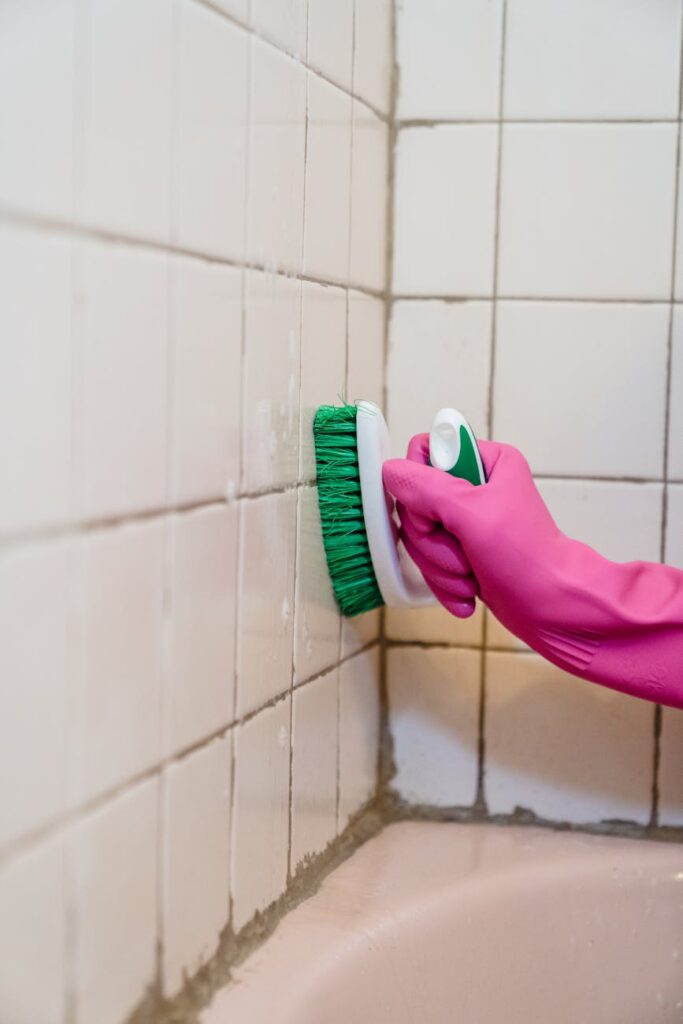
- Use your brush to scrub the grout lines gently. Focus on stained areas, applying more pressure if necessary.
- Wipe the area with a damp sponge or cloth to remove any cleaning solution and loosened grime.
- Use a towel to dry the grout thoroughly. This step is crucial to prevent future mold growth.
- Method: Create a paste with equal parts baking soda and water. Apply it to the stained grout, then spray with vinegar. The foaming reaction helps lift stains.
- Method: Use 3% hydrogen peroxide for tough stains. Apply it directly to the grout, let sit for 10-15 minutes, and scrub away.
- Method: Follow the instructions on the label. These products are often formulated specifically for removing mold and mildew.
- Method: A steam cleaner can effectively kill mold spores without chemicals. Simply direct the steam at the grout lines and wipe away any loosened stains.
How to Fix Stains (Step-by-Step)
Removing moldy stains from grout can be a straightforward process if you follow these steps:
Step 1: Gather Your Supplies
Step 2: Apply the Cleaning Solution
Step 3: Scrub the Grout
Step 4: Rinse
Step 5: Dry the Area
Best Cleaning Methods
Here are some of the most effective methods for tackling moldy bathroom grout:
1. Vinegar and Baking Soda
2. Hydrogen Peroxide
3. Commercial Grout Cleaners
4. Steam Cleaning
Common Mistakes to Avoid
Cleaning grout can be straightforward, but several common mistakes can hinder your efforts:
1. Using Harsh Chemicals: Avoid bleach-based products, as they can discolor grout and are not as effective against mold.
2. Skipping the Drying Step: Failing to dry the area after cleaning can lead to mold regrowth.
3. Using the Wrong Tools: Avoid metal brushes, which can damage grout. Stick to soft-bristled brushes instead.
4. Not Testing First: Always test a small, hidden area when using a new cleaning solution to check for discoloration or damage.
Prevention Tips
Preventing moldy stains in bathroom grout is easier than removing them. Here are some effective strategies:
1. Regular Cleaning: Clean your grout at least once a month to prevent mold buildup.
2. Improve Ventilation: Use an exhaust fan or open windows during and after showers to reduce humidity.
3. Seal Your Grout: Apply a grout sealer every 6-12 months to create a barrier against moisture.
4. Fix Leaks: Address any plumbing issues promptly to prevent water from accumulating.
5. Use Mold-Resistant Products: Choose mold-resistant grout and caulk when renovating or installing new fixtures.
Frequently Asked Questions
1. How often should I clean my bathroom grout?
Aim to clean your bathroom grout at least once a month to prevent mold buildup.
2. Can I use bleach to clean grout?
It is not recommended, as bleach can discolor grout and may not effectively kill mold spores.
3. What should I do if stains persist after cleaning?
If stains remain, consider using a stronger commercial grout cleaner or consult a professional cleaning service.
4. Is steam cleaning safe for grout?
Yes, steam cleaning is a safe and effective method for cleaning grout without using chemicals.
5. How can I tell if my grout needs to be sealed?
If water absorbs into the grout instead of beading up, it’s time to apply a grout sealer.
6. Can I prevent mold without chemicals?
Yes, improving ventilation and regularly cleaning can significantly reduce mold growth without chemicals.
By following this guide, you can effectively tackle moldy bathroom grout stains, ensuring your bathroom remains clean and hygienic. With a little effort and the right techniques, you can maintain a fresh and inviting space in your home.