
Moldy Bathroom Grout Mould & Damp Guide Part 2
Introduction
Moldy bathroom grout is a common issue that many homeowners face. It not only looks unsightly but can also lead to more serious damp problems. This guide aims to help you identify the causes, fix the problem, and prevent it from recurring. Let’s dive into the details.
What Causes Mould & Damp?
Mould thrives in damp environments, making bathrooms a prime target. The primary factors contributing to mould growth in bathroom grout include:
1. High Humidity: Bathrooms often have high moisture levels due to showers and baths.
2. Poor Ventilation: Lack of airflow can trap moisture, leading to damp conditions.
3. Leaky Pipes: Any leaks can increase humidity and create a perfect setting for mould.
4. Dirty Grout: Grout collects soap scum and dirt, providing nutrients for mould spores.
5. Temperature Fluctuations: Warm, humid air can condense and create damp spots.
Why This Problem Happens
Understanding why mould and damp occur is crucial for effective cleaning. Here are the main reasons:
- Condensation: When warm air meets cold surfaces, water droplets form, leading to moisture accumulation.
- Neglect: Regular cleaning and maintenance are often overlooked, allowing dirt and moisture to build up.
- Inadequate Cleaning Products: Using ineffective cleaners can fail to tackle the root of the problem, allowing mould to persist.
- Old Grout: Over time, grout can wear down, allowing water to penetrate and create damp conditions.
- Rubber gloves
- A mask (to avoid inhaling spores)
- A scrubbing brush or old toothbrush
- Spray bottle
- Baking soda
- White vinegar
- Hydrogen peroxide (optional)
- Bleach (optional)
- Natural Solutions: Baking soda and vinegar are effective and eco-friendly.
- Commercial Cleaners: Use products specifically designed for removing mould and mildew. Look for ones that contain mould inhibitors.
- Steam Cleaning: A steam cleaner can penetrate grout deeply, killing mould without chemicals.
How to Fix Mould & Damp (Step-by-Step)
Step 1: Gather Your Supplies
You will need:
Step 2: Prepare the Area
1. Ventilate: Open windows and turn on exhaust fans to improve airflow.
2. Remove Items: Take any toiletries, towels, and mats out of the bathroom.
Step 3: Apply Cleaning Solution
1. Baking Soda Paste: Mix baking soda with water to form a paste. Apply it to the affected grout areas.
2. Vinegar Spray: Fill a spray bottle with white vinegar and spray it on the grout. Let it sit for about 10 minutes.
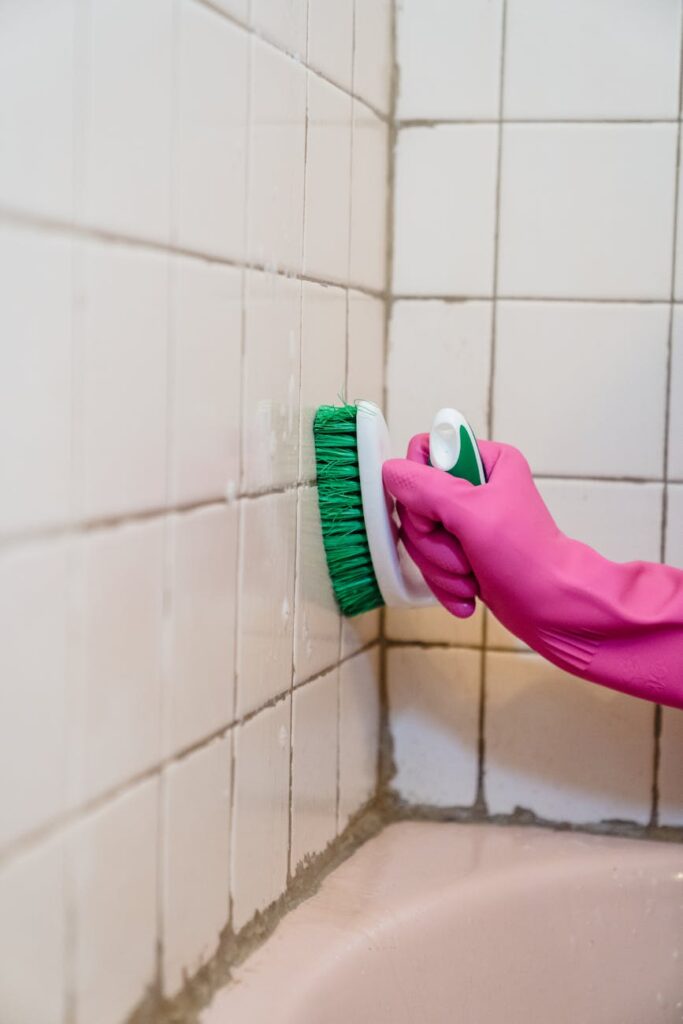
Step 4: Scrub the Grout
Using the scrubbing brush or toothbrush, scrub the grout lines. Use firm but gentle pressure to avoid damaging the grout.
Step 5: Rinse and Dry
1. Rinse: Use warm water to rinse away the baking soda and vinegar mixture.
2. Dry: Wipe the area with a clean towel to remove excess moisture.
Step 6: Disinfect (Optional)
If mould persists, consider using hydrogen peroxide or a diluted bleach solution (1 part bleach to 10 parts water). Apply it carefully, let it sit for 10 minutes, then scrub and rinse.
Step 7: Repeat as Necessary
You may need to repeat the process for stubborn mould stains.
Best Cleaning Methods
Common Mistakes to Avoid
1. Ignoring Ventilation: Always ensure your bathroom is well-ventilated, especially after hot showers.
2. Using Too Much Water: Excess water can exacerbate the problem; use just enough to clean.
3. Using Harsh Chemicals: Overusing bleach can weaken grout and lead to more problems.
4. Neglecting Regular Maintenance: Clean grout regularly to prevent mould from returning.
Prevention Tips
1. Improve Ventilation: Install an exhaust fan or open windows during and after showers.
2. Wipe Down Surfaces: After bathing, use a squeegee or towel to dry tiles and grout.
3. Seal Grout: Apply a grout sealant every 6-12 months to create a barrier against moisture.
4. Use Mould-Resistant Products: Consider using mould-resistant paints and materials in your bathroom.
5. Keep It Clean: Regularly clean your bathroom to prevent dirt build-up that can lead to mould.
Frequently Asked Questions
1. How often should I clean my bathroom grout?
Aim for at least once a month to keep mould at bay.
2. Can I use bleach on colored grout?
Bleach can discolor colored grout. Test in an inconspicuous area first or opt for a safer cleaner.
3. What if the mould returns after cleaning?
Persistent mould might indicate underlying damp issues. Consider consulting a professional.
4. Is it possible to remove mould without scrubbing?
While scrubbing is effective, using steam cleaning or specific mould removal products can reduce the need for scrubbing.
5. Can I prevent mould if I have a small bathroom?
Yes, improved ventilation and regular cleaning can prevent mould growth in small spaces.
6. What grout sealant should I use?
Choose a high-quality, water-resistant grout sealant designed for bathrooms.
Conclusion
Mouldy bathroom grout can be a nuisance, but with the right knowledge and tools, you can clean it effectively and prevent it from returning. Regular maintenance and improved ventilation are key to keeping your bathroom fresh and mould-free. Follow this guide, and you’ll be well on your way to a cleaner, healthier bathroom.