
Moldy Bathroom Grout: Mould & Damp Guide Part 1
Introduction
Mouldy bathroom grout is more than just an eyesore; it’s a sign of dampness that can lead to bigger problems in your home. Grout lines, especially in wet areas, are prone to mould growth if not properly maintained. This guide provides you with actionable steps to identify, fix, and prevent mould and damp in your bathroom grout.
What Causes Mould & Damp?
Mould thrives in environments that are warm, dark, and moist. Your bathroom is a perfect breeding ground due to:
1. Humidity: Showers and baths create steam, which increases moisture levels.
2. Poor Ventilation: Lack of airflow allows humidity to linger.
3. Water Leakage: Leaks from pipes or fixtures introduce additional moisture.
4. Dirty Surfaces: Soap scum and organic debris provide food for mould spores.
Each of these factors contributes to the growth of mould in bathroom grout, making it essential to address them.
Why This Problem Happens
Understanding why mould grows in your bathroom helps in identifying the best solutions. Here are the primary reasons:
- Condensation: Warm air from your shower meets cooler surfaces, leading to condensation. This moisture accumulates in grout lines.
- Neglected Maintenance: Grout needs regular cleaning and sealing. Neglecting this can lead to mould buildup.
- Infrequent Cleaning: If you only clean occasionally, mould has time to establish itself.
- Structural Issues: Cracks in walls or floors can allow water to seep in, creating damp conditions.
- Gloves
- Mask
- Scrub brush or toothbrush
- Spray bottle
- Vinegar or bleach
- Baking soda (optional)
- Grout sealer
- For Vinegar: Fill a spray bottle with white vinegar and spray directly onto the mouldy grout. Let it sit for at least 30 minutes.
- For Bleach: Mix one part bleach to three parts water in a spray bottle. Apply to the affected areas and let it sit for 10-15 minutes.
- Vinegar: A natural and effective solution for light mould. It’s non-toxic and safe for most surfaces.
- Bleach: Effective for stubborn mould but should be used with caution. Always ventilate the area and never mix with ammonia.
- Baking Soda: A gentle abrasive that can help lift stains when combined with vinegar or water.
- Commercial Grout Cleaners: These often contain stronger chemicals designed for heavy mould infestations. Always follow the instructions provided.
By targeting these underlying issues, you can effectively combat mould and damp.
How to Fix Mould & Damp (Step-by-Step)
Step 1: Gather Your Supplies
Step 2: Safety First
Wear gloves and a mask to protect yourself from mould spores and cleaning fumes.
Step 3: Apply Cleaning Solution
Step 4: Scrub the Grout
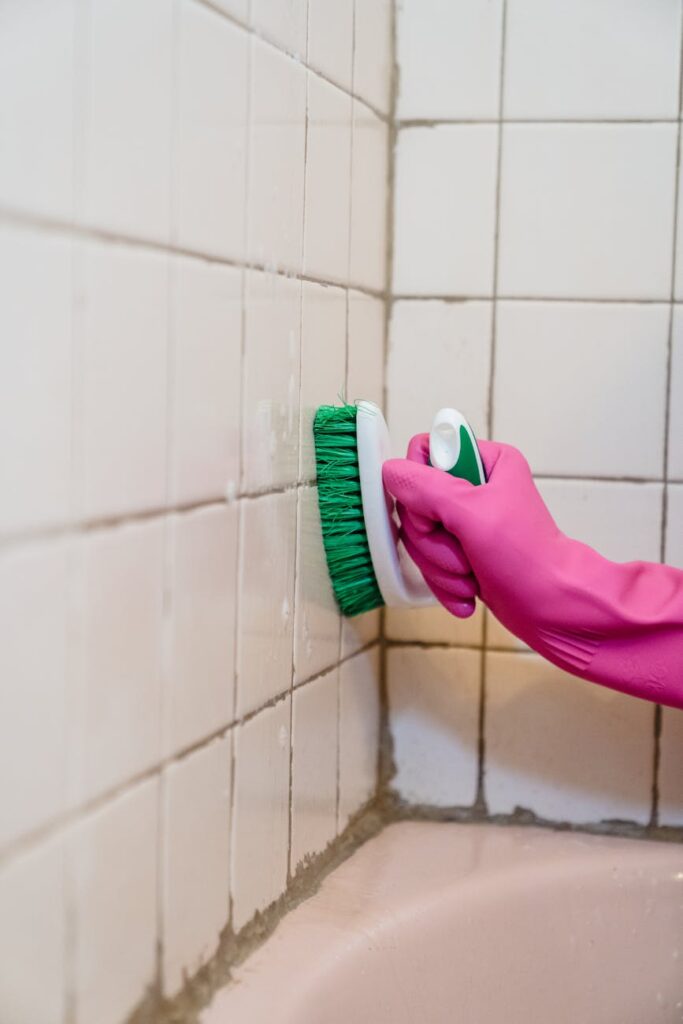
Use a scrub brush or an old toothbrush to scrub the grout lines. For tough stains, sprinkle baking soda on the grout before scrubbing.
Step 5: Rinse Thoroughly
After scrubbing, rinse the area with warm water to remove any cleaning solution. Make sure no residue is left behind.
Step 6: Dry the Area
Use a towel or cloth to dry the grout and surrounding surfaces. This step is crucial to prevent further mould growth.
Step 7: Seal the Grout
Once dry, apply a grout sealer to protect against future dampness. Follow the manufacturer’s instructions for application.
Best Cleaning Methods
Different cleaning agents work best for different situations:
Common Mistakes to Avoid
1. Ignoring Ventilation: Never underestimate the importance of airflow. Avoid keeping bathroom doors closed for extended periods.
2. Using Too Much Water: Excessive moisture can worsen the problem. Use just enough water to clean surfaces without soaking them.
3. Skipping Sealing: Failing to seal grout after cleaning leaves it vulnerable to future mould growth.
4. Mixing Chemicals: Never mix bleach with ammonia or other cleaning agents. This can create toxic fumes.
5. Delayed Action: Address mould growth as soon as you spot it. The longer you wait, the harder it is to remove.
Prevention Tips
1. Improve Ventilation: Install an exhaust fan and use it during and after showers to reduce humidity.
2. Wipe Down Surfaces: After using the shower, wipe down tiles and grout with a squeegee or towel.
3. Regular Cleaning: Clean your bathroom at least once a week to prevent mould buildup.
4. Seal Grout Periodically: Reapply grout sealer every 6 to 12 months, depending on wear and tear.
5. Fix Leaks Promptly: Regularly check for and repair any leaks in pipes or fixtures.
Frequently Asked Questions
1. How often should I clean my bathroom grout?
Aim to clean your bathroom grout at least once a week to prevent mould buildup.
2. Can I use vinegar and bleach together?
No, mixing these two can produce harmful fumes. Use them separately and ensure good ventilation.
3. What’s the best way to dry my bathroom after a shower?
Use an exhaust fan, open a window, or wipe surfaces down with a towel to promote drying.
4. Is mould in grout harmful?
While not usually harmful, mould can cause allergic reactions and respiratory issues in sensitive individuals. It’s best to remove it promptly.
5. How can I tell if my grout needs sealing?
If water no longer beads on the grout surface, it’s time to reseal. You can also conduct a simple water test by pouring a small amount on the grout.
6. Can I use a steam cleaner on my grout?
Yes, steam cleaners can be very effective for cleaning grout without chemicals, but ensure to follow the manufacturer’s guidelines.
By following these guidelines, you can tackle mouldy bathroom grout effectively, ensuring your bathroom remains clean and healthy. Stay tuned for Part 2, where we’ll delve deeper into advanced cleaning techniques and maintenance strategies.