
Mold in Shower Stains Guide Part 2
Introduction
Mold stains in your shower can be both unsightly and a source of frustration for homeowners. They not only compromise the aesthetics of your bathroom but can also indicate a larger issue related to moisture and ventilation. In this guide, we’ll address the causes of these stains, how to effectively clean them, and tips for preventing mold from reappearing.
What Causes Stains?
Mold stains in the shower primarily arise from a few key factors:
1. Moisture: Showers are damp environments, making them ideal for mold growth.
2. Poor Ventilation: A lack of airflow can lead to stagnant moisture, promoting mold.
3. Soap Scum and Residue: Soap can leave behind residues that mold feeds on.
4. Organic Materials: Body oils and hair can contribute to the food source for mold growth.
Understanding these causes is crucial for effective prevention and cleaning.
Why This Problem Happens
Mold thrives in warm, humid conditions, and your shower provides the perfect environment. When water evaporates, it leaves moisture behind on surfaces. If your bathroom is not well-ventilated, this moisture can accumulate, leading to mold growth. Additionally, if you don’t regularly clean soap scum or debris, you create a breeding ground for mold.
How to Fix Stains (Step-by-Step)
Cleaning mold stains in your shower can be straightforward if you follow these steps:
Step 1: Gather Your Supplies
- Cleaning Solution: You can use a commercial mold remover or create a homemade solution with equal parts vinegar and water, or a mixture of baking soda and water.
- Scrub Brush or Sponge: Ensure it’s non-abrasive to protect surfaces.
- Gloves: Protect your hands from harsh chemicals and mold.
- Spray Bottle: For easy application of your cleaning solution.
- Microfiber Cloth: For drying surfaces afterward.
- Remove any personal items, such as shampoo bottles and towels, from the shower.
- Ensure the bathroom is well-ventilated by opening a window or turning on the exhaust fan.
- Spray your cleaning solution generously on the stained areas. If using vinegar, let it sit for 15-30 minutes to penetrate the mold.
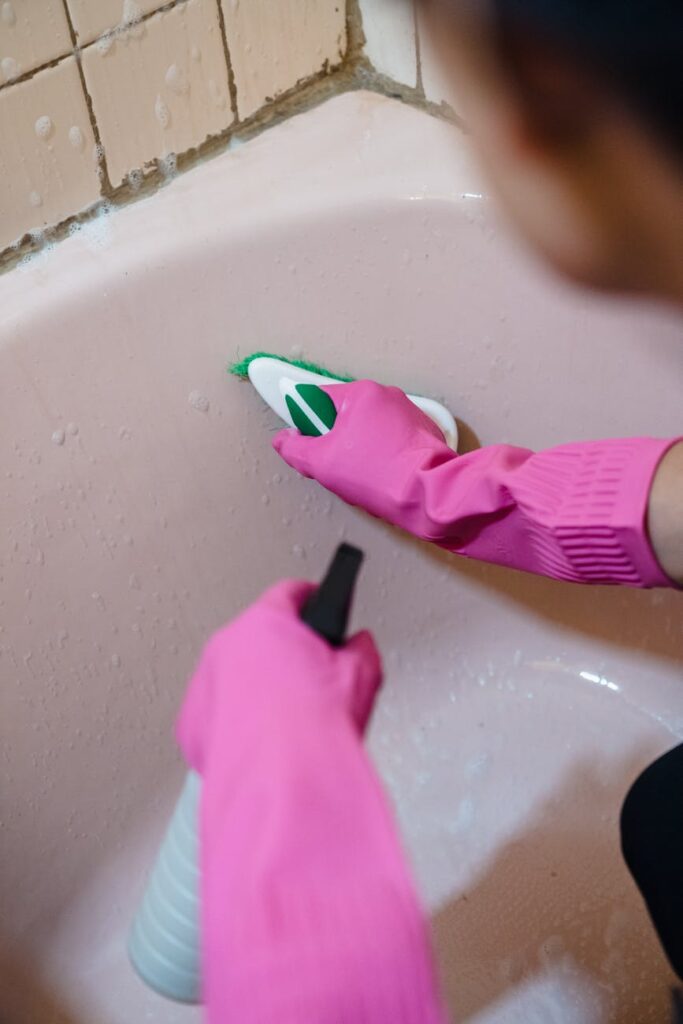
- Use a scrub brush or sponge to scrub the affected areas, focusing on grout lines and corners where mold often accumulates.
- Rinse the area with hot water to remove any cleaning solution and loosened mold.
- Use a microfiber cloth to dry the area thoroughly. This step is crucial in preventing future mold growth.
- For stubborn stains, repeat the process or let the cleaning solution sit longer before scrubbing.
Step 2: Prepare the Area
Step 3: Apply the Cleaner
Step 4: Scrub the Area
Step 5: Rinse Thoroughly
Step 6: Dry the Surface
Step 7: Repeat if Necessary
Best Cleaning Methods
Here are some effective cleaning methods for tackling mold stains:
1. Vinegar: A natural disinfectant that can kill mold spores. Its acidity helps break down soap scum and grime.
2. Baking Soda: Known for its abrasive qualities, baking soda can scrub away mold without damaging surfaces. Mix it with water to form a paste.
3. Hydrogen Peroxide: A powerful mold killer. Apply 3% hydrogen peroxide directly to the stains and let it sit for about 10 minutes before scrubbing.
4. Commercial Mold Removers: Many products on the market are specifically designed to handle mold stains. Always follow the manufacturer’s instructions.
Common Mistakes to Avoid
1. Not Ventilating Properly: Failing to ventilate your bathroom can exacerbate the problem. Always ensure airflow during and after showers.
2. Using Abrasive Cleaners: Avoid harsh scrubbing pads that can scratch surfaces and lead to further mold growth.
3. Ignoring Grout Lines: Mold often hides in grout. Be sure to pay extra attention to these areas during cleaning.
4. Neglecting Regular Maintenance: Waiting too long between cleanings can allow mold to take hold. Establish a regular cleaning routine to keep your shower mold-free.
Prevention Tips
1. Use a Squeegee: After each shower, wipe down walls and doors with a squeegee to remove excess moisture.
2. Install a Ventilation Fan: Ensure your bathroom has adequate ventilation to reduce humidity levels.
3. Choose Mold-Resistant Products: Consider using mold-resistant paints and shower curtains.
4. Regularly Clean: Incorporate shower cleaning into your weekly routine to prevent mold from establishing itself.
5. Check for Leaks: Regularly inspect your shower for leaks or water accumulation, which can promote mold growth.
6. Keep the Room Dry: If possible, leave the shower door open after use to allow air circulation.
Frequently Asked Questions
1. How do I know if it’s mold or mildew?
Mold is typically black or green and has a fuzzy texture, while mildew is usually white and powdery. Both thrive in damp environments.
2. Can I use bleach to clean mold stains?
While bleach can kill mold, it may not be effective on porous surfaces like grout and can lead to discoloration. Use it with caution.
3. How often should I clean my shower to prevent mold?
Aim for at least once a week to keep mold at bay. Regular maintenance is key.
4. Is it safe to use vinegar on all surfaces?
Vinegar is safe for most surfaces, but avoid using it on natural stone as it can etch the stone.
5. What should I do if the mold keeps returning?
If mold keeps returning, check for underlying moisture issues and consider consulting a professional for a thorough inspection.
6. Can I prevent mold without using chemicals?
Yes! Regular cleaning with natural solutions like vinegar and baking soda, alongside proper ventilation, can effectively prevent mold growth.
By following the steps outlined in this guide, you can effectively tackle mold stains in your shower and keep your bathroom looking clean and inviting. Establishing a routine and being proactive will go a long way in ensuring your shower remains a mold-free zone.