
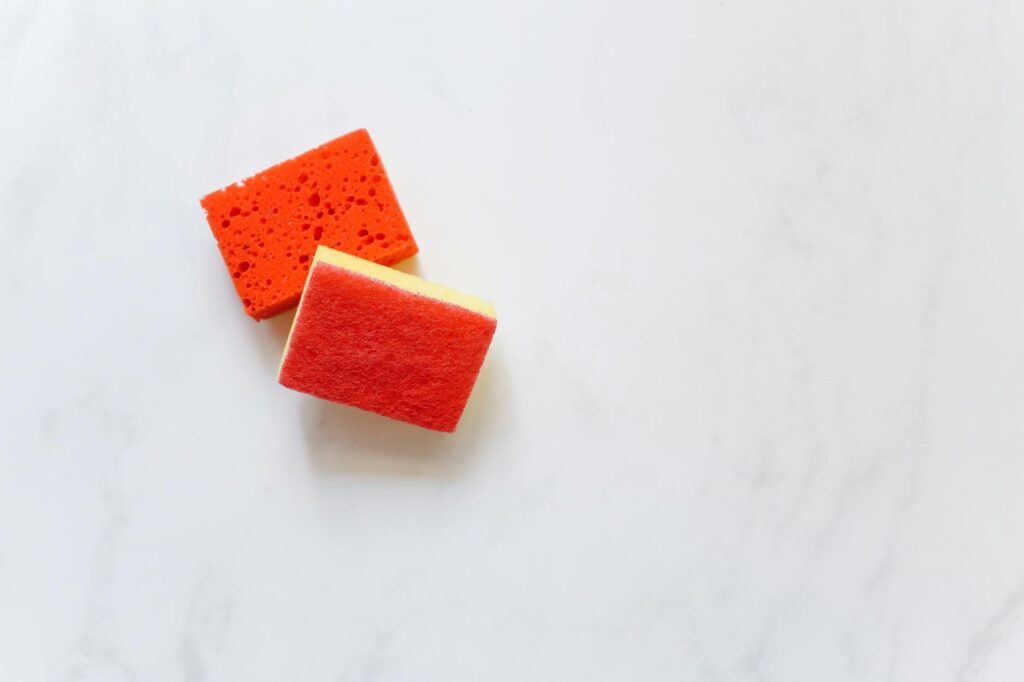
Kitchen Sponge Stains Odours Guide Part 1
Introduction
A smelly kitchen sponge can quickly turn your cooking space from a sanitary haven to a breeding ground for unpleasant odours. Sponges are essential for cleaning, but they can trap food particles, moisture, and bacteria if not properly maintained. This guide will help you understand the causes of sponge odours, how to eliminate them, and how to keep your sponges fresh for longer.
What Causes Odours?
Kitchen sponge odours primarily arise from:
- Bacteria and Mold: Sponges retain moisture, making them ideal environments for bacteria and mold growth. When these microorganisms proliferate, they produce foul-smelling compounds.
- Food Particles: Bits of food left in the sponge can decompose, contributing to unpleasant smells.
- Hard Water Deposits: Minerals in hard water can accumulate in sponges, creating a musty odour.
- Improper Drying: If sponges are not allowed to dry completely, they remain damp, which fosters bacterial growth.
- Extended Use Without Cleaning: Using a sponge for weeks without cleaning it can lead to a buildup of bacteria and food residues.
- Humidity: High humidity levels in your kitchen can exacerbate the problem by keeping sponges moist for longer periods.
- Action: Rinse the sponge under hot running water to remove any loose food particles.
- Tip: Squeeze the sponge repeatedly to release trapped debris.
- Action: Mix equal parts white vinegar and water in a bowl. Soak the sponge in this solution for about 5-10 minutes.
- Why: Vinegar is a natural disinfectant that kills bacteria and neutralizes odours.
- Action: Place the damp sponge in the microwave for 1-2 minutes. Ensure it’s wet to prevent fire hazards.
- Why: The heat kills most bacteria and helps eliminate smells.
- Action: After soaking or microwaving, rinse the sponge thoroughly under hot water.
- Tip: Squeeze out as much water as possible.
- Action: Place the sponge in a well-ventilated area to dry completely.
- Tip: You can also hang it up or place it in a dish rack.
- How: Mix baking soda with a small amount of water to create a paste. Apply it to the sponge and scrub gently. Rinse thoroughly.
- Why: Baking soda neutralizes odours and acts as a mild abrasive to scrub away grime.
- How: Mix one part bleach to ten parts water. Soak the sponge for 5 minutes, then rinse thoroughly.
- Caution: Use this method sparingly and ensure proper ventilation. Avoid mixing bleach with vinegar.
- How: Fill a bowl with hot water and add a few drops of dish soap. Soak the sponge for 10 minutes, then rinse.
- Why: This method helps remove grease and food residues.
- Not Changing Sponges Regularly: Sponges should be replaced every 2-4 weeks, depending on use.
- Using the Same Sponge for Different Tasks: Using a sponge for multiple cleaning tasks can transfer odours and bacteria. Designate sponges for specific areas (e.g., dishes vs. countertops).
- Storing Wet Sponges: Leaving sponges in a closed container or sink traps moisture. Always store them in a dry, open area.
- Neglecting to Clean Sponges: Regular cleaning is crucial. Don’t wait until the sponge smells bad to take action.
- Rinse After Each Use: Always rinse your sponge thoroughly after cleaning to remove food particles.
- Dry Completely: Ensure your sponge dries out completely between uses. Consider using a sponge holder that allows for airflow.
- Rotate Sponges: Keep multiple sponges on hand and rotate their use to give each sponge a chance to dry out.
- Use Dishwasher: If your sponge is dishwasher-safe, toss it in the dishwasher regularly for a thorough clean.
- Limit Usage: Try to limit the number of uses before cleaning or replacing your sponge.
Understanding these causes is the first step in tackling the problem effectively.
Why This Problem Happens
Several factors contribute to the development of odours in kitchen sponges:
By recognizing these factors, you can take proactive steps to prevent odours from occurring in the first place.
How to Fix Odours (Step-by-Step)
If your sponge has developed an odour, follow these steps to eliminate the smell effectively:
Step 1: Rinse Thoroughly
Step 2: Soak in Vinegar Solution
Step 3: Microwave Method (Optional)
Step 4: Rinse Again
Step 5: Dry Completely
By following these steps, you can effectively remove odours from your kitchen sponge.
Best Cleaning Methods
To keep your kitchen sponge smelling fresh, consider these effective cleaning methods:
1. Baking Soda Paste
2. Bleach Solution
3. Dish Soap and Hot Water
Common Mistakes to Avoid
To effectively manage kitchen sponge odours, avoid these common pitfalls:
By avoiding these mistakes, you can prolong the life of your sponge and keep your kitchen smelling fresh.
Prevention Tips
Preventing odours from developing in the first place is easier than fixing them. Here are some tips:
By incorporating these prevention tips, you can maintain the freshness of your kitchen sponges.
Frequently Asked Questions
1. How often should I replace my kitchen sponge?
It’s advisable to replace your kitchen sponge every 2-4 weeks, depending on usage and how well you maintain it.
2. Can I use a sponge for cleaning surfaces and dishes?
It’s best to designate sponges for specific tasks to avoid cross-contamination and odours.
3. What’s the best way to store sponges?
Store sponges in a dry, open area where air circulation is possible to prevent moisture buildup.
4. Can I disinfect my sponge in the washing machine?
Yes, you can wash sponges in the washing machine, but make sure they are dishwasher-safe and use a gentle cycle.
5. Are there any sponges that resist odours better than others?
Look for sponges labeled as odor-resistant or antimicrobial. These often have additives that help prevent bacteria growth.
6. What should I do if my sponge smells even after cleaning?
If your sponge continues to smell, it may be time to replace it. Persistent odours indicate that bacteria may be deeply embedded in the sponge.
By following this guide, you can effectively manage kitchen sponge odours and maintain a cleaner, more pleasant kitchen environment.