
Kitchen Sponge Odor Bathroom Guide Part 2
Introduction
Kitchen sponges are often the unsung heroes of our cleaning routine, especially when it comes to keeping our bathrooms fresh. However, they can quickly become a source of unpleasant odors if not properly maintained. This guide delves deep into understanding and resolving kitchen sponge odor issues specifically related to your bathroom.
What Causes Bathroom Odor?
Bathroom odors often arise from a combination of moisture, bacteria, and the materials found in sponges. When a sponge absorbs water and grime, it creates an ideal breeding ground for bacteria, mold, and mildew. These elements can lead to unpleasant odors that can permeate your bathroom.
Key Contributors:
- Moisture: Damp sponges retain water, which promotes bacterial growth.
- Food Particles: If sponges are used for cleaning in the kitchen, leftover food can transfer to the bathroom during cross-use.
- Chemical Reactions: Certain cleaning agents can react with sponge materials, leading to a breakdown that contributes to odor.
- Check for visible signs of mold or excessive wear. If the sponge is heavily discolored or falling apart, it’s time to replace it.
- Rinse the sponge under hot water to remove any food particles or cleaning products.
- Mix equal parts water and white vinegar in a bowl. Soak the sponge in this solution for about 5-10 minutes. Vinegar is a natural disinfectant and deodorizer.
- Place the damp sponge in the microwave for 1-2 minutes. This step kills bacteria and helps to eliminate odors. Ensure the sponge is wet to prevent fire hazards.
- After microwaving, rinse the sponge thoroughly under hot water to remove any remaining vinegar smell.
- Place the sponge in a well-ventilated area to dry completely. Avoid placing it in a closed container or drawer.
- Mix baking soda with a bit of water to create a paste. Scrub the sponge with this paste and let it sit for 10 minutes before rinsing.
- Soak the sponge in a solution of hydrogen peroxide and water. This can help disinfect and eliminate odors.
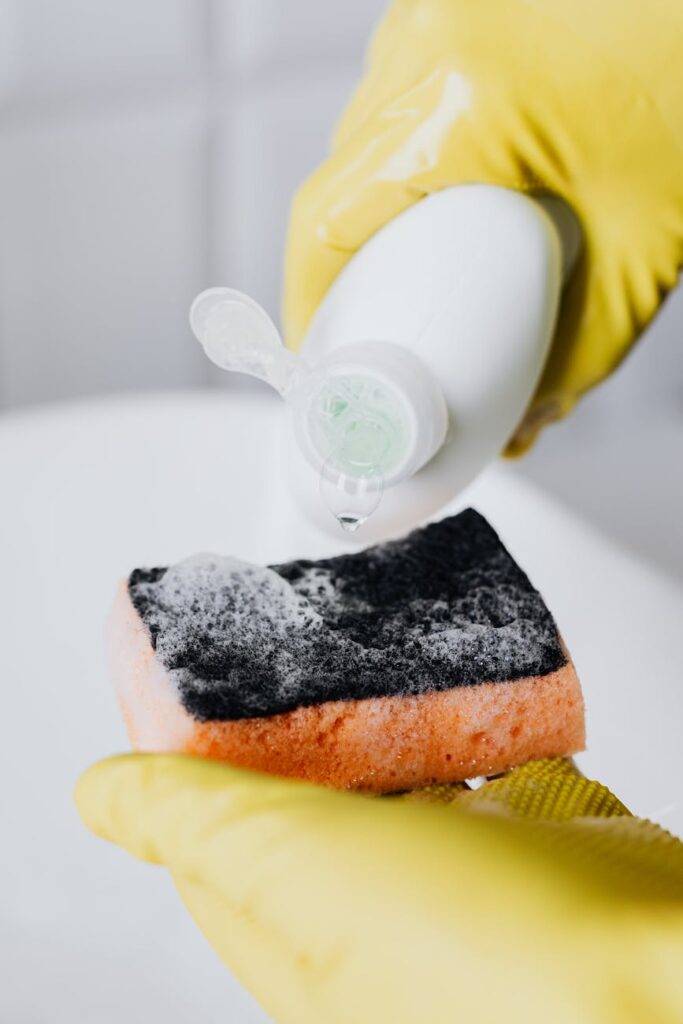
- Regularly wash your sponge in a mixture of dish soap and hot water. This can help remove grease and grime that contribute to odors.
- Neglecting Regular Cleaning: Failing to clean your sponge regularly will allow odors to develop.
- Using the Same Sponge: Using one sponge for both kitchen and bathroom cleaning can lead to cross-contamination.
- Storing in Closed Spaces: Storing sponges in a closed container traps moisture and breeds bacteria.
- Ignoring Replacement: Sponges should be replaced every few weeks, especially if they start to smell or fray.
- Use Separate Sponges: Designate specific sponges for kitchen and bathroom use to avoid cross-contamination.
- Dry Thoroughly: Ensure sponges are dried after each use. Consider using a sponge holder that allows airflow.
- Regular Replacement: Change out sponges every 2-4 weeks, depending on usage.
- Limit Moisture: Wipe down surfaces after use to reduce humidity levels in the bathroom.
Why This Problem Happens
Understanding why your sponges might emit odors is crucial for effective cleaning. Here are the primary reasons:
1. Improper Drying: After use, if sponges are not allowed to dry completely, they remain damp, fostering bacteria growth.
2. Lack of Cleaning: Neglecting to clean your sponge regularly allows grime to build up.
3. Cross-Contamination: Using the same sponge in both the kitchen and bathroom can transfer odors and bacteria.
4. Sponge Material: Some sponges are more porous than others, retaining more moisture and odor.
How to Fix Bathroom Odor (Step-by-Step)
To eliminate kitchen sponge odor in your bathroom, follow this straightforward process:
Step 1: Assess the Sponge
Step 2: Rinse Thoroughly
Step 3: Soak in Vinegar Solution
Step 4: Microwave (Optional)
Step 5: Rinse Again
Step 6: Air Dry
Best Cleaning Methods
When it comes to maintaining a fresh-smelling sponge, several effective methods can be employed:
1. Baking Soda Paste
2. Hydrogen Peroxide
3. Dish Soap and Hot Water
Common Mistakes to Avoid
To effectively deal with sponge odors, be mindful of these common pitfalls:
Prevention Tips
To keep your kitchen sponges odor-free in your bathroom, consider these preventive measures:
Frequently Asked Questions
1. How often should I replace my kitchen sponge?
You should replace your kitchen sponge every 2-4 weeks, or sooner if it shows signs of wear or odor.
2. Can I use bleach to clean my sponge?
While bleach can disinfect, it’s not recommended for sponges as it can break down the sponge material over time.
3. What is the best way to dry a sponge?
Air drying is the best method. Place it in a well-ventilated area or use a sponge holder that promotes airflow.
4. Can I wash my sponge in the dishwasher?
Yes, you can wash your sponge in the dishwasher on the top rack. Use a heated drying cycle for best results.
5. Is it safe to microwave my sponge?
Yes, microwaving a damp sponge for 1-2 minutes can kill bacteria, but ensure it is wet to avoid fire hazards.
6. What should I do if my sponge still smells after cleaning?
If the smell persists, it’s best to replace the sponge. Persistent odors can indicate deep-set bacteria that cleaning methods cannot eliminate.
Conclusion
A clean and odor-free sponge is key to maintaining a fresh bathroom environment. By understanding the causes of sponge odors and implementing effective cleaning and prevention strategies, you can ensure your kitchen sponge remains a reliable tool in your cleaning arsenal. Follow the steps outlined in this guide, and you’ll have a fresh-smelling sponge ready for any cleaning task.