
Kitchen Smell Removal Odours Guide Part 2
Introduction
Kitchen odours can linger long after meals have been prepared, making your home less welcoming. Whether it’s the smell of burnt food, fish, or stale grease, it’s essential to tackle these odours effectively. In this guide, we’ll explore what causes these unpleasant smells, why they persist, and how to remove them efficiently. Let’s dive in!
What Causes Odours?
Understanding the sources of kitchen odours is the first step in removing them. Common culprits include:
- Cooking Residue: Spills and splatters from cooking can leave behind residues that emit odours.
- Food Waste: Leftover food, especially meat and fish, can rot and produce foul smells.
- Grease Buildup: Grease can accumulate on surfaces and in appliances, releasing odours over time.
- Mold and Mildew: Moisture can lead to mold growth, which generates musty smells.
- Old Appliances: Refrigerators and microwaves can harbor old food particles, leading to unpleasant odours.
- Poor Ventilation: Without proper airflow, smells can linger and permeate the kitchen.
- Neglecting Cleaning: Regular cleaning is crucial; failure to clean spills and food waste can lead to odours.
- Inadequate Waste Disposal: Not sealing trash can or leaving food scraps can attract pests and cause smells.
- Appliance Issues: Faulty or dirty appliances can contribute to persistent odours.
- Trash cans
- Refrigerator
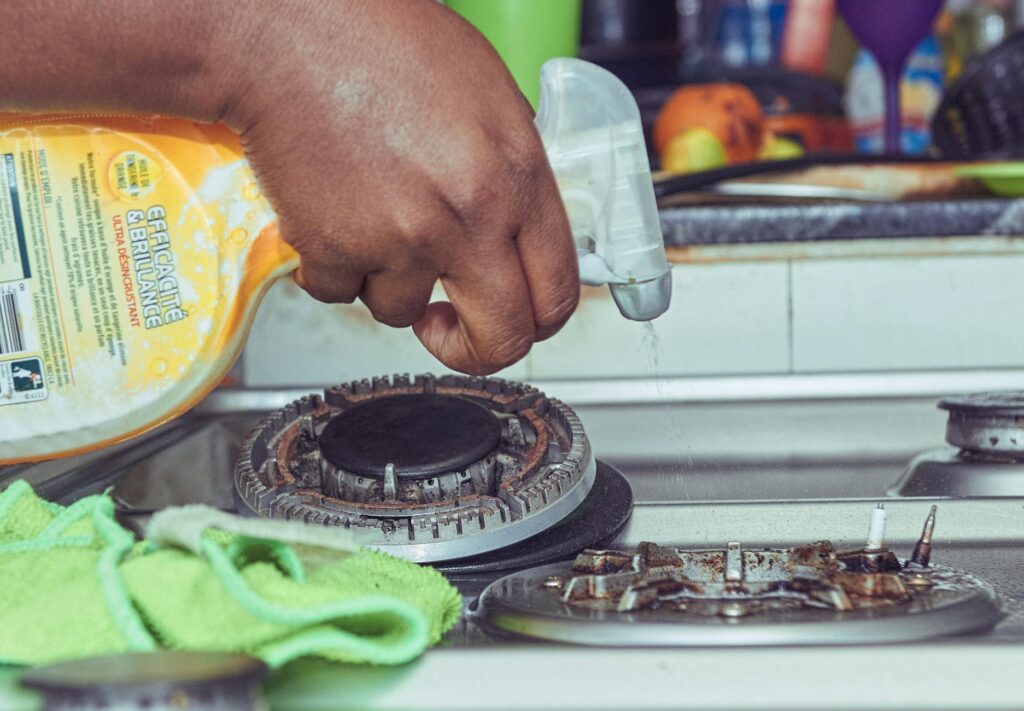
- Oven and stovetop
- Sink and drains
- Open Windows: Allow fresh air to circulate through the kitchen.
- Use Fans: Turn on exhaust fans or portable fans to help dissipate lingering smells.
- Baking Soda: Known for its deodorizing properties, baking soda can absorb and neutralize odours.
- Vinegar: A natural disinfectant, vinegar can break down grease and eliminate smells.
- Essential Oils: Adding a few drops of essential oils, like lemon or lavender, to cleaning solutions can leave a pleasant scent.
- Activated Charcoal: Place activated charcoal in the kitchen to absorb unwanted smells effectively.
- Ignoring Spills: Small spills can lead to big smells. Clean them up immediately.
- Neglecting Appliances: Don’t forget to clean behind and under appliances where food particles can hide.
- Overlooking the Garbage Disposal: Regularly clean your garbage disposal to prevent lingering odours.
- Using Strong Air Fresheners: Strong fragrances can mask smells but often don’t eliminate them. Focus on cleaning first.
- Regular Cleaning: Establish a routine cleaning schedule for the kitchen, focusing on surfaces and appliances.
- Proper Storage: Store food in airtight containers to prevent spoilage and odours.
- Ventilation: Use exhaust fans while cooking to expel smells immediately.
- Manage Food Waste: Dispose of food scraps regularly and keep the trash can clean.
Why This Problem Happens
Odours can become persistent for various reasons:
How to Fix Odours (Step-by-Step)
Removing kitchen odours requires a systematic approach. Follow these steps to effectively tackle the problem:
Step 1: Identify the Source
Walk through the kitchen and take note of any specific areas that seem to be the source of the smell. Check:
Step 2: Clean Surfaces
1. Wipe Down Surfaces: Use a mixture of warm water and dish soap to wipe all surfaces, including countertops, stovetops, and cabinets.
2. Scrub Stubborn Spots: For tough stains, sprinkle baking soda on the area, let it sit for 15 minutes, and scrub with a damp sponge.
Step 3: Address Food Waste
1. Empty Trash Regularly: Dispose of kitchen waste daily. Use a trash can with a tight-fitting lid to minimize smells.
2. Clean the Trash Can: Rinse the trash can with a solution of vinegar and water to eliminate lingering odours.
Step 4: Freshen the Fridge
1. Check Expiration Dates: Go through the refrigerator and discard expired or spoiled food.
2. Clean Shelves: Wipe down fridge shelves with a mixture of baking soda and water to neutralize odours.
Step 5: Deodorize the Sink
1. Pour Baking Soda and Vinegar: Pour half a cup of baking soda followed by half a cup of vinegar down the drain. Let it fizz for a few minutes, then flush with hot water.
2. Clean the Garbage Disposal: Feed lemon peels or ice cubes into the disposal to help remove smells.
Step 6: Air It Out
Best Cleaning Methods
Here are some effective cleaning methods for tackling kitchen odours:
Common Mistakes to Avoid
Avoiding these mistakes will help you tackle kitchen odours more effectively:
Prevention Tips
To prevent kitchen odours from returning, implement these habits:
Frequently Asked Questions
1. How can I remove burnt food smells from my kitchen?
To remove burnt food smells, simmer a pot of water with lemon slices or vinegar on the stovetop. This will help neutralize the odour.
2. Why does my refrigerator smell bad?
A bad smell in the refrigerator is often caused by spoiled food, spills, or mold. Regularly clean and check expiration dates to prevent this.
3. How do I clean my garbage disposal to eliminate odours?
To clean your garbage disposal, grind ice cubes along with lemon peels. This helps to eliminate odours and sharpen the blades.
4. Can I use air fresheners to mask kitchen odours?
While air fresheners can mask smells temporarily, they don’t eliminate the source of the odour. It’s essential to clean first and then use air fresheners if desired.
5. What can I do about lingering fish smells?
To tackle fish smells, soak a cotton ball in vinegar and leave it in the kitchen overnight. Additionally, cleaning surfaces with baking soda can help neutralize the odour.
6. Is it safe to use vinegar on all surfaces in the kitchen?
Vinegar is safe on most surfaces, but avoid using it on natural stone countertops, as it can cause damage. Always test a small area first.
—
By following this guide, you’ll be well-equipped to tackle and prevent kitchen odours effectively. Regular cleaning and maintenance can keep your kitchen smelling fresh and inviting.