
Kitchen Smell Removal: Mould & Damp Guide Part 2
Introduction
Mould and dampness in the kitchen can lead to unpleasant smells and create an unhealthy environment. Not only do they pose a risk to your home’s aesthetics, but they can also compromise the quality of air you breathe. In this guide, we will break down the causes of mould and damp, provide actionable steps to resolve these issues, and offer tips to prevent their recurrence.
What Causes Mould & Damp?
Understanding the causes of mould and dampness is crucial for effective treatment. Here are the primary contributors:
- High Humidity: Kitchens generate steam and moisture from cooking, which can lead to high humidity levels.
- Poor Ventilation: Lack of airflow allows moisture to settle and condense, creating a perfect breeding ground for mould.
- Leaking Pipes: Water leaks from plumbing or other sources can cause damp patches on walls and ceilings.
- Condensation: Cold surfaces, such as windows, can accumulate moisture from warm air, leading to dampness.
- Warmth and Moisture: Kitchens are naturally warm and humid, especially during cooking.
- Organic Material: Mould feeds on organic materials like wood, paper, and food particles.
- Dark Spaces: Areas with minimal light, such as behind appliances, can foster mould growth.
- Vinegar: Its acidity helps kill mould spores. Use it undiluted for tough spots.
- Baking Soda: Mix with water to form a paste. Apply it to mouldy areas and scrub after a few hours.
- Hydrogen Peroxide: This is an effective disinfectant. Spray it directly on mould and let it sit for 10 minutes before wiping clean.
- Commercial Mould Cleaners: Look for products specifically designed to combat mould and mildew.
- Regular Cleaning: Clean surfaces regularly with vinegar or baking soda.
- Use Air Purifiers: These can help reduce humidity and improve air quality.
- Seal Cracks and Gaps: Inspect and seal any cracks in walls or around windows.
- Monitor Humidity Levels: Use a hygrometer to keep humidity levels below 60%.
- Install Exhaust Fans: Make sure they are working effectively to expel moisture.
Why This Problem Happens
Mould and damp are not just irritants; they thrive in specific conditions:
Understanding these factors helps you tackle the root cause rather than just the symptoms.
How to Fix Mould & Damp (Step-by-Step)
Step 1: Identify the Source
Locate the source of dampness. Check under sinks, around appliances, and in corners for leaks or condensation.
Step 2: Remove Affected Items
Clear out any items affected by mould, such as food, utensils, or kitchen towels. Dispose of anything that’s beyond saving.
Step 3: Clean the Area
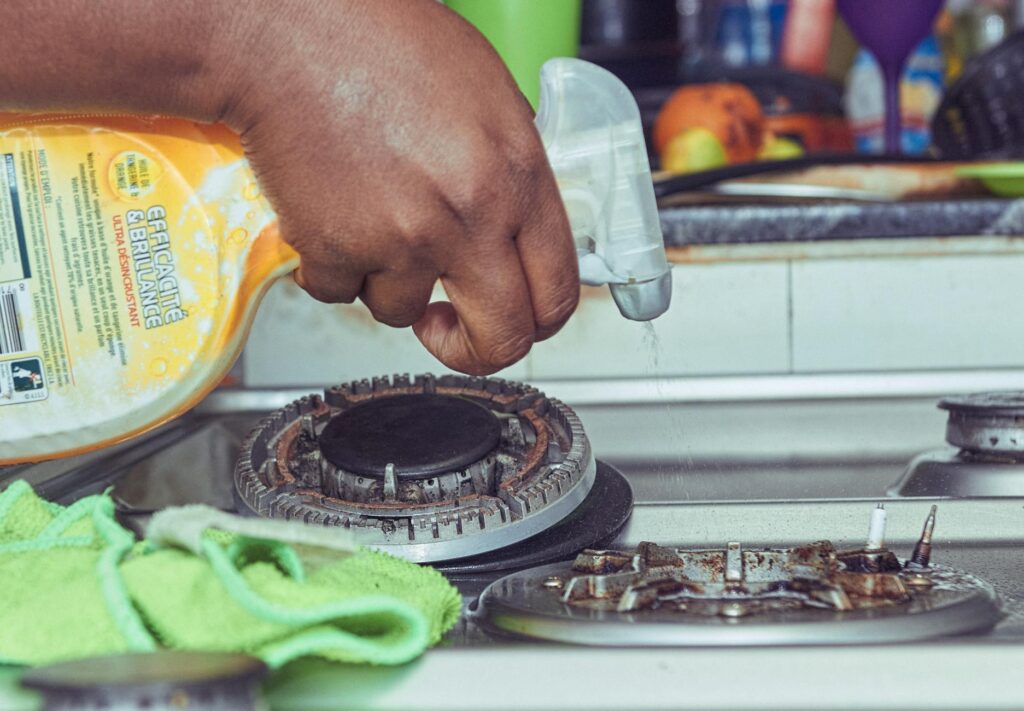
1. Prepare a Cleaning Solution: Use a mix of water and white vinegar (1:1 ratio) or a commercial mould remover.
2. Scrub the Surfaces: Use a sponge or brush to scrub affected areas. Ensure you cover corners and crevices.
3. Rinse and Dry: Rinse with clean water and dry the area thoroughly with a towel.
Step 4: Fix Leaks
If there are leaks, repair them immediately. This may involve tightening fittings, replacing seals, or calling a plumber.
Step 5: Improve Ventilation
Install exhaust fans or open windows while cooking to allow moisture to escape. Consider using dehumidifiers in particularly damp areas.
Step 6: Check Insulation
Ensure that your kitchen has adequate insulation to prevent condensation on cold surfaces.
Best Cleaning Methods
Using the right cleaning products can make a significant difference. Here are some effective solutions:
Common Mistakes to Avoid
1. Ignoring Small Spots: Even minor mould patches can grow quickly if ignored. Address them immediately.
2. Using the Wrong Cleaners: Avoid bleach; it can temporarily mask the smell but doesn’t kill mould roots.
3. Not Drying Surfaces: Always dry areas thoroughly after cleaning to prevent moisture accumulation.
4. Neglecting Ventilation: Failing to ventilate after cooking can lead to recurrent dampness.
Prevention Tips
To keep mould and damp at bay, implement these preventative strategies:
Frequently Asked Questions
1. How can I tell if I have mould in my kitchen?
Look for discolouration on walls, ceilings, or under sink areas. A musty smell is also a strong indicator.
2. Can I remove mould myself?
Yes, you can remove mould with cleaning solutions like vinegar or baking soda. However, large infestations may require professional help.
3. How do I prevent mould from returning?
Maintain low humidity, ensure proper ventilation, and regularly clean surfaces to prevent mould growth.
4. Is mould in the kitchen dangerous?
While not all mould is harmful, some types can cause health issues. It’s best to address mould promptly.
5. What should I do if mould keeps coming back?
If mould returns, assess for underlying issues such as leaks or poor ventilation and address those factors.
6. Can I paint over mould?
No, painting over mould will not solve the issue. Always clean and remove mould before painting.
Conclusion
Mould and dampness in the kitchen can be a persistent nuisance, but with the right approach, you can eliminate these problems effectively. Follow the steps outlined in this guide to tackle existing mould, prevent future occurrences, and create a healthier kitchen environment. By taking action today, you can ensure your kitchen remains a welcoming and safe space for you and your family.