
Kitchen Odor Removal Cleaning Guide Part 1
Introduction
A clean kitchen is essential for a healthy home. However, lingering odors can turn your culinary paradise into a smelly nightmare. Whether it’s from cooking, garbage, or even your refrigerator, understanding how to effectively remove these odors is crucial. This guide will provide you with practical solutions to tackle kitchen odor problems head-on, helping you create a fresh and welcoming space.
What Causes Odors in the Kitchen?
Understanding the source of kitchen odors is your first step toward effective removal. Here are some common culprits:
1. Cooking Residue: Grease and food particles can cling to surfaces, releasing unpleasant smells over time.
2. Garbage: Food scraps and waste can decompose, leading to foul odors that permeate your kitchen.
3. Refrigerator Spoilage: Expired or spoiled food can emit strong smells that spread throughout your kitchen.
4. Drains: Food particles can accumulate in your sink and drain, creating a breeding ground for bacteria and bad smells.
5. Appliances: Odors can emanate from dishwashers, microwaves, and ovens if not cleaned regularly.
Why This Problem Happens
Kitchen odors often arise from a combination of factors. Cooking can produce strong smells, but when combined with poor ventilation or lack of cleaning, these odors can linger. Additionally, food waste that isn’t disposed of promptly can cause significant odor issues. Understanding these factors will help you identify the best cleaning methods to tackle the problem effectively.
How to Fix Kitchen Odors (Step-by-Step)
Step 1: Identify the Source
Before you can eliminate odors, you need to find out where they’re coming from. Check the following areas:
- Garbage bins: Look for old food scraps.
- Refrigerator: Check for expired or spoiled items.
- Sink and drains: Inspect for food buildup.
- Appliances: Open and smell microwaves, ovens, and dishwashers.
Step 2: Clean the Areas
Garbage Disposal
1. Turn off the disposal.
2. Pour half a cup of baking soda down the drain.
3. Follow with a cup of vinegar.
4. Let it sit for 10-15 minutes, then rinse with hot water.
Refrigerator
1. Empty the fridge and check expiration dates.
2. Wipe down shelves with a mixture of water and vinegar (1:1 ratio).
3. Place an open box of baking soda inside to absorb future odors.
Surfaces
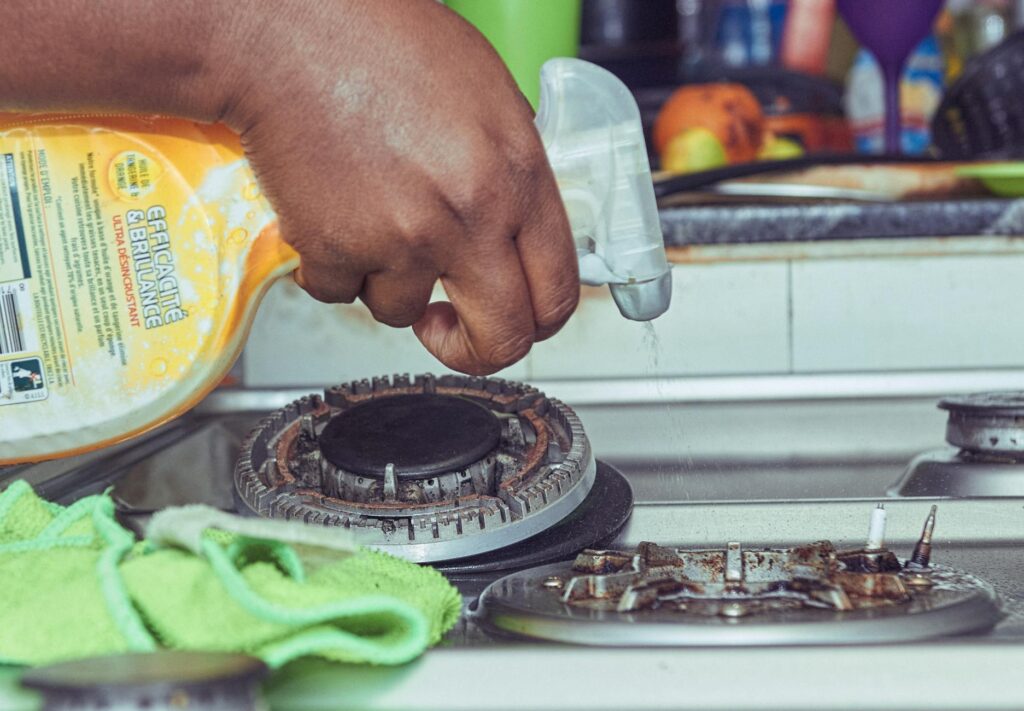
1. Use an all-purpose cleaner to wipe down countertops and stovetops.
2. Clean cabinet surfaces and handles, as grease can build up here.
Sinks and Drains
1. Scrub the sink with a mixture of baking soda and water.
2. Use a brush to clean the drain and remove any buildup.
Appliances
1. Microwave: Heat a bowl of water with lemon juice for 5 minutes, then wipe down the inside.
2. Oven: Use a commercial oven cleaner or a paste of baking soda and water to clean the interior.
Step 3: Ventilate
Open windows and use exhaust fans while cleaning and cooking to help dissipate odors. Fresh air can significantly reduce lingering smells.
Best Cleaning Methods
Baking Soda
Baking soda is a powerhouse when it comes to odor removal. It neutralizes odors and can be used in various applications, from fridges to carpets.
Vinegar
White vinegar is a natural deodorizer. It can be used to wipe down surfaces and clear up drains. The strong smell dissipates quickly, leaving your kitchen smelling fresh.
Essential Oils
Adding a few drops of essential oils, such as lemon or lavender, to your cleaning solutions can give your kitchen a pleasant scent while removing odors.
Activated Charcoal
Activated charcoal is excellent for absorbing odors. Place a few bags around your kitchen to keep the air fresh.
Common Mistakes to Avoid
1. Ignoring Regular Cleaning: Daily or weekly cleaning prevents odors from building up.
2. Using the Wrong Products: Avoid cleaning products that simply mask odors rather than eliminate them.
3. Neglecting the Garbage Disposal: This often-overlooked area can harbor significant odor sources.
4. Not Ventilating Properly: Failing to ventilate can trap odors, making them worse over time.
Prevention Tips
1. Take out the garbage regularly to prevent odors from developing.
2. Store food in airtight containers to keep smells contained.
3. Clean spills immediately to prevent lingering odors.
4. Use a deodorizing spray or essential oils in your kitchen after cooking.
5. Keep your sink and drains clean by regularly flushing them with vinegar and baking soda.
Frequently Asked Questions
1. How often should I clean my kitchen to prevent odors?
Aim for a thorough cleaning at least once a week, with daily spot cleaning as needed.
2. Can I use bleach to remove odors?
While bleach can disinfect, it often masks odors rather than removes them. It’s better to use natural alternatives like vinegar or baking soda.
3. How do I remove a burnt smell from my kitchen?
Boil a pot of water with lemon slices or cinnamon sticks to help neutralize the burnt smell.
4. What should I do if the odor persists?
If odors continue despite cleaning, consider calling a professional to inspect for plumbing issues or hidden mold.
5. Are there any natural products I can use to prevent kitchen odors?
Yes! Baking soda, vinegar, and activated charcoal are excellent natural options for preventing odors.
6. Can I use air fresheners to mask kitchen odors?
While air fresheners can provide temporary relief, they do not eliminate the source of the odors. Focus on cleaning first, then use fresheners as a supplementary measure.
By following this guide, you can tackle kitchen odors effectively and maintain a fresh, inviting space for cooking and gathering. Stay tuned for Part 2, where we’ll delve into more advanced odor removal techniques!