
Kitchen Grease Odor Mould & Damp Guide Part 2
Introduction
Mould and dampness in kitchens are not just unsightly; they can also contribute to unpleasant odors and affect your home’s air quality. If you’ve noticed a persistent kitchen grease odor along with mould growth or damp patches, it’s essential to tackle the issue head-on. In this guide, we’ll explore the causes, solutions, and preventative measures to keep your kitchen fresh and clean.
What Causes Mould & Damp?
Mould and damp are typically caused by excess moisture in the air. In kitchens, this can come from:
- Cooking: Boiling water and frying food generates steam and grease, which can settle on surfaces.
- Poor Ventilation: Kitchens often lack adequate airflow, trapping moisture.
- Leaky Pipes: Plumbing issues can lead to water pooling in cabinets or under sinks.
- Condensation: Warm, moist air can condense on cooler surfaces, leading to damp spots.
- Leaks under sinks.
- Damp spots on walls or ceilings.
- Poor airflow or blocked vents.
- Vinegar Solution: An effective natural mould remover. Its acidity helps break down mould and remove odours.
- Baking Soda Paste: Mix baking soda with water to create a paste, apply it to mouldy areas, let it sit, and scrub off.
- Hydrogen Peroxide: A powerful disinfectant that can be sprayed directly on mouldy areas. Allow it to sit before wiping away.
- Commercial Cleaners: When natural methods are insufficient, opt for a commercial mould cleaner. Follow the manufacturer’s instructions closely.
- Ignoring the Source: Simply cleaning mould without addressing the underlying moisture will only lead to a return of the problem.
- Using the Wrong Products: Avoid bleach, as it only kills surface mould and can worsen damp issues by introducing more moisture.
- Not Ventilating: Failing to ventilate after cleaning can trap moisture, leading to further mould growth.
- Using Cloths: Avoid using cloths that can spread mould spores around. Use disposable wipes or paper towels.
- Regular Cleaning: Clean kitchen surfaces regularly to prevent grease build-up.
- Ventilation: Always use exhaust fans and open windows during cooking.
- Seal Leaks: Regularly check for leaks and repair them promptly.
- Humidity Control: Keep humidity levels below 50% with a dehumidifier or by running air conditioning.
- Store Food Properly: Keep food in sealed containers to minimize spills and attractants for mould.
Understanding these factors is the first step to resolving mould and damp issues effectively.
Why This Problem Happens
Mould thrives in environments with high humidity and organic matter, such as grease and food particles. In kitchens, the combination of steam from cooking, spills, and inadequate cleaning creates the perfect breeding ground for mould. Additionally, poor ventilation exacerbates the problem, as moisture isn’t allowed to escape.
When grease accumulates, it can trap moisture and become a food source for mould, leading to persistent odours. Addressing both the mould and the underlying dampness is crucial for a clean, odour-free kitchen.
How to Fix Mould & Damp (Step-by-Step)
Step 1: Identify the Source of Moisture
Check for:
Step 2: Remove Mould
1. Protect Yourself: Wear gloves and a mask to avoid inhaling spores.
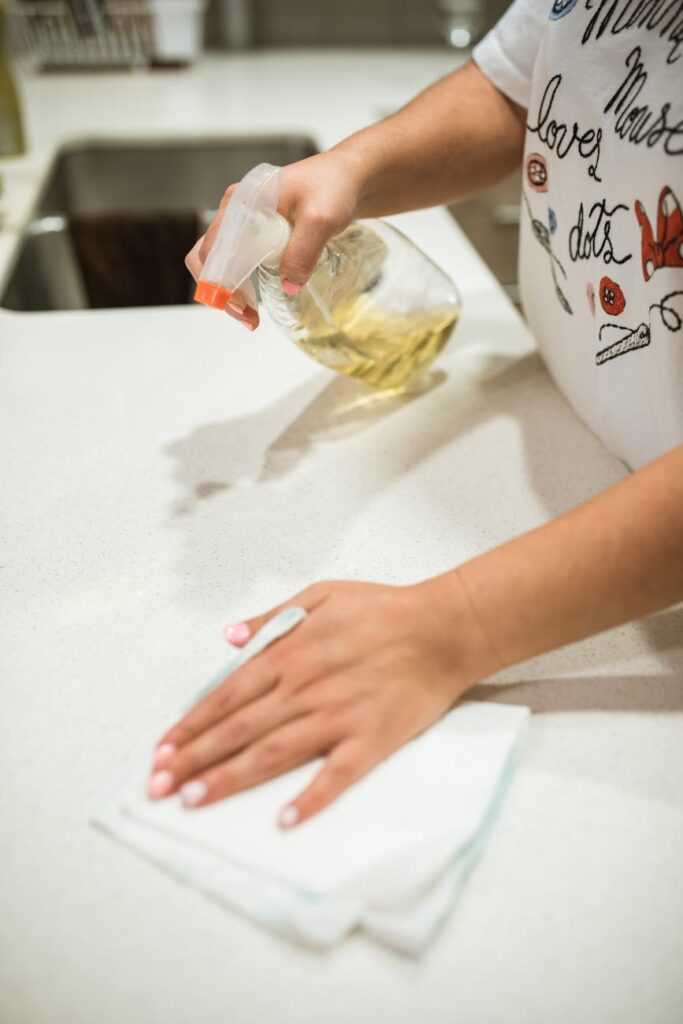
2. Prepare a Cleaning Solution: Mix one part vinegar with one part water in a spray bottle. Alternatively, use a commercial mould remover.
3. Apply: Spray the solution on the affected areas and let it sit for at least 15 minutes.
4. Scrub: Use a scrub brush to remove mould. Rinse with clean water.
5. Dry: Ensure the area is well-ventilated to dry completely.
Step 3: Address Dampness
1. Fix Leaks: Repair any plumbing issues immediately.
2. Improve Ventilation: Use exhaust fans while cooking and keep windows open when possible.
3. Use a Dehumidifier: Consider using a dehumidifier to reduce humidity levels.
Step 4: Clean Surfaces Regularly
Incorporate regular cleaning of surfaces, especially those prone to grease build-up.
Best Cleaning Methods
Common Mistakes to Avoid
Prevention Tips
Frequently Asked Questions
1. How can I tell if I have mould in my kitchen?
Look for dark spots on walls, ceilings, or under sinks, and smell for musty odours.
2. Can I use bleach to clean mould?
No, bleach can worsen the problem by adding moisture and only kills surface mould.
3. What humidity level should my kitchen be at?
Aim to keep humidity levels below 50% for optimal mould prevention.
4. How often should I clean my kitchen to prevent mould?
Regular cleaning once a week, with special attention to damp or greasy areas, is ideal.
5. Is mould harmful to my health?
While some moulds are harmless, others can cause respiratory issues. It’s best to remove it promptly.
6. What should I do if the mould returns?
If mould keeps returning, reassess moisture sources and consider consulting a professional for persistent leaks or ventilation issues.
By following these guidelines, you can effectively manage and prevent mould and dampness in your kitchen, ensuring a healthier and more pleasant cooking environment. Regular maintenance and proactive measures will keep your space fresh and odour-free.