
Kitchen Grease Odor Kitchen Guide Part 2
Introduction
Kitchen grease odors can linger long after you’ve finished cooking, creating an unpleasant environment. These odors often stem from the buildup of grease on various surfaces, affecting air quality and overall comfort in your kitchen. This guide will help you understand the causes of kitchen grease odors and provide actionable steps to eliminate and prevent them.
What Causes Kitchen Grease Odor?
Grease odors in the kitchen primarily originate from cooking activities. When food is prepared, particularly fried or sautéed items, tiny particles of grease become airborne and settle on surfaces. Common sources of grease odors include:
- Cooking appliances: Stoves, ovens, and microwaves can trap grease.
- Ventilation systems: Range hoods that aren’t properly cleaned can emit odors.
- Countertops and cabinets: Grease can accumulate over time, especially near cooking areas.
- Trash cans: Food scraps and waste can contribute significantly to odor.
- Dish soap
- Baking soda
- White vinegar
- Essential oils (optional)
- Microfiber cloths
- Scrub brushes
- A bucket
- A vacuum with a HEPA filter
- Remove grates and burners from the stovetop.
- Mix a solution of warm water and dish soap.
- Use a scrub brush to clean all surfaces, paying special attention to grease-laden areas.
- For the oven, spray a baking soda and water paste on greasy spots and let it sit for 15 minutes before wiping clean.
- Place a bowl of water with lemon slices inside and microwave for 5 minutes.
- Wipe the interior with a damp cloth to remove grease.
- Disconnect the range hood and remove the filters.
- Soak filters in hot, soapy water or vinegar for at least 30 minutes.
- Wipe down the exterior of the hood with a vinegar-water solution.
- If accessible, vacuum or clean the ducts to remove trapped grease and odor.
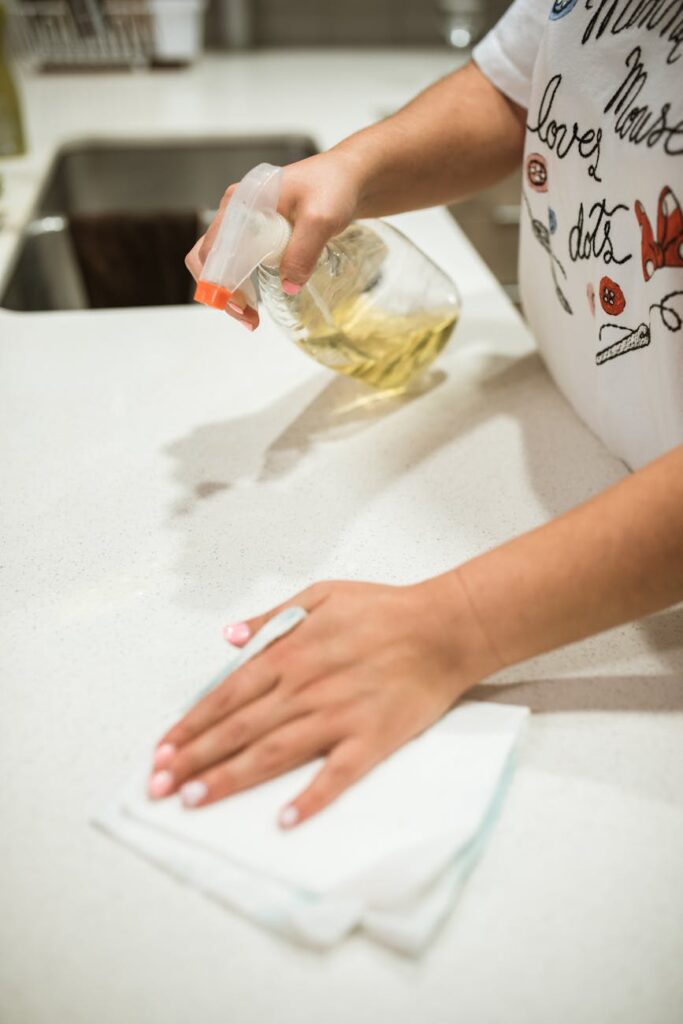
- Mix equal parts water and vinegar in a spray bottle.
- Spray the solution on countertops and cabinets, then wipe down with a microfiber cloth.
- Sweep and mop the floor with a solution of warm water and vinegar.
- Remove any food waste and clean the inside of the bin with soap and water.
- Sprinkle baking soda at the bottom to absorb odors before replacing the liner.
- Boil a pot of water with lemon peels, cinnamon sticks, or cloves to neutralize lingering odors.
- Alternatively, place bowls of vinegar or baking soda around the kitchen to absorb odors.
Why This Problem Happens
Kitchen grease odors persist for several reasons:
1. Poor ventilation: Inadequate airflow can cause odors to linger.
2. Grease buildup: Over time, grease accumulates on surfaces, making elimination more difficult.
3. Moisture: Humidity can exacerbate odors, allowing them to permeate the air.
4. Neglected cleaning: Regular cleaning is essential. Skipping this can lead to stubborn odors.
Understanding these causes is the first step in effectively combating kitchen grease odors.
How to Fix Kitchen Grease Odor (Step-by-Step)
Step 1: Gather Your Supplies
Before you start, gather the following cleaning supplies:
Step 2: Clean Appliances
1. Stovetop and Oven:
2. Microwave:
Step 3: Address Ventilation
1. Clean the Range Hood:
2. Check Ducts:
Step 4: Wipe Down Surfaces
1. Counters and Cabinets:
2. Floors:
Step 5: Eliminate Odors from Trash
1. Empty the Trash:
Step 6: Freshen the Air
Best Cleaning Methods
1. Baking Soda: Excellent for absorbing odors. Use it in the trash can, on surfaces, or as a paste with water for scrubbing.
2. White Vinegar: A natural deodorizer. Use it to wipe down surfaces, in your mop water, or as a rinse for your appliances.
3. Essential Oils: Add a few drops of essential oils (like lemon or tea tree) to your cleaning solutions for an extra fresh scent.
4. Steam Cleaners: If you have persistent grease buildup, a steam cleaner can penetrate and break down grease effectively.
Common Mistakes to Avoid
1. Neglecting the Range Hood: Many homeowners forget to clean their range hoods, which can lead to persistent odors.
2. Using the Wrong Cleaners: Avoid harsh chemicals that may not effectively cut through grease.
3. Not Ventilating Properly: Always ensure your kitchen is well-ventilated while cooking to reduce grease buildup.
4. Ignoring Floors and Walls: Odors can linger on surfaces beyond countertops; include floors and walls in your cleaning routine.
Prevention Tips
1. Use a Splatter Guard: Prevent grease from escaping the pan by using a splatter guard while cooking.
2. Ventilate While Cooking: Turn on your range hood or open windows to improve airflow.
3. Regular Cleaning Schedule: Set a weekly cleaning schedule for surfaces, appliances, and trash to prevent buildup.
4. Store Food Properly: Keep food in airtight containers to minimize odors.
5. Use Odor Absorbers: Consider placing bowls of baking soda or activated charcoal in your kitchen to absorb odors continuously.
Frequently Asked Questions
1. How often should I clean my kitchen to prevent grease odors?
Aim for a weekly deep clean and daily quick clean-ups to prevent grease buildup.
2. Can I use bleach to eliminate grease odors?
While bleach can disinfect, it’s not effective for grease. Use vinegar or baking soda instead.
3. What if the odor persists after cleaning?
If odors persist, consider checking for hidden grease buildup in ducts or vents that may need professional cleaning.
4. Are there natural alternatives to commercial odor removers?
Yes, baking soda, vinegar, and essential oils are effective natural alternatives.
5. How do I clean greasy walls?
Mix warm water with dish soap or vinegar and scrub with a microfiber cloth.
6. Can pets contribute to kitchen odors?
Yes, pet food and waste can contribute to odors. Regular cleaning and proper food storage can help minimize this issue.
By following these steps and tips, you can effectively tackle and prevent kitchen grease odors, creating a fresh and pleasant cooking environment.