
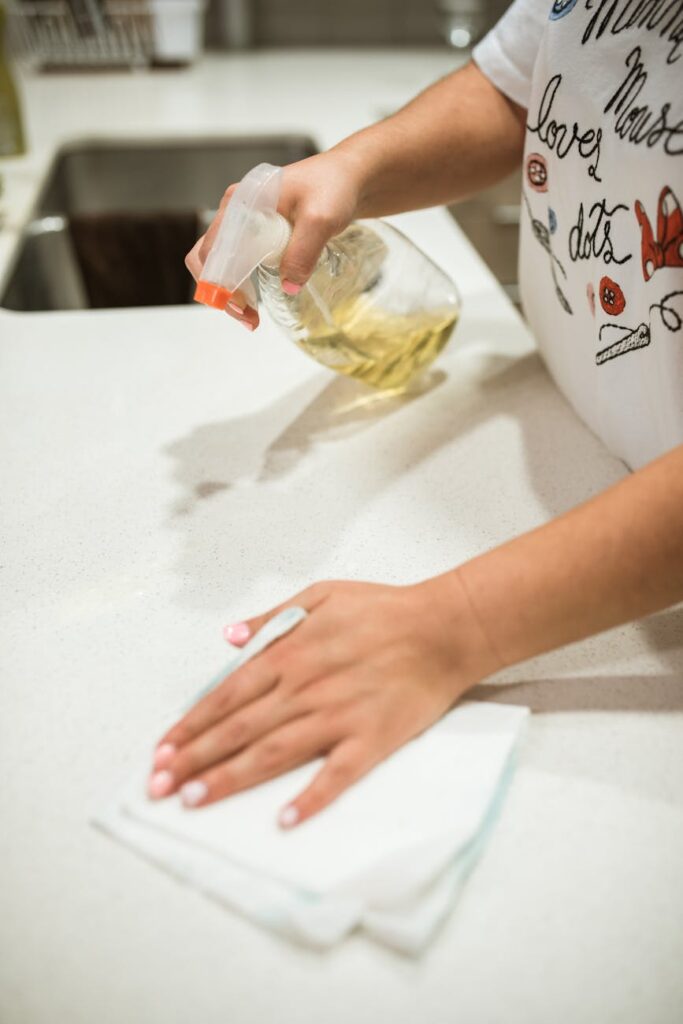
Kitchen Grease Buildup Stains Guide Part 1
Introduction
Kitchen grease buildup is one of the most common and frustrating cleaning challenges homeowners face. Whether it’s on your stovetop, walls, or cabinets, grease stains can be tough to remove and can make your kitchen look unkempt. This guide will provide you with practical solutions to tackle kitchen grease buildup effectively, ensuring your space stays clean and inviting.
What Causes Stains?
Grease stains in the kitchen originate from cooking activities. Here are the primary culprits:
- Cooking Oils: Oils from frying or sautéing can splatter and stick to surfaces.
- Food Residue: Greasy foods, especially those high in fat, can leave behind residues that attract more dirt and grime.
- Steam and Humidity: Cooking generates steam, which can carry grease particles and deposit them on surfaces.
- Attracts Dust and Dirt: Sticky surfaces accumulate dust, making cleaning more challenging.
- Odors: Old grease can develop unpleasant smells, affecting kitchen ambiance.
- Fire Hazard: Excessive grease buildup can pose a fire risk, especially near stovetops.
- Dish soap
- Baking soda
- White vinegar
- Spray bottle
- Soft cloths or sponges
- Scrub brush (for tough stains)
- Rubber gloves
- Using Abrasive Tools: Scrubbing with steel wool or harsh brushes can damage surfaces.
- Neglecting to Rinse: Always rinse after cleaning to remove residues that can attract dirt.
- Ignoring High-Traffic Areas: Pay special attention to spots that receive more grease, such as around the stovetop.
Understanding the sources of these stains will help you address them more effectively.
Why This Problem Happens
Grease buildup is not just a cosmetic issue; it can also lead to more significant problems:
Recognizing the importance of addressing these stains promptly can prevent further complications.
How to Fix Stains (Step-by-Step)
Cleaning grease stains requires a methodical approach. Follow these steps for effective results:
Step 1: Gather Your Supplies
You will need:
Step 2: Initial Wipe Down
1. Remove Loose Debris: Use a dry cloth or paper towel to wipe away any loose debris or food particles.
2. Prepare Cleaning Solution: Mix a few drops of dish soap with warm water in a bowl.
3. Apply the Solution: Dip a cloth into the soapy water and wipe the stained area.
Step 3: Treat Stubborn Stains
For tough stains, follow these steps:
1. Make a Paste: Combine baking soda and water to form a paste.
2. Apply the Paste: Spread the paste over the stain and let it sit for about 15 minutes.
3. Scrub Gently: Use a scrub brush or sponge to gently scrub the area. Rinse with warm water.
Step 4: Rinse and Dry
1. Final Rinse: Wipe the area with a clean, damp cloth to remove any cleaning residue.
2. Dry Thoroughly: Use a dry cloth to ensure the area is completely dry, preventing future buildup.
Best Cleaning Methods
There are several effective methods to clean kitchen grease stains:
1. Dish Soap and Hot Water
This classic method is suitable for most surfaces. The hot water helps dissolve the grease, while the dish soap cuts through it.
2. Baking Soda and Vinegar
This combo is excellent for tougher stains. The fizzing action of vinegar with baking soda helps lift grease.
3. Commercial Degreasers
For heavily soiled areas, consider using a commercial degreaser. Always follow the manufacturer’s instructions and test on a small area first.
4. Citrus-Based Cleaners
Natural citrus cleaners are effective and leave a pleasant scent. They work well on kitchen surfaces and are less harsh than chemical alternatives.
Common Mistakes to Avoid
Avoid these pitfalls to ensure effective cleaning:
Prevention Tips
Preventing grease buildup is easier than removing it. Here are some strategies:
1. Use a Splatter Guard: A splatter screen can significantly reduce grease splatter while cooking.
2. Regular Cleaning: Establish a routine to clean surfaces after cooking, preventing buildup from accumulating.
3. Ventilation: Use exhaust fans to help reduce steam and grease in the air.
4. Cover Pots and Pans: Whenever possible, cover pots and pans to minimize splatter.
5. Use Less Oil: When cooking, consider using less oil or healthier cooking methods such as baking or steaming.
Frequently Asked Questions
1. How often should I clean my kitchen surfaces?
Aim to clean your kitchen surfaces after every use, especially high-traffic areas like the stovetop and countertops.
2. Can I use bleach to clean grease stains?
Bleach is not recommended for grease stains, as it can create harmful fumes and may damage surfaces. Stick to dish soap and vinegar for best results.
3. What if the stains are old and set in?
For old stains, repeat the cleaning process, allowing your cleaning solution to sit longer. Consider using a commercial degreaser for tough spots.
4. Is it safe to use vinegar on all surfaces?
While vinegar is safe for most surfaces, it can damage natural stone like granite or marble. Test on a small area first or use a stone-safe cleaner.
5. Can I prevent grease stains with a coating?
Yes, consider using a protective coating on your surfaces, such as a sealant for countertops, to make cleaning easier and reduce grease adherence.
6. What’s the best way to clean a greasy oven?
For a greasy oven, use a paste of baking soda and water. Apply it to the greasy areas, let it sit overnight, then scrub and rinse.
By following this guide, you can tackle kitchen grease buildup stains effectively and maintain a clean, inviting kitchen. Stay tuned for Part 2, where we’ll delve deeper into specific cleaning techniques and products.