
Kitchen Grease Buildup Mould & Damp Guide Part 1
Introduction
Mould and dampness are common problems in kitchens, especially due to grease buildup. This article aims to provide you with practical solutions and preventive measures to combat these issues effectively. By understanding the causes and implementing the right cleaning methods, you can maintain a clean and healthy kitchen environment.
What Causes Mould & Damp?
Mould thrives in damp conditions, often fueled by grease and food particles. The following factors contribute to mould and dampness in your kitchen:
- High Humidity: Kitchens produce steam from cooking, which can increase moisture levels.
- Lack of Ventilation: Poor airflow can trap humidity, creating an ideal environment for mould.
- Grease Buildup: Grease can hold moisture and provide a food source for mould.
- Water Leaks: Any leaks from pipes or appliances can lead to dampness.
- Vinegar or a commercial mould cleaner
- Baking soda
- Scrub brushes or sponges
- Microfiber cloths
- Safety gear (gloves, mask, goggles)
- Vinegar: Effective at killing mould spores and can be used on most surfaces.
- Baking Soda: A natural deodorizer and mild abrasive that can help scrub away mould.
- Commercial Cleaners: If the mould is extensive, you may want to use a commercial cleaner designed for mould and mildew.
- Ignoring Small Spots: Small patches can quickly become larger problems if not addressed.
- Using Too Much Water: Over-saturating surfaces can lead to more dampness. Use damp cloths instead.
- Failing to Ventilate: After cleaning, make sure to ventilate the area to dry it out.
- Not Wearing Protective Gear: Always wear gloves and a mask when dealing with mould to protect yourself from spores.
- Regular Cleaning: Wipe down surfaces regularly to prevent grease buildup.
- Use Exhaust Fans: Turn on your kitchen fan while cooking to reduce humidity.
- Seal Leaks: Regularly check for leaks and seal them promptly.
- Improve Airflow: Keep kitchen doors open and consider using a dehumidifier if moisture levels are high.
- Store Food Properly: Ensure all food is stored in airtight containers to minimize spills and contamination.
Understanding these factors is the first step toward effective management.
Why This Problem Happens
The kitchen is a hotspot for moisture and grease accumulation. Cooking generates steam, while food preparation can lead to splatters and spills that are often left uncleaned. When combined with inadequate ventilation, these conditions can lead to mould growth.
Additionally, if grease isn’t cleaned regularly, it can create a sticky residue that attracts moisture, making it easier for mould to settle and grow. This cycle can quickly escalate if not addressed promptly.
How to Fix Mould & Damp (Step-by-Step)
Step 1: Identify Affected Areas
Check all surfaces, including walls, ceilings, and behind appliances. Look for discolored patches, particularly in corners or areas with poor airflow.
Step 2: Gather Cleaning Supplies
You will need:
Step 3: Remove Mould
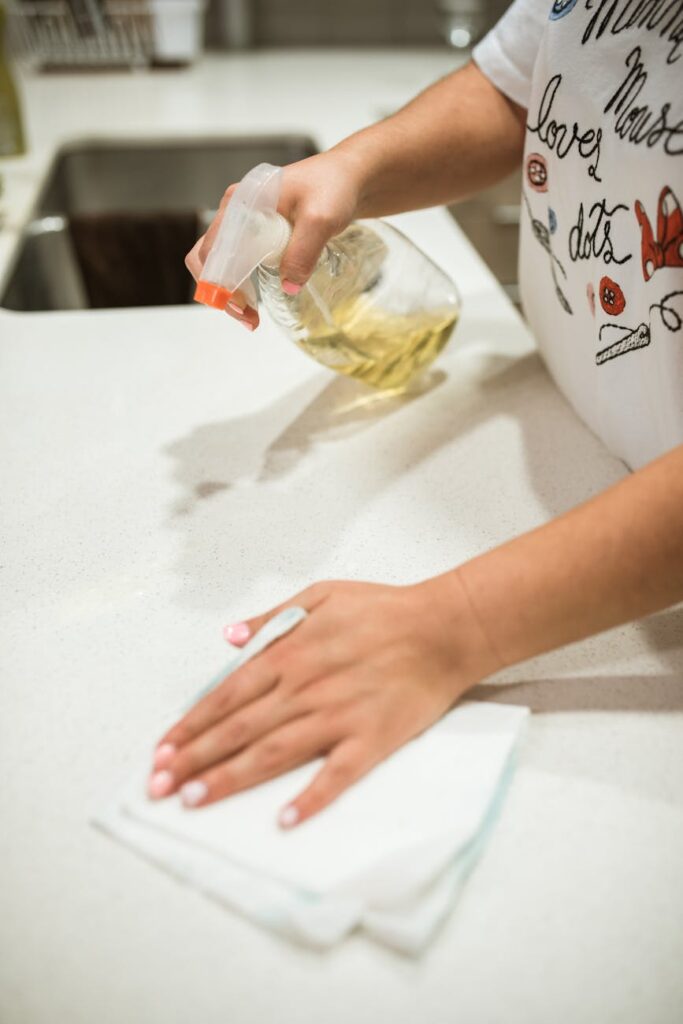
1. Vinegar Solution: Spray undiluted vinegar directly onto the mouldy areas. Let it sit for at least an hour.
2. Scrub: Use a scrub brush or sponge to remove the mould. For stubborn spots, sprinkle baking soda on the area and scrub again.
3. Rinse: Wipe the area with a damp cloth to remove any residue.
Step 4: Dry the Area
Ensure all cleaned surfaces are dried thoroughly. Use a fan or dehumidifier if necessary.
Step 5: Check for Leaks
Inspect pipes and appliances for any leaks. Fix any issues immediately to prevent future dampness.
Best Cleaning Methods
Recommended Cleaning Mixes
1. Vinegar and Water: 1:1 ratio for general cleaning.
2. Baking Soda Paste: Mix baking soda with water to form a paste for scrubbing.
Common Mistakes to Avoid
Prevention Tips
Frequently Asked Questions
1. How do I know if I have mould?
Check for discoloration, a musty smell, or visible growth on surfaces.
2. Can I use bleach to clean mould?
While bleach can kill mould, it may not prevent regrowth. Consider using vinegar or commercial mould cleaners instead.
3. How often should I clean my kitchen to prevent mould?
Aim for weekly cleanings, focusing on greasy areas and regular maintenance.
4. What should I do if mould returns?
Investigate the source of moisture, improve ventilation, and clean again. If it persists, consult a professional.
5. Can I prevent mould with natural remedies?
Yes, regularly using vinegar and baking soda can help prevent mould growth.
6. Is mould harmful to my health?
While not all moulds are harmful, some can cause respiratory issues. It’s best to keep your kitchen mould-free.
By following this guide, you’ll be well-equipped to tackle mould and dampness resulting from kitchen grease buildup. Stay proactive, and your kitchen will remain a clean and healthy space!