
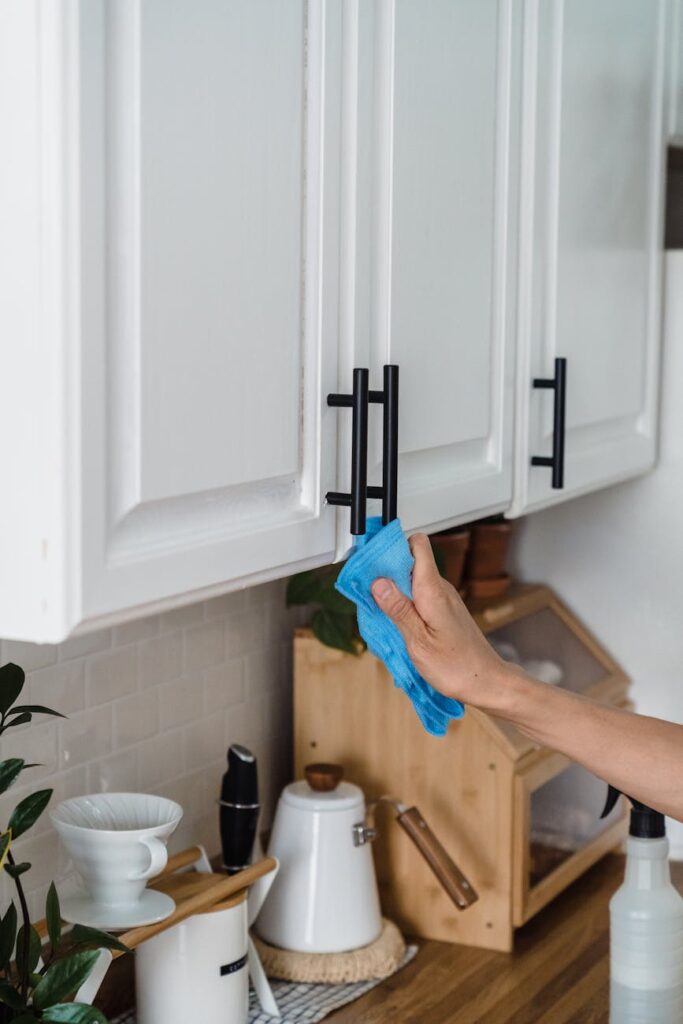
Kitchen Cabinet Mold Stains Guide Part 2
Introduction
Kitchen cabinets are a crucial part of your home, not just for storage but also for aesthetics. However, mold stains can tarnish their appearance and pose a cleaning challenge. This guide will help you understand the causes of these stains, provide effective cleaning methods, and offer practical tips to prevent their recurrence.
What Causes Stains?
Mold stains on kitchen cabinets typically arise from a combination of moisture, warmth, and lack of ventilation. Here are the primary contributors:
1. Humidity: High moisture levels in the kitchen, often from cooking or washing dishes, can lead to mold growth.
2. Food Residue: Spills that aren’t cleaned promptly can create a breeding ground for mold.
3. Poor Ventilation: Kitchens lacking proper airflow can trap humidity, promoting mold growth.
4. Infrequent Cleaning: Cabinets that aren’t regularly cleaned can accumulate grime, providing a perfect environment for mold.
Why This Problem Happens
Understanding why mold stains occur is essential for effective cleaning and prevention. Mold thrives in environments where:
- Temperature is Warm: Kitchens generate heat from cooking, which can accelerate mold growth.
- Moisture is Present: Any water source, including the steam from cooking, can contribute to excess humidity.
- Organic Material is Available: Mold feeds on organic materials, such as food particles and grease, which can accumulate on cabinets.
- Mild detergent
- White vinegar or hydrogen peroxide
- Baking soda
- Soft cloths or sponges
- A bucket
- Protective gloves
- A mask (if sensitive to mold)
Neglecting these factors can lead to persistent mold stains that are difficult to remove and may even damage your cabinets over time.
How to Fix Stains (Step-by-Step)
Follow this step-by-step guide to effectively remove mold stains from your kitchen cabinets:
Step 1: Gather Your Supplies
You will need:
Step 2: Prepare the Area
1. Remove all items from the cabinets.
2. Place a drop cloth or old towel on the floor to catch any drips.
3. Ensure the kitchen is well-ventilated by opening windows or using fans.
Step 3: Wipe Down Cabinets
1. Mix a solution of warm water and mild detergent in a bucket.
2. Dampen a soft cloth or sponge in the solution and wring it out.
3. Wipe the stained areas gently, taking care not to saturate the wood.
Step 4: Apply Mold Remover
1. Use white vinegar or hydrogen peroxide for mold stains. These natural solutions are effective and less harsh than chemical cleaners.
2. Apply the solution directly to the stain using a spray bottle or a cloth.
3. Let it sit for 10-15 minutes to penetrate the mold.
Step 5: Scrub the Stains
1. Sprinkle some baking soda onto the stained area for extra scrubbing power.
2. Use a soft brush or sponge to scrub gently. Avoid abrasive materials that could scratch the finish.
3. Wipe away any residue with a damp cloth.
Step 6: Dry Thoroughly
1. After cleaning, dry the cabinet surfaces with a clean, dry cloth.
2. Ensure no moisture remains, as this can lead to mold returning.
Step 7: Inspect and Repeat
1. Check for any remaining stains.
2. If necessary, repeat the cleaning process until the stains are gone.
Best Cleaning Methods
When tackling mold stains, these methods have proven to be the most effective:
1. Vinegar Solution: Mix equal parts of white vinegar and water for a natural mold cleaner.
2. Baking Soda Paste: Combine baking soda and water to form a paste. This works well for stubborn stains.
3. Hydrogen Peroxide: Use 3% hydrogen peroxide directly on stains for more persistent mold issues.
4. Commercial Cleaners: If you prefer ready-to-use products, choose an eco-friendly mold and mildew cleaner.
Common Mistakes to Avoid
1. Using Harsh Chemicals: Strong chemical cleaners can damage finishes and may not effectively remove mold.
2. Neglecting the Source: Cleaning without addressing the underlying moisture problem will lead to recurring stains.
3. Scrubbing Too Hard: Aggressive scrubbing can scratch surfaces and worsen the appearance of your cabinets.
4. Skipping Ventilation: Cleaning in a poorly ventilated area can cause mold spores to spread.
Prevention Tips
To keep your kitchen cabinets mold-free, follow these prevention tips:
1. Maintain Low Humidity: Use a dehumidifier or air conditioner to control moisture levels.
2. Improve Ventilation: Install exhaust fans and open windows while cooking to reduce humidity.
3. Regular Cleaning: Wipe down cabinets regularly, focusing on areas prone to spills and moisture.
4. Seal Cabinets: Consider applying a water-resistant sealant to protect wooden cabinets from moisture.
5. Fix Leaks: Address any plumbing issues promptly to prevent water accumulation.
Frequently Asked Questions
1. Can I use bleach to clean mold stains on cabinets?
Bleach can be effective but is generally not recommended for wood surfaces as it can damage the finish. Opt for vinegar or hydrogen peroxide instead.
2. How can I tell if my cabinets have mold or just dirt?
Mold often appears as dark spots and may have a fuzzy texture. Dirt typically looks like smudges or grease stains.
3. Is mold on cabinets dangerous?
While the mold itself is usually not dangerous to healthy individuals, it can pose risks to those with allergies or respiratory issues.
4. How often should I clean my kitchen cabinets?
Aim for a thorough cleaning every month, and wipe down high-traffic areas more frequently.
5. Can I prevent mold stains with a specific product?
Yes, using a mold-resistant spray can help, but maintaining low humidity and good ventilation is crucial.
6. What should I do if mold keeps returning?
If mold returns consistently, investigate the source of moisture in your kitchen and consider consulting a professional for a more permanent solution.
By following these actionable steps and preventive measures, you can effectively manage and eliminate mold stains on your kitchen cabinets, keeping your space clean and inviting.