
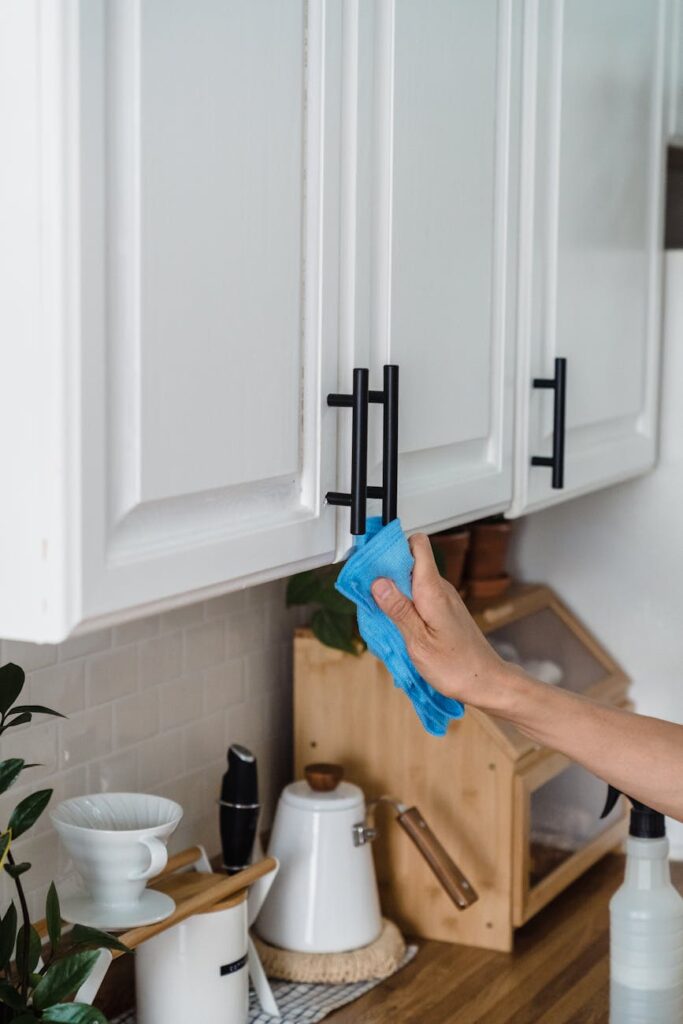
Kitchen Cabinet Mold Cleaning Guide Part 2
Introduction
Mold in kitchen cabinets is not only unsightly but can also pose a serious problem for your home. Addressing this issue promptly and effectively is essential to maintain a safe and healthy environment. This guide will walk you through the causes of mold, how to fix the problem step-by-step, the best cleaning methods, common mistakes to avoid, and prevention tips to ensure your kitchen cabinets remain mold-free.
What Causes Mold?
Mold thrives in damp, dark, and poorly ventilated areas. In kitchens, this can often be found in cabinets due to several factors:
- High Humidity: Cooking generates steam, which can lead to moisture accumulation.
- Leaking Pipes: Small leaks behind cabinets can create the perfect breeding ground for mold.
- Poor Ventilation: Lack of airflow can trap moisture inside cabinets.
- Food Residue: Spills or crumbs left in cabinets can attract mold spores.
- Moisture Environment: Kitchens are naturally humid, especially when cooking. If the humidity isn’t managed, mold can develop quickly.
- Dark Spaces: Cabinets are often closed and dark, creating an ideal environment for mold to flourish.
- Infrequent Cleaning: Many homeowners neglect to clean the insides of their cabinets regularly, allowing mold spores to settle and grow.
- Gloves
- Mask (to avoid inhaling mold spores)
- Spray bottle
- White vinegar or hydrogen peroxide
- Baking soda
- Clean cloths or paper towels
- A scrub brush or sponge
- Bucket
- Warm water
- Ignoring the Source of Moisture: Failing to address leaks or humidity will lead to mold returning.
- Using Bleach: While bleach can kill mold on non-porous surfaces, it doesn’t penetrate porous materials like wood and can create harmful fumes.
- Not Drying Thoroughly: Leaving cabinets damp after cleaning can encourage mold growth.
- Neglecting to Clean Surrounding Areas: Mold can spread, so clean adjacent surfaces and items too.
- Control Humidity: Use a dehumidifier or exhaust fan while cooking to reduce humidity levels.
- Regular Cleaning: Clean your kitchen cabinets regularly, especially after spills or food storage.
- Ventilation: Ensure proper airflow in your kitchen by opening windows or doors when cooking.
- Seal Cabinets: If your cabinets are made of wood, consider sealing them to prevent moisture absorption.
- Temperature Regulation: Keep your kitchen at a stable temperature to reduce condensation.
Understanding these causes is the first step toward effective mold removal.
Why This Problem Happens
Mold growth is often a symptom of underlying issues in your kitchen. Here’s why mold finds a home in your cabinets:
Recognizing these problems can help you take the necessary steps to eliminate mold effectively.
How to Fix Mold (Step-by-Step)
Removing mold from kitchen cabinets can seem daunting, but with the right approach, you can tackle it efficiently. Follow these steps:
Step 1: Gather Your Supplies
Before you start, gather the following supplies:
Step 2: Empty the Cabinets
Remove all items from the cabinets, including dishes, food, and cleaning supplies. Inspect these items for any signs of mold and clean them if necessary.
Step 3: Inspect for Leaks
Before cleaning, check for any leaks or water damage. Fix any plumbing issues to prevent mold from returning.
Step 4: Prepare Cleaning Solution
For a natural cleaning solution, mix equal parts white vinegar and water in a spray bottle. Alternatively, you can use hydrogen peroxide (3% solution) to kill mold spores effectively.
Step 5: Apply the Solution
Spray the affected areas generously with your cleaning solution. Let it sit for at least 10-15 minutes to penetrate the mold.
Step 6: Scrub the Area
Using a scrub brush or sponge, scrub the moldy areas thoroughly. Make sure to reach all corners and crevices where mold might be hiding.
Step 7: Rinse and Dry
Wipe down the surfaces with a damp cloth to remove any mold residue. Follow with a dry cloth to ensure the area is completely dry, as moisture will encourage mold growth.
Step 8: Dispose of Contaminated Items
Throw away any items that cannot be cleaned or salvaged, especially if they were heavily contaminated with mold.
Best Cleaning Methods
There are various methods to tackle mold in kitchen cabinets effectively:
1. Vinegar
Vinegar is a natural and powerful mold killer. Its acidity helps to break down mold and prevent regrowth.
2. Baking Soda
Baking soda is a gentle abrasive that can help scrub away mold. It also neutralizes odors.
3. Hydrogen Peroxide
This is an effective antifungal and can kill mold spores on contact. Use it with caution and avoid mixing with vinegar.
4. Commercial Mold Cleaners
If natural solutions aren’t cutting it, consider using a commercial mold cleaner. Make sure to follow the manufacturer’s instructions and safety precautions.
Common Mistakes to Avoid
When dealing with kitchen cabinet mold, be mindful of these common pitfalls:
Prevention Tips
Preventing mold from returning is crucial. Here are some practical tips:
Frequently Asked Questions
1. How often should I check for mold in my kitchen cabinets?
Inspect your cabinets every few months, especially if you notice increased humidity or spills.
2. Can I use essential oils to fight mold?
While some essential oils have antifungal properties, they are generally not as effective as vinegar or hydrogen peroxide for removing mold.
3. What if the mold keeps coming back?
If mold reappears, investigate the source of moisture. It may be necessary to consult a professional for plumbing issues.
4. Are there any signs that indicate mold is present?
Look for discoloration, a musty odor, or visible mold growth on surfaces.
5. Is mold dangerous?
Certain types of mold can cause health issues, especially for individuals with allergies or respiratory problems. It’s best to address mold growth promptly.
6. Can I paint over mold?
No, painting over mold will not eliminate it. You must clean the mold thoroughly before painting to prevent it from reappearing.
By following this comprehensive guide, you can effectively clean mold from your kitchen cabinets and prevent it from returning. Keep your kitchen a safe and healthy space for cooking and family gatherings.