
Kitchen Cabinet Mildew Stains Guide Part 2
Introduction
Mildew stains on kitchen cabinets can be an eyesore and a nuisance. They often appear in areas with high humidity or poor ventilation, turning your cabinets unsightly and potentially harboring unpleasant odors. This guide will provide you with practical solutions to identify, remove, and prevent these stains, ensuring your kitchen remains clean and inviting.
What Causes Stains?
Understanding what causes mildew stains is crucial for effective cleaning. Here are the primary culprits:
1. Moisture: Excess moisture from cooking, spills, or humidity can lead to mildew growth.
2. Poor Ventilation: Lack of airflow in kitchen spaces allows moisture to linger, creating an ideal environment for mildew.
3. Food Particles: Food spills or splatters that aren’t cleaned promptly can contribute to mildew formation.
4. Temperature Fluctuations: Changes in temperature can lead to condensation, fostering mildew growth.
Why This Problem Happens
Mildew stains develop in kitchens due to a combination of moisture and warmth, particularly in areas that are often overlooked:
- Near the Stove: Grease and moisture from cooking can accumulate here.
- Under Sinks: Leaks or condensation are common in this area.
- Corners and Edges: These spots often trap moisture and food particles.
- Mild detergent
- White vinegar
- Baking soda
- Spray bottle
- Soft cloths or sponges
- A scrub brush (soft bristle)
- Water
- Gloves (optional)
Ignoring these factors can exacerbate the problem, leading to more extensive cleaning needs.
How to Fix Stains (Step-by-Step)
Removing mildew stains from kitchen cabinets requires a systematic approach. Follow these steps:
Step 1: Gather Your Supplies
You will need:
Step 2: Clear the Area
Remove all items from the cabinets. This not only gives you space to work but also prevents any damage to your belongings.
Step 3: Prepare Your Cleaning Solution
Mix equal parts of white vinegar and water in a spray bottle. For tougher stains, you can add a tablespoon of baking soda to the mixture. Shake well to combine.
Step 4: Apply the Solution
Spray the vinegar solution directly onto the stained areas of the cabinets. Let it sit for about 10-15 minutes to allow the solution to penetrate the mildew.
Step 5: Scrub the Stains
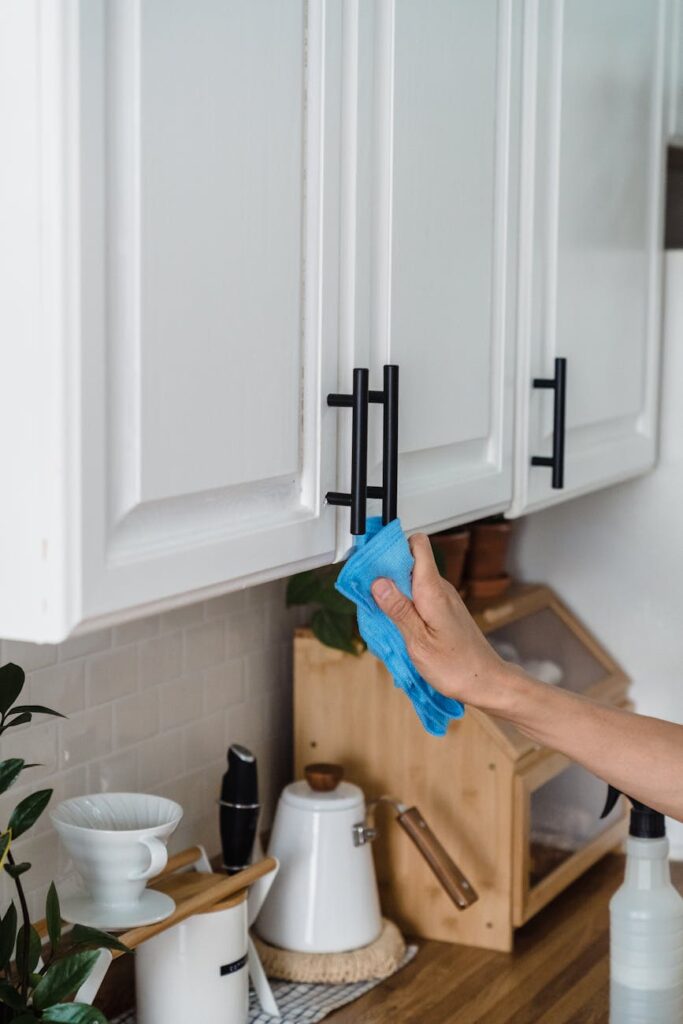
Using a soft cloth or sponge, gently scrub the stained areas. For stubborn stains, use a soft-bristle scrub brush to avoid damaging the cabinet’s finish.
Step 6: Rinse
Dampen another cloth with plain water and wipe down the cleaned areas to remove any residue from the cleaning solution.
Step 7: Dry Thoroughly
Ensure the cabinets are completely dry to prevent future mildew growth. Use a dry cloth or towel for best results.
Best Cleaning Methods
Here are some effective methods for tackling kitchen cabinet mildew stains:
1. Vinegar and Baking Soda
A powerful combination, vinegar acts as a natural disinfectant, while baking soda helps lift stains. This method is safe for most cabinet finishes.
2. Hydrogen Peroxide
For tougher stains, hydrogen peroxide can be effective. Apply it directly to the stain, let it sit for a few minutes, and then scrub.
3. Commercial Mildew Removers
If natural methods fail, consider using a commercial mildew remover. Ensure it is safe for use on your cabinet material and follow the manufacturer’s instructions.
Common Mistakes to Avoid
Avoid these pitfalls when tackling mildew stains:
1. Using Abrasive Cleaners: Harsh chemicals can damage cabinet finishes. Stick to gentle solutions.
2. Skipping the Drying Process: Not drying the cabinets thoroughly can lead to recurring mildew.
3. Not Testing First: Always test a small, inconspicuous area first to ensure your cleaning solution does not damage the finish.
4. Ignoring Ventilation: After cleaning, ensure proper ventilation in the kitchen to reduce humidity.
Prevention Tips
Preventing mildew stains is easier than cleaning them. Here are some effective strategies:
1. Improve Ventilation: Use exhaust fans when cooking and consider opening windows.
2. Wipe Down Cabinets Regularly: Clean spills and moisture immediately to prevent accumulation.
3. Avoid Overcrowding Cabinets: Too many items can trap moisture. Keep cabinets organized and allow airflow.
4. Use a Dehumidifier: In particularly humid climates, consider using a dehumidifier in the kitchen area.
Frequently Asked Questions
1. How often should I clean my kitchen cabinets?
Regular cleaning every few months is recommended. If you notice moisture build-up, clean more frequently.
2. Can I use bleach to remove mildew stains?
Bleach can be effective but may damage the finish on some cabinets. Use it as a last resort and test first.
3. What materials are safe for kitchen cabinets?
Most wooden and laminate cabinets can handle mild detergents and vinegar solutions. Always check the manufacturer’s guidelines.
4. How do I know if the mildew is gone?
Ensure that all stains are removed, and there is no lingering odor. If mildew returns, you may need to address underlying moisture issues.
5. Can I prevent mildew without cleaning?
While cleaning is essential, prevention measures like improving ventilation and managing humidity are crucial to keep mildew at bay.
6. Is professional cleaning necessary?
For severe cases or if you’re unsure about cleaning methods, professional cleaning can be beneficial. However, for most situations, DIY methods work effectively.
Conclusion
Mildew stains on kitchen cabinets are manageable with the right approach. By understanding the causes, using effective cleaning methods, and implementing preventive measures, you can maintain a clean and healthy kitchen environment. With a little effort, your kitchen cabinets can remain mildew-free and looking their best.