
Kitchen Cabinet Mildew Mould & Damp Guide Part 2
Introduction
Mould and dampness in kitchen cabinets can be a troublesome issue for homeowners. Not only does it affect the aesthetics of your kitchen, but it can also lead to damage and unpleasant odors. This guide aims to tackle the root causes of mould and dampness, provide actionable steps for cleaning, and offer tips to prevent future occurrences.
What Causes Mould & Damp?
Mould thrives in environments with excessive moisture, warmth, and limited airflow. Here are some common causes:
1. Humidity: High humidity levels in your kitchen can create a breeding ground for mould.
2. Leaks: Water leaks from pipes, appliances, or the roof can lead to dampness.
3. Poor Ventilation: Inadequate airflow can trap moisture in your cabinets.
4. Condensation: Temperature differences between your kitchen and cupboards can cause condensation, particularly in colder months.
5. Food Residue: Spills and crumbs can attract moisture and create a conducive environment for mould.
Why This Problem Happens
Understanding why mould and damp occur is crucial for effective treatment. In kitchens, the combination of heat from cooking, steam from boiling, and moisture from washing dishes can lead to a perfect storm for mould growth. If your kitchen lacks proper ventilation, these factors can accumulate, resulting in damp spots and mould.
How to Fix Mould & Damp (Step-by-Step)
Step 1: Assess the Damage
Before beginning the cleaning process, inspect your cabinets. Look for visible signs of mould, damp patches, or any damage to the wood.
Step 2: Gather Your Supplies
You will need:
- A mask and gloves
- Scrub brush or sponge
- Bucket
- Cleaning solution (white vinegar, baking soda, or a commercial mould remover)
- Cloths or paper towels
- Fan or dehumidifier (optional)
- White Vinegar: An effective natural disinfectant that kills most mould strains.
- Baking Soda: A mild abrasive that works well for scrubbing away mould without damaging surfaces.
- Commercial Mould Removers: If the mould persists, consider using a commercial product specifically designed for mould removal. Always follow the manufacturer’s instructions.
Step 3: Remove Contents
Empty your kitchen cabinets. This will allow you to clean thoroughly and inspect all items for mould.
Step 4: Clean Surfaces
1. Vinegar Solution: Mix equal parts white vinegar and water in a spray bottle. Spray the affected areas and let it sit for 10 minutes.
2. Scrub: Use a scrub brush or sponge to scrub the mouldy areas. For stubborn spots, sprinkle baking soda directly on the mould and scrub again.
3. Rinse: Wipe down the surfaces with a damp cloth to remove any residue. Ensure the area is thoroughly dried afterward.
Step 5: Dry Thoroughly
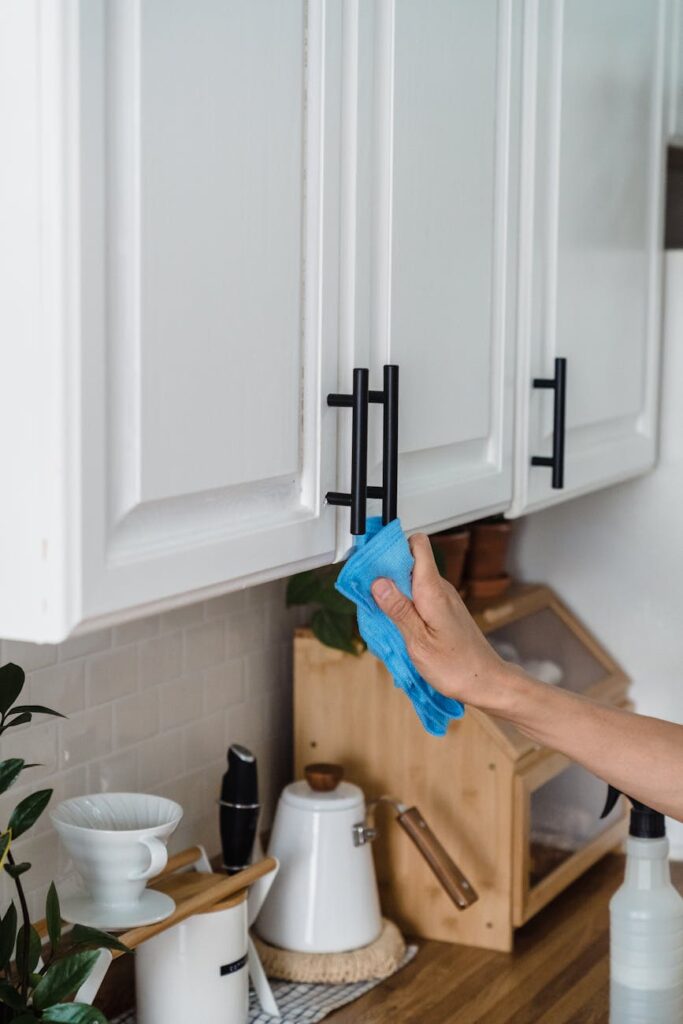
Use a cloth to wipe down the cabinets, and leave the doors open to allow air circulation. If possible, use a fan or dehumidifier to speed up the drying process.
Step 6: Inspect and Replace
Check for any damaged items or materials in your cabinets. Discard anything that shows signs of mould, including food items and cardboard packaging.
Best Cleaning Methods
Common Mistakes to Avoid
1. Using Bleach: While bleach can kill mould, it doesn’t remove it and can lead to regrowth if not properly cleaned.
2. Ignoring Ventilation: Failing to improve airflow while cleaning can trap moisture and worsen the problem.
3. Not Drying Completely: Leaving cabinets damp after cleaning can lead to mould returning quickly.
4. Neglecting Regular Checks: Failing to regularly inspect your cabinets can allow mould to grow unnoticed.
Prevention Tips
1. Improve Ventilation: Install vents or use exhaust fans to reduce humidity levels in your kitchen.
2. Control Humidity: Use a dehumidifier if your kitchen often feels humid, especially during cooking.
3. Seal Cabinets: Consider sealing the inside of cabinets with a protective coating to prevent moisture absorption.
4. Regular Cleaning: Clean your cabinets regularly, focusing on corners and hidden areas where moisture can accumulate.
5. Store Items Properly: Use airtight containers for food to minimize spills and moisture.
Frequently Asked Questions
1. Can I use bleach to clean mould in my kitchen cabinets?
While bleach can kill mould, it often does not remove it and can lead to regrowth. It’s better to use vinegar or baking soda for a more effective clean.
2. How often should I check for mould in my kitchen?
Regular inspections every few months are recommended, especially in high-humidity seasons or after any water leaks.
3. Is it safe to eat food from cabinets with mould?
If food shows any signs of mould or has been stored in a cabinet with mould, it’s best to discard it to avoid health risks.
4. What’s the best way to improve kitchen ventilation?
Install an exhaust fan, keep windows open while cooking, and consider using a dehumidifier if humidity is a constant issue.
5. How can I tell if I have a hidden leak causing dampness?
Look for water stains, peeling paint, or a musty smell, which can indicate hidden leaks. If you suspect a leak, consider hiring a professional to evaluate the situation.
6. Can mould return after cleaning?
Yes, if the underlying causes (moisture and poor ventilation) are not addressed, mould can return. Implementing preventative measures is essential to keeping your kitchen mould-free.
By following these steps and tips, you can effectively tackle mould and damp issues in your kitchen cabinets, ensuring a clean and safe cooking environment.