
Grout Mold Removal Bathroom Guide Part 2
Introduction
Grout mold is a common nuisance in bathrooms, making your space look unkempt and unsanitary. This guide will walk you through understanding what causes bathroom mold, how to effectively remove it, and tips for preventing it from returning. If you’re tired of that pesky mold ruining your bathroom, you’re in the right place.
What Causes Bathroom Mold?
Mold thrives in warm, moist environments, making bathrooms a prime target. The primary factors contributing to grout mold include:
- High Humidity: Bathrooms often have high humidity levels, especially after showers and baths.
- Poor Ventilation: Lack of airflow traps moisture, creating an ideal breeding ground for mold.
- Water Leaks: Leaks from pipes or fixtures can lead to damp grout.
- Dirty Grout: Soap scum, body oils, and other residues can provide nutrients for mold growth.
- Mold removal solution (commercial or homemade)
- Scrub brush or old toothbrush
- Gloves
- Spray bottle
- Sponge or cloth
- Bucket
- Water
- Fan or dehumidifier (for ventilation)
- Ventilate: Open windows or turn on the bathroom fan to improve airflow.
- Protect Surfaces: Lay down towels or old sheets to protect the floor.
- Commercial Cleaner: If using a store-bought mold remover, follow the instructions on the label.
- Homemade Solution: Mix equal parts of water and white vinegar or hydrogen peroxide in a spray bottle. You can also use baking soda mixed with water to create a paste.
- Spray the solution generously onto the affected grout lines.
- Allow it to sit for about 10-15 minutes to penetrate the mold.
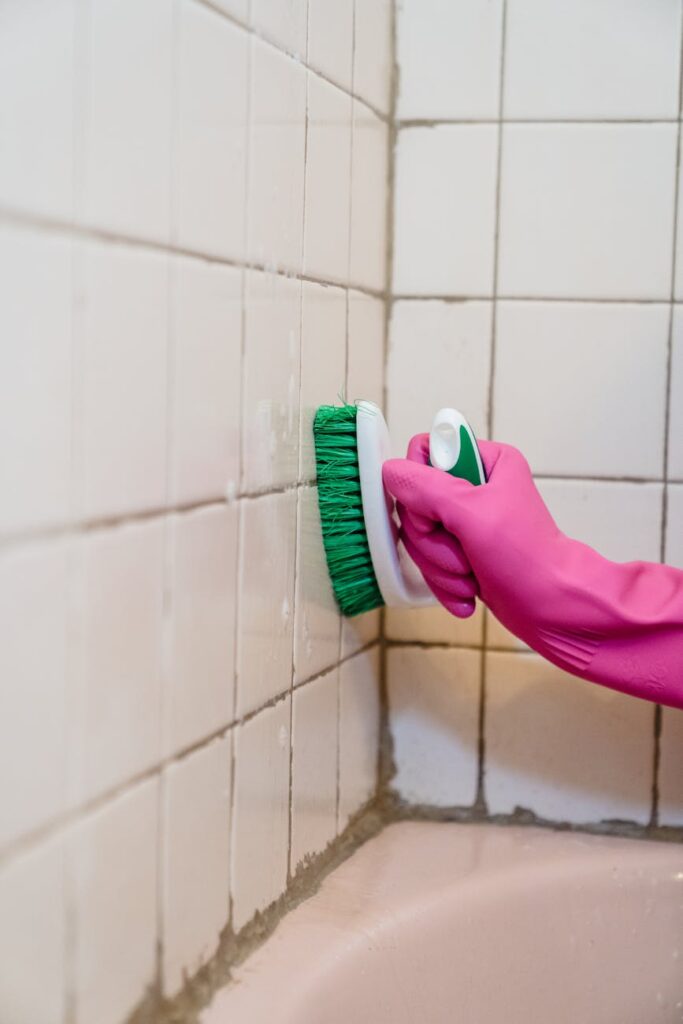
- Use a scrub brush or old toothbrush to scrub the grout gently. Pay special attention to corners and difficult areas.
- Rinse the area with warm water using a sponge or cloth.
- Ensure all residue is removed.
- Dry the area thoroughly with a towel or let air dry using a fan or dehumidifier.
- After drying, check for any remaining mold. If needed, repeat the cleaning process until the grout is mold-free.
- How to Use: Sprinkle baking soda on the grout, then spray vinegar over it. Let it fizz for a few minutes, scrub, and rinse.
- Effectiveness: This method is great for light mold and stains.
- How to Use: Apply hydrogen peroxide directly to the moldy grout. Let it sit for 10 minutes, scrub, and rinse.
- Effectiveness: It’s particularly effective on tough stains and mold.
- How to Use: Follow the manufacturer’s instructions. Most require you to spray, wait, scrub, and rinse.
- Effectiveness: Fast-acting and designed specifically for mold.
- How to Use: Use a steam cleaner with a grout attachment. The high heat will kill mold spores and loosen dirt.
- Effectiveness: Excellent for deep cleaning without chemicals.
- Improve Ventilation: Use exhaust fans during and after showers to reduce humidity.
- Wipe Down Surfaces: After each use, wipe down walls and fixtures to remove excess moisture.
- Seal Grout Regularly: Reapply grout sealer every 6-12 months to keep moisture out.
- Use Mold-Resistant Products: Consider mold-resistant caulk and paint.
- Control Humidity: Use a dehumidifier or keep windows open when possible.
Why This Problem Happens
Understanding why mold appears can help you tackle the issue more effectively.
1. Condenser Effect: When warm air meets cooler surfaces, condensation forms. This moisture can penetrate grout and encourage mold growth.
2. Infrequent Cleaning: Regular cleaning can prevent mold from taking root. Neglecting this can lead to a buildup that’s harder to remove.
3. Improper Sealing: Grout should be sealed properly to resist moisture. If the seal wears off, moisture penetrates the grout, leading to mold.
How to Fix Bathroom (Step-by-Step)
Removing grout mold requires a systematic approach. Here’s a step-by-step guide to tackle it effectively.
Step 1: Gather Your Supplies
Before you begin, gather the necessary cleaning supplies:
Step 2: Prepare the Area
Step 3: Apply Mold Removal Solution
Step 4: Scrub the Grout
Step 5: Rinse and Dry
Step 6: Inspect and Repeat if Necessary
Best Cleaning Methods
Different methods work better for different situations. Here are some of the best options:
1. Vinegar and Baking Soda
2. Hydrogen Peroxide
3. Commercial Mold Removers
4. Steam Cleaning
Common Mistakes to Avoid
1. Skipping Ventilation: Always ventilate the area to prevent inhaling fumes and to help the cleaning solutions work effectively.
2. Using Excessive Force: Scrubbing too hard can damage grout. Use gentle pressure.
3. Neglecting Regular Maintenance: Waiting until mold becomes visible can make removal more difficult. Clean grout regularly.
4. Ignoring Sealing: After cleaning, ensure you re-seal your grout to protect against future mold growth.
Prevention Tips
Keeping your bathroom mold-free is easier than removing it. Here are some practical tips:
Frequently Asked Questions
1. How often should I clean my grout to prevent mold?
Aim to clean your grout at least once a month, especially in high-moisture areas.
2. Can I use bleach to remove mold from grout?
While bleach can kill mold, it may not effectively remove it from porous surfaces like grout. It can also discolor grout, so use caution.
3. Is it necessary to seal my grout?
Yes, sealing your grout helps prevent moisture penetration and mold growth. It’s an essential step in maintaining your bathroom.
4. How can I tell if my grout needs to be sealed?
If water absorbs quickly into your grout rather than beading up, it’s time to re-seal.
5. What is the best homemade solution for mold removal?
A mixture of equal parts vinegar and water or hydrogen peroxide works well for removing mold.
6. Can mold in the bathroom be harmful?
While not all mold is harmful, some can trigger allergies or respiratory issues. It’s best to remove it promptly.
By following this comprehensive guide, you can effectively tackle grout mold in your bathroom and keep it at bay for good! Happy cleaning!