
Drain Mold Removal Stains Guide Part 2
Introduction
Stains from mold in your drains can be unsightly and a source of unpleasant odors. Understanding how to deal with these stains effectively can help you maintain a clean and healthy home. This guide provides practical solutions, cleaning methods, and preventive tips to tackle drain mold stains head-on.
What Causes Stains?
Mold stains are typically caused by a combination of moisture, organic material, and stagnant water. Common contributors include:
- Food particles: Leftovers from dishes can accumulate in your drain.
- Soap scum: Residue from soaps and detergents can create a breeding ground for mold.
- Humidity: High levels of moisture in the air or poorly ventilated spaces can exacerbate mold growth.
- Poor drainage: If water doesn’t flow freely, it can stagnate and promote mold growth.
- Clogged pipes: Blockages can trap food and organic materials, providing a feast for mold.
- Infrequent cleaning: Neglecting regular maintenance allows mold to build up over time.
- Baking soda
- White vinegar
- A scrub brush
- Hot water
- Rubber gloves
- A bucket
- Ignoring Clogs: Don’t overlook slow-draining sinks. They are often indicative of mold issues that need addressing.
- Using Bleach: While bleach may sanitize, it can also lead to further mold growth under certain conditions. Opt for natural solutions whenever possible.
- Skipping Regular Maintenance: Regularly cleaning your drains can prevent the build-up of mold and stains. Make it a part of your cleaning routine.
- Regular Cleaning: Clean your drains at least once a month using baking soda and vinegar.
- Use Drain Screens: Install screens to catch food particles and debris before they enter the drain.
- Maintain Proper Ventilation: Ensure your kitchen and bathroom are well-ventilated to reduce humidity levels.
- Fix Leaks: Address any leaks promptly to avoid creating a damp environment conducive to mold growth.
Understanding these causes helps you target the root of the problem for effective cleaning.
Why This Problem Happens
Mold thrives in damp, dark environments, making your drains an ideal location. Factors that contribute to mold growth include:
Recognizing these factors can help you take action before stains become a severe issue.
How to Fix Stains (Step-by-Step)
Step 1: Gather Supplies
You’ll need the following items:
Step 2: Prepare the Area
Put on rubber gloves to protect your hands. Clear away any items near the drain that could get wet or contaminated.
Step 3: Remove Visible Debris
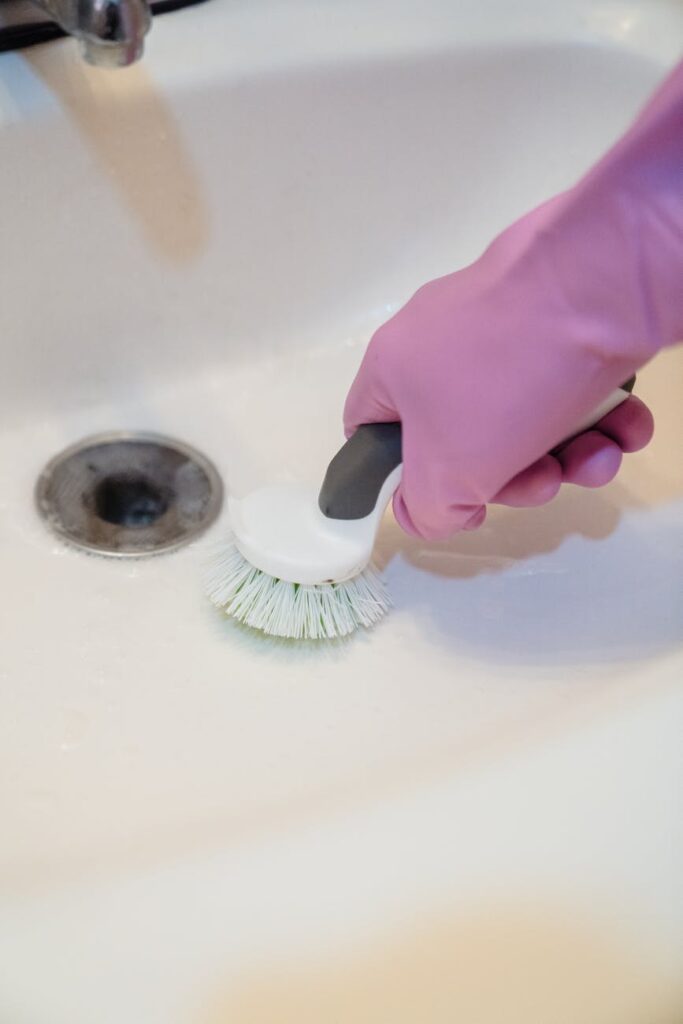
Use the scrub brush to clear out any visible debris around the drain. This helps create a cleaner work area and allows the cleaning solutions to penetrate effectively.
Step 4: Apply Baking Soda
Pour about half a cup of baking soda directly into the drain. Baking soda is a natural abrasive that can help lift stains and eliminate odors.
Step 5: Add Vinegar
Follow the baking soda with half a cup of white vinegar. The combination will fizz and bubble, working to break down grime and mold.
Step 6: Let it Sit
Allow the baking soda and vinegar mixture to sit for at least 30 minutes. This gives the solution time to penetrate and work on the stains.
Step 7: Flush with Hot Water
After the waiting period, boil some water and carefully pour it down the drain. This will help flush away the remnants of the baking soda and vinegar, along with any loosened stains.
Step 8: Scrub Again
For stubborn stains, use the scrub brush once more to scrub the drain and surrounding areas. Rinse with water to remove any residue.
Step 9: Inspect
Check to see if any stains remain. If necessary, repeat the process until the stains are completely gone.
Best Cleaning Methods
1. Baking Soda and Vinegar
This classic method is both effective and eco-friendly. The fizzing action helps lift stubborn stains while neutralizing odors.
2. Hydrogen Peroxide
For tough mold stains, use hydrogen peroxide (3%). Apply it directly onto the stain, let it sit for about 10 minutes, then rinse with hot water. This method is more potent and can effectively kill mold spores.
3. Commercial Cleaners
If natural methods fail, consider using a commercial mold and mildew remover. Follow the manufacturer’s instructions carefully, ensuring proper ventilation and safety measures.
Common Mistakes to Avoid
Prevention Tips
Frequently Asked Questions
1. How often should I clean my drains?
Clean your drains at least once a month to prevent mold and stains from building up.
2. Can I use bleach to remove mold stains?
While bleach may remove surface stains, it doesn’t kill mold spores effectively and can lead to further growth. Opt for natural methods instead.
3. What if the stains persist after cleaning?
If stains remain, consider using hydrogen peroxide or a commercial cleaner specifically designed for mold removal.
4. Are there any natural alternatives to commercial cleaners?
Yes, baking soda, vinegar, and hydrogen peroxide are effective natural alternatives for cleaning mold stains.
5. Can mold in drains affect my health?
Yes, mold can release spores that may cause allergic reactions or respiratory issues. It’s important to address mold problems promptly.
6. How can I tell if I have a clog in my drain?
Signs of a clog include slow drainage, gurgling sounds, or unpleasant odors coming from the drain. If you notice these, it may be time to clean the drain or call a plumber.
By applying the methods and tips outlined in this guide, you can effectively tackle mold stains in your drains. Regular maintenance and proper cleaning techniques are your best defenses against this common household issue.