
Drain Mold Removal Kitchen Guide Part 1
Introduction
Kitchens are often the heart of a home, but they can also be a breeding ground for mold, especially in drains. Mold thrives in dark, damp environments, making kitchen drains prime real estate. This guide will provide you with practical steps to identify, remove, and prevent mold in your kitchen drains.
What Causes Kitchen Mold?
Mold in kitchen drains is primarily caused by:
1. Food Residue: Bits of food that accumulate in the drain can provide nutrients for mold growth.
2. Moisture: High humidity and water from washing dishes create a perfect environment for mold.
3. Stagnant Water: Slow-moving or stagnant water in the drain can lead to mold development.
4. Lack of Cleaning: Infrequent cleaning of the kitchen and drains allows mold spores to settle and thrive.
Why This Problem Happens
Understanding why mold forms in your kitchen is crucial for effective removal and prevention. Mold spores are everywhere, and when they find a suitable environment—like a damp kitchen drain—they settle and begin to grow. The combination of organic materials, moisture, and darkness creates an ideal breeding ground.
Furthermore, kitchen habits such as not rinsing dishes thoroughly or neglecting to clean sink strainers can exacerbate the issue. Over time, this leads to a persistent mold problem that can affect the cleanliness of your kitchen and pose potential health risks.
How to Fix Kitchen Mold (Step-by-Step)
Step 1: Gather Your Supplies
You’ll need:
- Baking soda
- White vinegar
- Hot water
- A scrub brush
- Rubber gloves
- A bucket
- An old toothbrush
Step 2: Clear the Area
Remove any items from around the sink area to ensure you have enough space to work and prevent contamination.
Step 3: Remove Visible Mold
1. Put on Rubber Gloves: Protect your hands from mold spores and cleaning agents.
2. Inspect the Drain: Look for visible mold and debris.
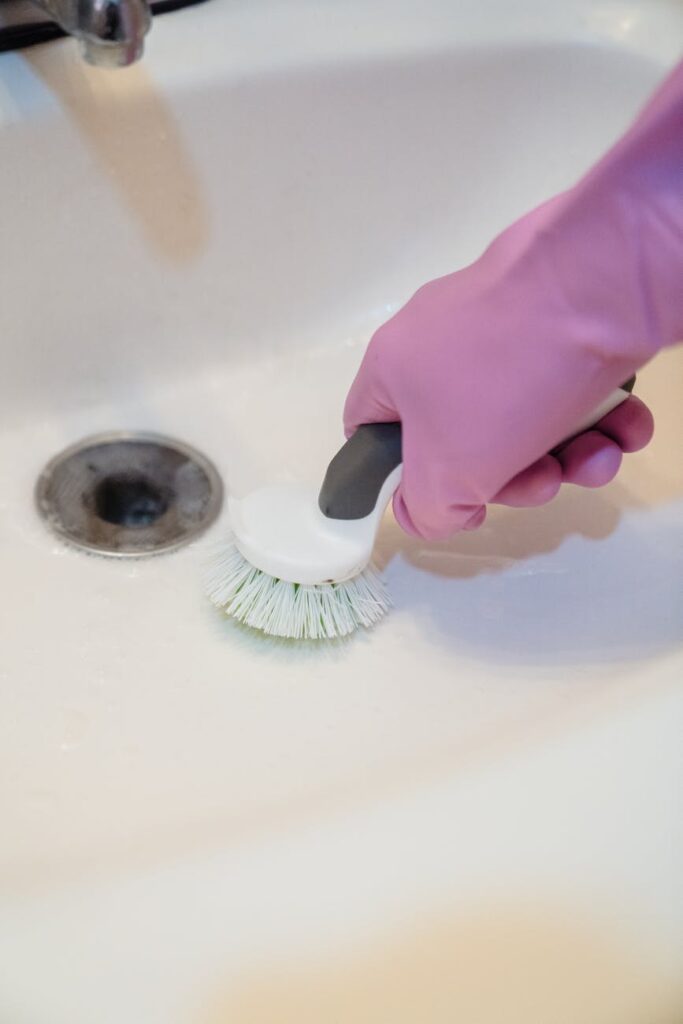
3. Scrub the Drain: Use a scrub brush to remove any visible mold. For hard-to-reach areas, use an old toothbrush.
Step 4: Use Baking Soda and Vinegar
1. Pour Baking Soda: Add about 1/2 cup of baking soda down the drain.
2. Add Vinegar: Follow with 1 cup of white vinegar. You’ll see fizzing as the two react.
3. Wait: Let the mixture sit for 15-30 minutes to break down mold and debris.
Step 5: Flush with Hot Water
1. Boil Water: Bring a pot of water to a boil.
2. Pour Down the Drain: Carefully pour the hot water down the drain to flush away any remaining mold and residue.
Step 6: Repeat if Necessary
For stubborn mold, you may need to repeat the baking soda and vinegar process a couple of times.
Step 7: Clean Surrounding Areas
Don’t forget to clean the sink, faucet, and countertops with a suitable cleaner to prevent recontamination.
Best Cleaning Methods
1. Baking Soda and Vinegar: This natural method is effective and safe for most drains.
2. Commercial Drain Cleaners: Use them as a last resort; ensure they’re safe for your plumbing.
3. Hydrogen Peroxide: A diluted solution can be effective against mold.
4. Borax: Sprinkle some borax down the drain and follow with hot water.
Common Mistakes to Avoid
1. Neglecting Regular Maintenance: Don’t wait for mold to become a problem; clean regularly.
2. Using Harsh Chemicals: Avoid bleach or ammonia, as they can harm plumbing and may not effectively eliminate mold.
3. Ignoring Sink Strainers: Regularly clean sink strainers to prevent buildup.
4. Not Flushing the Drain: Always flush your drain with hot water after cleaning to remove residue.
Prevention Tips
1. Regular Cleaning: Clean your kitchen drains weekly to prevent buildup.
2. Rinse Dishes Thoroughly: Ensure no food particles remain in the sink.
3. Use a Drain Strainer: Catch food scraps before they go down the drain.
4. Keep the Area Dry: Wipe down the sink and surrounding areas to minimize moisture.
5. Ventilation: Ensure proper ventilation in the kitchen to reduce humidity.
Frequently Asked Questions
1. How often should I clean my kitchen drain?
Aim to clean your kitchen drain at least once a week to prevent mold and buildup.
2. Can I use bleach to clean my kitchen drain?
It’s not recommended. Bleach can damage plumbing and doesn’t effectively kill mold in the long term.
3. What if the mold keeps coming back?
If mold persists, consider investigating for leaks or drainage issues that may be causing excess moisture.
4. Is mold in my kitchen drain harmful?
While not all mold is harmful, some types can cause health issues. It’s best to remove it promptly.
5. Can I prevent mold without harsh chemicals?
Yes! Natural cleaning methods using baking soda and vinegar are effective and safe.
6. Should I call a professional for persistent mold?
If you’re unable to remove the mold yourself or if it keeps returning, consider contacting a professional cleaner for assistance.
By following this guide, you can effectively address mold issues in your kitchen drains and maintain a cleaner, healthier kitchen environment. Stay proactive with your cleaning habits, and you’ll minimize the chances of mold returning.