
Drain Fly Removal Stains Guide Part 1
Introduction
Drain flies, also known as moth flies, are a common nuisance in many households. These tiny, fuzzy insects breed in the organic matter found in drains, making them a persistent problem. Unfortunately, their presence often leads to unsightly stains around sink areas, drains, and other plumbing fixtures. This guide will help you understand what causes these stains, why they occur, and how to effectively remove them. We’ll also explore methods for preventing future issues.
What Causes Stains?
Stains around your drains are primarily caused by a buildup of organic material. This can include:
- Food particles: Leftover food from dishes that go down the drain.
- Grease: Oil and fats from cooking that accumulate and harden.
- Soap scum: Residue from soaps and detergents that cling to surfaces.
- Organic matter: Dead skin cells, hair, and other biological debris.
- Poor drainage: Clogged drains trap organic material, creating a breeding ground for drain flies.
- Neglect: Infrequent cleaning allows residues to build up over time.
- Moist environments: Drains are often damp, providing an ideal habitat for both flies and organic matter to thrive.
- Baking soda
- White vinegar
- Dish soap
- Hot water
- Scrub brush or sponge
- Old toothbrush
- Microfiber cloth or paper towels
When drain flies breed, they lay eggs in this organic matter, which can lead to discoloration and staining around your sinks and drains.
Why This Problem Happens
The problem arises when there is insufficient cleaning and maintenance of your drains. A few reasons include:
Addressing these issues promptly will not only eliminate stains but also reduce the likelihood of drain fly infestations.
How to Fix Stains (Step-by-Step)
Follow these steps to remove stains caused by drain flies effectively:
Step 1: Gather Your Supplies
You will need:
Step 2: Prepare the Area
Clear any items from around the sink and ensure good ventilation. This will make your cleaning process more efficient.
Step 3: Create a Cleaning Paste
Mix baking soda with a small amount of water to form a paste. This will help lift stains without scratching surfaces.
Step 4: Apply the Paste
Spread the baking soda paste over the stained areas using your sponge or brush. Let it sit for about 10-15 minutes to break down the stains.
Step 5: Rinse with Vinegar
Pour white vinegar over the baking soda paste. The mixture will fizz, which helps lift the stains further. Allow it to sit for an additional 5-10 minutes.
Step 6: Scrub the Area
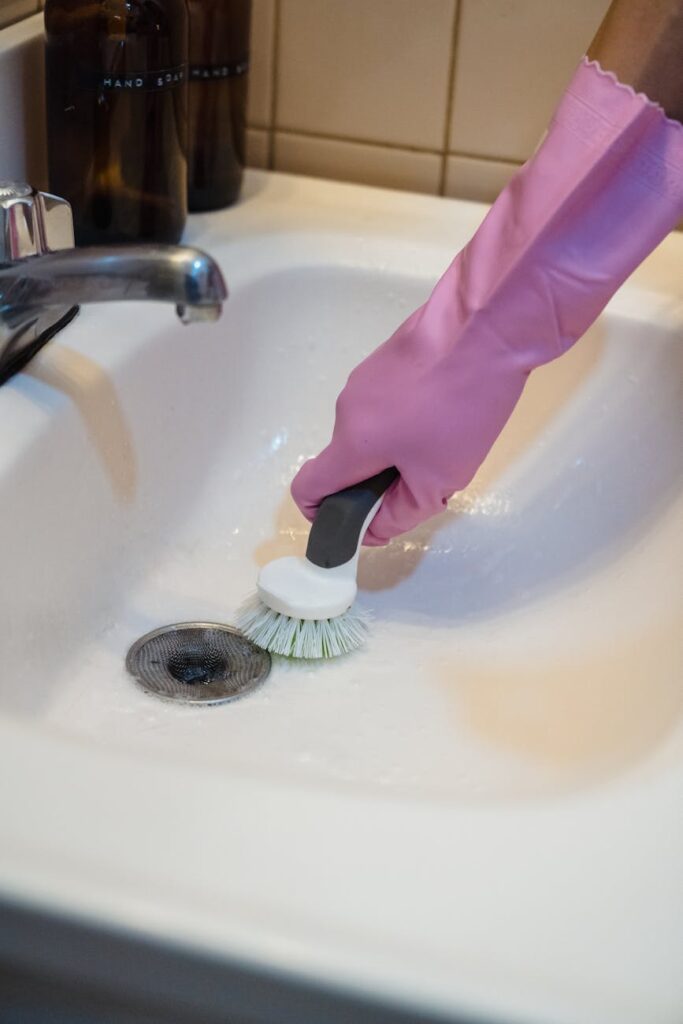
Using a scrub brush or an old toothbrush, gently scrub the stained areas. Focus on spots where you see the most discoloration.
Step 7: Rinse Thoroughly
Rinse the area with hot water to remove the baking soda and vinegar residues. Ensure no paste is left behind, as this can attract more grime.
Step 8: Dry the Surface
Use a microfiber cloth or paper towels to dry the area completely. This step is crucial to prevent future stains and discourage drain fly breeding.
Best Cleaning Methods
While the baking soda and vinegar combo is effective, here are a few other methods you can consider:
1. Dish Soap and Hot Water
Mix a few drops of dish soap with hot water. Pour it down the drain to help break down grease and food particles.
2. Enzymatic Cleaners
These cleaners use enzymes to break down organic matter. Pour according to the package instructions for effective stain and odor removal.
3. Bleach Solution
For stubborn stains, a diluted bleach solution can work wonders. Mix 1 part bleach with 10 parts water. Apply carefully, as bleach can damage certain surfaces.
4. Commercial Drain Cleaners
If the problem persists, consider using a commercial drain cleaner specifically designed for organic buildup. Follow the manufacturer’s instructions for safe and effective use.
Common Mistakes to Avoid
1. Using abrasive cleaners: Avoid using steel wool or harsh scrubbing pads, as they can scratch surfaces and make stains worse.
2. Neglecting to rinse thoroughly: Failing to rinse after cleaning can leave residues that attract more grime.
3. Ignoring regular maintenance: Regular cleaning is key. Once you have removed the stains, establish a cleaning schedule to prevent recurrence.
4. Using too much cleaner: More is not always better. Follow recommended amounts to avoid buildup of cleaning products.
Prevention Tips
Preventing stains and drain fly infestations requires consistent maintenance. Here are some effective strategies:
1. Regular Cleaning: Clean your drains weekly using the baking soda and vinegar method or dish soap and hot water to prevent buildup.
2. Cover Drains: Use sink strainers to catch food particles and hair before they enter the drain.
3. Dry the Sink: After use, wipe down your sink to remove moisture and deter flies.
4. Inspect Plumbing: Check for leaks or slow drainage, as these can create a perfect breeding environment.
5. Dispose of Food Properly: Avoid putting food scraps down the drain. Use a compost bin or trash for disposal.
6. Use Essential Oils: Certain essential oils, like peppermint or tea tree oil, can repel drain flies. Add a few drops to your cleaning solution.
Frequently Asked Questions
1. How do I know if I have drain flies?
You may notice small, moth-like flies near drains or damp areas in your home. Check your drains for any buildup of organic matter.
2. Can drain flies harm my health?
While drain flies are not known to transmit diseases, they can be a nuisance and indicate unsanitary conditions.
3. How often should I clean my drains?
Aim to clean your drains at least once a week to prevent buildup and reduce the chance of drain fly infestations.
4. What if the stains persist after cleaning?
If stains remain, consider using a commercial drain cleaner or consult a plumbing professional for deeper issues.
5. Are there any natural remedies to deter drain flies?
Yes, a mixture of vinegar and essential oils can help repel drain flies. Spray around affected areas regularly.
6. How do I know if my drain is clogged?
Signs of a clogged drain include slow drainage, gurgling sounds, or unpleasant odors coming from the drain.
By following these steps and tips, you can effectively manage and prevent drain fly stains in your home. Stay proactive, and your drains will remain clean and free of pests!