
Black Water Stains Stains Guide Part 2
Introduction
Black water stains can be an unsightly nuisance in your home, often appearing in bathrooms, kitchens, and other areas exposed to moisture. These stains not only detract from the beauty of your surfaces but can also signify deeper plumbing issues if left untreated. This guide will help you understand the causes of black water stains, offer step-by-step solutions for removal, share effective cleaning methods, and provide tips for prevention.
What Causes Stains?
Black water stains are primarily caused by:
1. Mold and Mildew: These fungi thrive in damp environments, often leading to dark stains on walls, ceilings, and fixtures.
2. Hard Water Deposits: Minerals in hard water can accumulate and leave dark stains, especially around faucets and drains.
3. Soot and Smoke: Stains from fireplaces or candles can create black marks on surfaces.
4. Rust: Iron in the water supply can oxidize and create dark stains, particularly on light-colored surfaces.
5. Decaying Organic Matter: This can include food particles or plant debris that may attract mold.
Why This Problem Happens
Black water stains occur when moisture meets organic materials or minerals. Factors that contribute to this problem include:
- Poor Ventilation: Areas with inadequate airflow can trap moisture, creating a perfect environment for mold and mildew.
- Leaky Pipes: Water leaks can contribute to damp areas, promoting stain formation.
- High Humidity: Living in a humid climate increases the likelihood of moisture accumulating, leading to stains.
- Neglected Cleaning: Regular cleaning neglect allows stains to set in and become harder to remove.
- Mold/Mildew: Dark green or black spots, often fuzzy.
- Hard Water: White chalky residue that may appear dark on surfaces.
- Soot: Fine black dust, often around fireplaces or candles.
- Rust: Orange-brown stains that may have dark edges.
- For Mold/Mildew: White vinegar or a commercial mold remover, scrub brush, sponge.
- For Hard Water: Vinegar, baking soda, soft cloth.
- For Soot: Soap, water, sponge, vacuum with a HEPA filter.
- For Rust: Rust remover or a paste made from baking soda and water.
- Ensure good ventilation by opening windows or using a fan.
- Protect your hands with gloves and your eyes with goggles.
- Mold/Mildew: Spray the area with vinegar or mold remover. Let it sit for 10–15 minutes.
- Hard Water: Soak a cloth in vinegar, apply it to the stain, and let it sit for about 30 minutes.
- Soot: Dampen the sponge with soapy water and gently scrub the area.
- Rust: Apply rust remover or the baking soda paste and let it sit for 30 minutes.
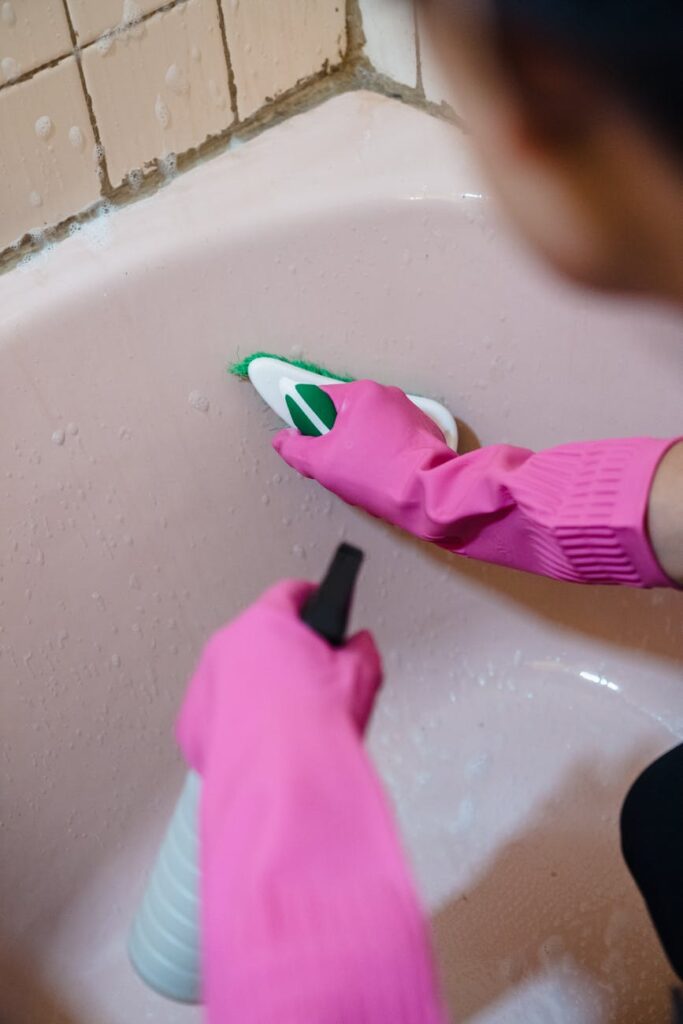
- Use your scrub brush or sponge to scrub the area gently.
- Rinse thoroughly with clean water to remove any residue.
- Use a clean towel to dry the area completely, preventing future moisture build-up.
- Using Bleach: While bleach can kill mold, it can also cause stains to spread or become more pronounced. Use it sparingly or not at all.
- Ignoring Safety Precautions: Always wear gloves and goggles to protect yourself from harsh chemicals.
- Not Testing First: Always test a small area before applying any cleaning solution to ensure it won’t damage the surface.
- Skipping Drying: Failing to dry the area properly can lead to new stains forming.
How to Fix Stains (Step-by-Step)
Step 1: Identify the Type of Stain
Step 2: Gather Your Supplies
Step 3: Prepare the Area
Step 4: Apply Cleaning Solution
Step 5: Scrub and Rinse
Step 6: Dry the Area
Best Cleaning Methods
1. Vinegar Solution: A natural disinfectant that effectively removes mold and hard water stains.
2. Baking Soda Paste: Combine baking soda with water for a gentle abrasive that works well on rust and tough stains.
3. Commercial Cleaners: For particularly stubborn stains, use specialized cleaners designed for mold, rust, or hard water.
4. Steam Cleaning: A steam cleaner can effectively sanitize and remove stains without harsh chemicals.
Common Mistakes to Avoid
Prevention Tips
1. Ventilation: Ensure proper airflow in areas prone to moisture. Use exhaust fans in bathrooms and kitchens.
2. Regular Cleaning: Establish a routine cleaning schedule to remove potential stain sources before they set in.
3. Dehumidifiers: Consider using a dehumidifier in high-humidity areas to reduce moisture levels.
4. Fix Leaks Promptly: Address any plumbing issues immediately to prevent water accumulation.
5. Seal Surfaces: Use sealants on porous surfaces like grout or natural stone to prevent moisture infiltration.
Frequently Asked Questions
1. Can I use bleach to remove black water stains?
While bleach can kill mold, it can also make stains worse by spreading them. It is better to use vinegar or specialized mold removers.
2. How often should I clean areas prone to black water stains?
Aim to clean high-moisture areas at least once a month to prevent stain formation.
3. What should I do if the stains persist after cleaning?
If stains persist, consider consulting a professional cleaner or checking for underlying plumbing issues.
4. Are there any natural alternatives to commercial cleaners?
Yes, vinegar, baking soda, and lemon juice are effective natural cleaning agents for many black water stains.
5. How can I tell if I have a mold problem beyond surface stains?
If you notice a musty odor, black patches on walls, or allergic reactions among household members, it may indicate a more serious mold issue.
6. Is it safe to use a steam cleaner on all surfaces?
While steam cleaning is effective, always check the manufacturer’s recommendations for delicate surfaces to avoid damage.
By following the guidelines outlined in this article, you can tackle black water stains effectively and keep your home looking clean and fresh. Remember, prevention is key to avoiding these stains in the first place!