
Black Water Stains Bathroom Guide Part 2
Introduction
Black water stains in your bathroom can be an eyesore, making your space feel unclean and neglected. These unsightly marks typically appear in areas like the toilet, shower, bathtub, and sink. If you’re tired of battling these stubborn stains, this guide will provide you with practical solutions, cleaning methods, and tips to prevent them from returning.
What Causes Bathroom Black Water Stains?
Black water stains are primarily caused by mineral buildup, mold, and mildew. Here’s a breakdown of the common culprits:
1. Hard Water: Water with high mineral content can leave behind stains, especially in areas where water frequently sits, like sinks and bathtubs.
2. Mold and Mildew: Bathrooms are often humid, creating the perfect environment for mold and mildew to thrive. These can stain surfaces and grout lines black.
3. Neglected Cleaning: Areas that are not regularly cleaned are more susceptible to staining. Over time, dirt, grime, and other residues can build up and turn black.
4. Low Ventilation: Poor air circulation exacerbates moisture problems, promoting the growth of mold and mildew.
Why This Problem Happens
Understanding why these stains occur can help you tackle them more effectively. Here are some factors that contribute to the problem:
- Humidity: Bathrooms are usually damp, allowing mold spores to settle and grow.
- Neglected Maintenance: Failing to clean your bathroom regularly will lead to a buildup of grime and stains.
- Water Quality: If your water supply has high mineral levels, this can lead to hard water stains.
- Temperature Fluctuations: Sudden changes in temperature can encourage condensation, leading to moisture accumulation.
- Rubber gloves
- Scrub brush or sponge
- Bucket
- White vinegar
- Baking soda
- Hydrogen peroxide
- Old toothbrush
- Spray bottle
- Commercial cleaner (if necessary)
- Toilet bowl (especially under the rim)
- Shower walls and floor
- Bathtub
- Sink and faucet areas
- Grout lines
- Mix equal parts of white vinegar and water in a spray bottle.
- Spray directly onto the stained area and let it sit for 15-20 minutes.
- Create a paste using baking soda and water.
- Apply this paste to the affected areas, especially grout lines.
- Let it sit for 10-15 minutes.
How to Fix Bathroom Black Water Stains (Step-by-Step)
Step 1: Gather Your Supplies
Before you begin, gather the following supplies:
Step 2: Identify Stained Areas
Inspect your bathroom thoroughly. Common areas for black water stains include:
Step 3: Apply Cleaning Solution
1. For Hard Water Stains:
2. For Mold and Mildew:
Step 4: Scrub the Stains
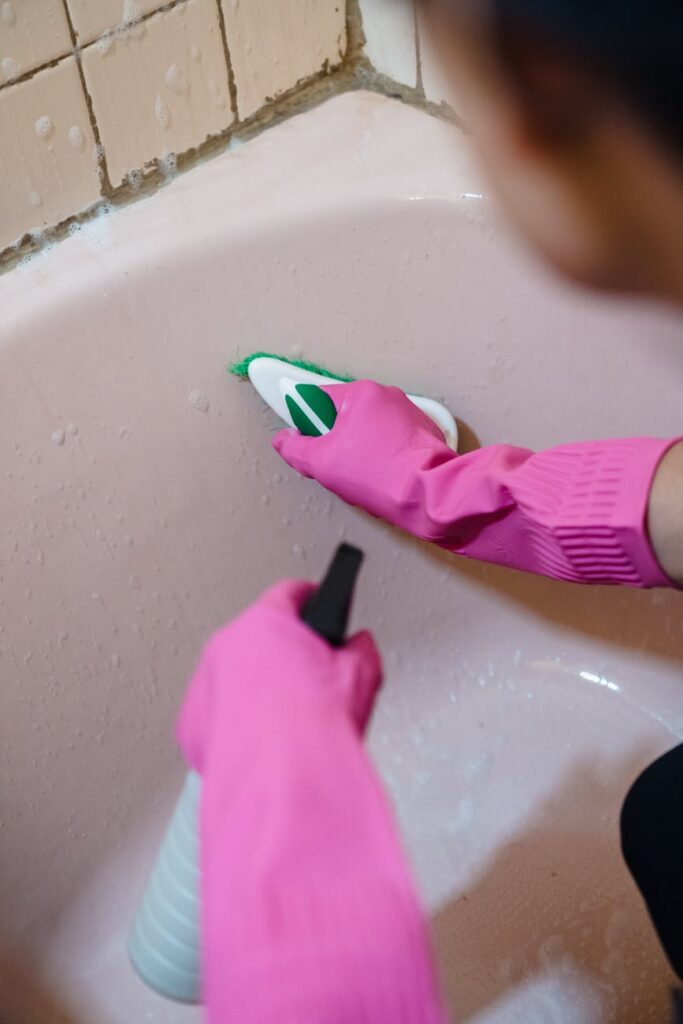
Using your scrub brush or sponge, scrub the stained areas in a circular motion. For tough stains, use an old toothbrush for precision on grout lines and tight spaces.
Step 5: Rinse and Inspect
After scrubbing, rinse the area thoroughly with warm water. Check if the stains are removed. If not, repeat the process or move on to stronger solutions.
Step 6: Use Hydrogen Peroxide (if needed)
For persistent stains, apply hydrogen peroxide directly to the black areas. Let it sit for 5-10 minutes before scrubbing again. Rinse thoroughly afterward.
Step 7: Final Touches
For toilet bowls, pour a cup of baking soda followed by a cup of vinegar into the bowl. Let it fizz for 30 minutes, then scrub with a toilet brush and flush.
Best Cleaning Methods
1. Vinegar and Baking Soda: This natural combination is effective for both hard water stains and mold. It’s safe for most surfaces and non-toxic.
2. Commercial Cleaners: For severe cases, consider using a commercial cleaner designed for hard water or mold removal. Always follow the instructions on the label.
3. Steam Cleaning: A steam cleaner can be an effective tool for removing both stains and mold without chemicals.
4. Bleach Solution: For non-porous surfaces, a diluted bleach solution (1 cup of bleach in a gallon of water) can sanitize and remove stubborn stains. Always ventilate the area when using bleach.
Common Mistakes to Avoid
1. Using Abrasive Tools: Avoid steel wool or other abrasive materials that can scratch surfaces, making stains harder to remove.
2. Ignoring Grout: Many homeowners forget to clean grout lines, where mold and stains can hide and thrive.
3. Overusing Cleaners: Using too much cleaning product can lead to residue buildup, which may attract more dirt.
4. Skipping Regular Maintenance: A quick weekly clean can prevent major buildup and future stains.
Prevention Tips
1. Regular Cleaning: Establish a regular cleaning schedule to keep your bathroom fresh. Aim for at least once a week.
2. Ventilation: Use an exhaust fan or open windows during and after showers to reduce humidity.
3. Wipe Down Surfaces: After use, wipe down sinks, tubs, and showers to remove moisture.
4. Water Softener: If hard water is a significant issue, consider installing a water softener to reduce mineral buildup.
5. Seal Grout: Use a grout sealer to protect against moisture and staining.
Frequently Asked Questions
1. How often should I clean my bathroom to prevent black water stains?
Aim to clean your bathroom at least once a week to prevent buildup and stains.
2. Can I use vinegar on all surfaces in my bathroom?
Vinegar is safe for most surfaces, but avoid using it on natural stone, as it can etch the surface.
3. What’s the best way to remove black stains from a toilet bowl?
Using a combination of baking soda and vinegar works well. Let it sit for 30 minutes before scrubbing.
4. Are commercial cleaners safe for mold removal?
Most commercial cleaners are safe when used as directed. Always read the label for specific instructions.
5. How can I tell if the stains are from mold or hard water?
Mold typically appears in damp areas and may have a fuzzy texture, while hard water stains feel smooth and are often whitish or chalky.
6. Can I prevent mold growth in my bathroom?
Yes, maintaining good ventilation, regular cleaning, and using mold-resistant products can help prevent mold growth.
By following this guide, you can effectively tackle black water stains in your bathroom, keeping it clean and visually appealing. Remember that consistency is key; regular maintenance will save you time and effort in the long run.